By Staff Reporter
ISLAMABAD: On the anniversary of a landmark United Nations resolution affirming the right of Kashmiris to self-determination, Pakistan’s top leaders on Monday renewed their demands for a plebiscite in the disputed region, urging the international community to compel India to reverse its 2019 actions and end what they described as widespread human rights abuses.
The observance of Right to Self-Determination Day commemorates the Jan. 5, 1949, resolution by the United Nations Security Council, which called for the people of Jammu and Kashmir to decide their future through a free and impartial vote supervised by the world body. Nearly eight decades later, that promise remains unfulfilled, Pakistani officials said, amid accusations that India has intensified its grip on the territory it controls.
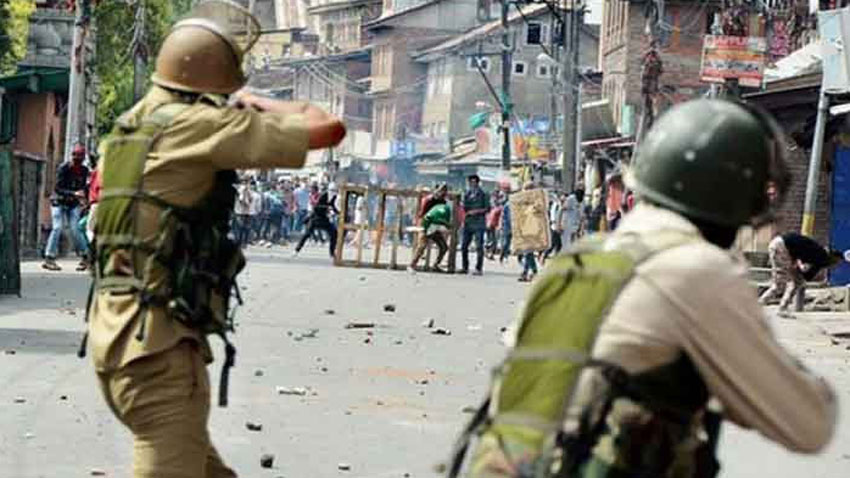
President Asif Ali Zardari, in a pointed message, highlighted the deteriorating conditions in Indian Illegally Occupied Jammu and Kashmir. “The situation on the ground in IIOJK remained deeply troubling,” he said. “Widespread restrictions on political activity and freedom of speech, prolonged detentions and the use of coercive laws have created an atmosphere of fear and impunity. Civilians continue to bear the brunt of violence, while families are displaced and livelihoods disrupted.”
Zardari also drew attention to emerging tensions over water resources, accusing India of undermining regional stability. “In recent years, control over the rivers originating in Jammu and Kashmir has emerged as a grave additional challenge, with serious implications for the lives of Kashmiris and for regional stability,” he said. He criticized India’s “unilateral suspension of the Indus Waters Treaty, in disregard of its binding international obligations,” calling it “a dangerous attempt to weaponize water, threatening livelihoods, food security and peace for millions who depend on these shared resources.”
Pakistan, he affirmed, would maintain its “consistent moral, political and diplomatic support” for Kashmiris in their “just and peaceful struggle for dignity, justice and a future of their own choosing.” He stressed that the dispute “could not be resolved through force or unilateral measures” and called for “credible steps to address ongoing human rights violations and to protect civilians.”
Prime Minister Shehbaz Sharif said the Kashmir issue as central to peace in South Asia. “The world must recognise that a just resolution of the Jammu and Kashmir dispute was the only way to achieve durable peace in South Asia,” he said in his message. He urged global powers to press India to “halt its widespread human rights violations in IIOJK, reverse its unilateral and illegal actions of 5 August 2019, repeal the draconian laws and give the right to self-determination to the Kashmiri people, as enshrined in the United Nations Security Council resolutions.”
Sharif traced the day’s significance to the 1949 resolution by the United Nations Commission for India and Pakistan, which “unequivocally stipulated that the final disposition of the State of Jammu and Kashmir would be decided through a free and impartial plebiscite under the auspices of the United Nations.” He lamented that “this commitment remains unfulfilled to this day, as the resolution has never been implemented, due to India’s illegal occupation of Jammu and Kashmir.”
The prime minister described the plight of Kashmiris as an “ordeal” spanning nearly eight decades, worsened since India’s 2019 revocation of the region’s semiautonomous status. “Their suffering has exacerbated manifold since 5 August 2019 when India undertook illegal and unilateral measures, as part of its systematic campaign to transform the demographic and political landscape of the IIOJK.” He accused India of efforts “to silence the genuine leadership of the Kashmiri people and muzzle the media,” but praised the residents’ endurance: “Nevertheless, all Indian coercive measures have failed to subjugate the will of the people of IIOJK or suppress their quest for the right to self-determination. The people of Pakistan salute their indomitable courage, commitment and resilience in the face of Indian atrocities.” Pakistan would “continue to extend its unwavering moral, political, and diplomatic support to your cause, and will continue to serve as your voice at every available platform,” Sharif added.
Bilawal Bhutto Zardari, the chairman of the Pakistan Peoples Party and a former foreign minister, paid tribute to the Kashmiris’ perseverance. “The people of Kashmir have endured decades of oppression, violence and denial of basic human rights, yet their resolve, courage and hope for freedom remain unbroken,” he said in a statement. “No amount of force can silence a people’s legitimate aspiration for dignity and justice.”
He called on the United Nations to “move beyond statements and ensure the implementation of UNSC resolutions on Jammu and Kashmir,” warning that “lasting peace in South Asia was impossible without a just and peaceful settlement of the Kashmir issue in accordance with the wishes of the Kashmiri people.” Invoking the legacy of his grandfather, Zulfikar Ali Bhutto, and his mother, Benazir Bhutto, Bhutto Zardari said his party would persist in advocating for Kashmiris. “We stand with Kashmir today, tomorrow and until justice is done,” he said.
The statements come against a backdrop of stalled dialogue between India and Pakistan, nuclear-armed rivals whose relations have been strained by the Kashmir conflict since their partition in 1947. India maintains that its 2019 changes were internal matters aimed at integrating the region, while rejecting calls for a plebiscite and accusing Pakistan of supporting militancy — charges Islamabad denies. Pakistani officials have long used international forums to spotlight the issue, but with little progress toward resolution.
Copyright © 2021 Independent Pakistan | All rights reserved