By Staff Reporter
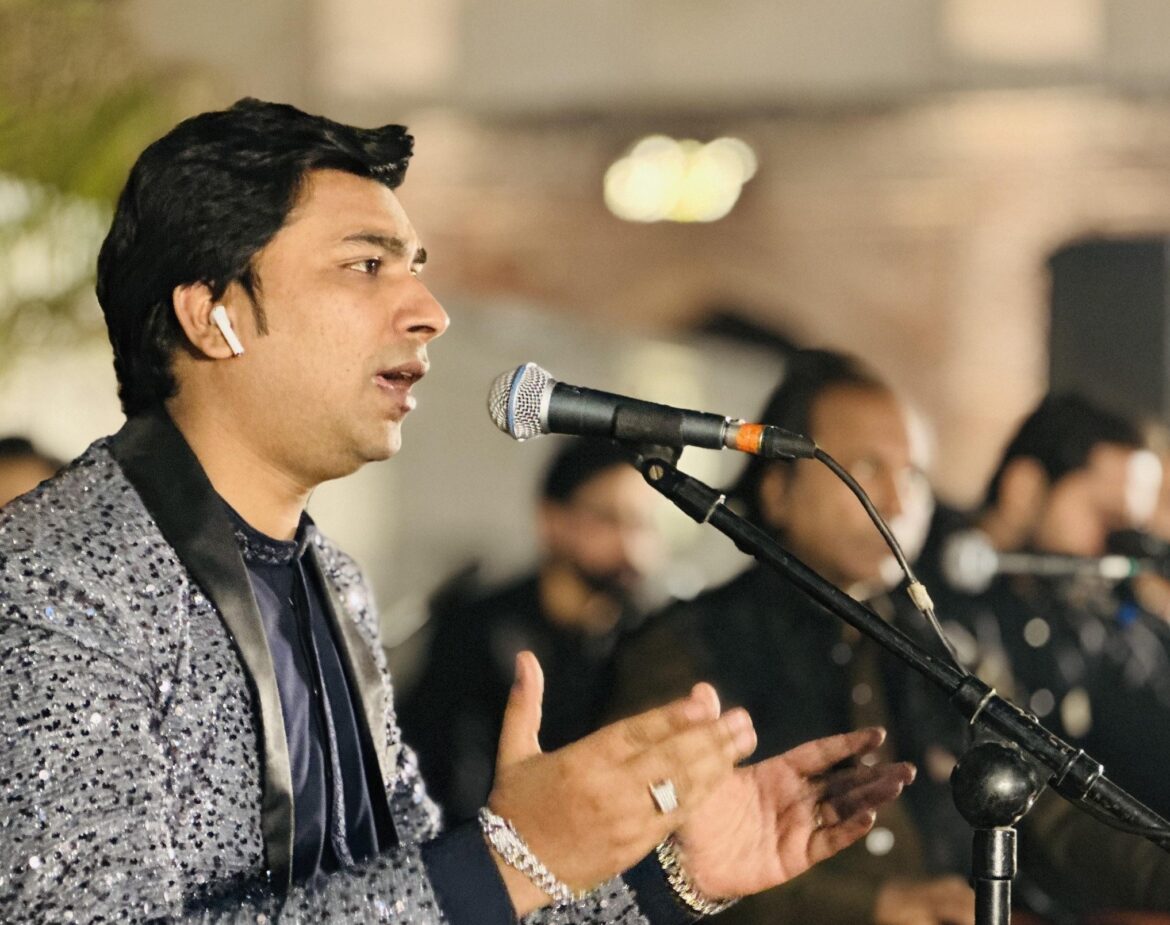
LAHORE: A court in Lahore granted pre-arrest bail on Monday to a traditional singer who had been charged with promoting enmity and inciting public mischief after performing a song that alluded to the imprisoned former prime minister Imran Khan during a government-organised cultural event.
The singer, Faraz Amjad Khan, a qawwal known for Sufi devotional music, appeared before Additional District and Sessions Judge Shazaib Dar, who approved the bail until Jan. 13 after hearing preliminary arguments. The judge also directed the police to submit the case record.
The episode unfolded at Shalimar Gardens on Jan. 3, during a program called “Chandni Raatain,” sponsored by the Walled City of Lahore Authority and billed as a nonpolitical celebration of culture, music and harmony. Open to the public, the event featured qawwali performances, but authorities said Khan and his ensemble “deliberately and without permission sang a politically provocative song” with lyrics referencing “Adiala Jail Qaidi 804” — Prisoner No. 804, Khan’s designation while held at Adiala Jail in Rawalpindi.
The song, “Nak Da Koka 2 Murshid,” drew complaints from event organisers, who halted the performance. Zameerul Hasan, the gardens’ in-charge, filed a police report the next day at the Baghbanpura station, accusing the singer of giving the gathering a “political colour” and sparking unrest that threatened law and order.
In the report, Hasan described the act as “highly irresponsible, condemnable and beyond legal limits,” saying it undermined the event’s neutrality, damaged the credibility of a government institution and amounted to an attempt to incite the public and disrupt order. The charges invoked several sections of the Pakistan Penal Code, including those covering acts in furtherance of common intention, abetment, promoting enmity between groups, intentional insult to provoke a breach of peace and statements conducing to public mischief.
Before the court, Khan’s counsel argued that the singer had no ties to any political party and had performed the song only at the insistence of audience members. The lawyer asked for bail so Khan could participate in the investigation and “prove his innocence.” Khan himself told the judge that if he had known that singing this song would lead to a case, he would never have sung it.
In a video statement posted online on Monday, Khan elaborated on the incident, saying he had been invited to perform traditional qawwali and given a list of approved songs. But during the event, he said, an unidentified man approached him multiple times, threatening and misbehaving, insisting he sing the controversial track. “I didn’t know how to do it,” Khan said in the video, adding that the man confronted him again onstage. “The audience who were sitting in front of us, that there may be a bad atmosphere because of him. I sang 2 or 4 songs.” He emphasized his loyalty to Pakistan, calling it “our pride” and insisting, “We can never rebel against our country.” Khan appealed directly to Punjab’s chief minister, Maryam Nawaz Sharif, for justice, saying, “I am from your country, and you are the one who makes me proud.” Police officials said an investigation was underway, with the matter being examined “from different angles in accordance with the law.”
The case has stirred debate over the boundaries of artistic expression in cultural programs, particularly those backed by the state, and comes amid a pattern of actions against artists and creators whose work touches on sensitive political themes. In August 2024, the YouTuber Aun Ali Khosa vanished from his Lahore home after releasing a parody video criticising the government. His location was unknown for days, prompting Amnesty International to demand his safe return, despite a court order for his recovery.
In May 2024, the Kashmiri poet Ahmad Farhad disappeared after sharing critical verses on social media. An Islamabad High Court judge summoned defence officials and questioned whether the nation would be governed by law or intelligence agencies. Last year, a military court sentenced the activist Adil Raja and six others to double life terms for “digital terrorism.” Such incidents highlight growing concerns about tolerance for dissent in Pakistan, where Khan, the ousted leader of the Pakistan Tehreek-e-Insaf party, remains a polarising figure even from behind bars.
Copyright © 2021 Independent Pakistan | All rights reserved