By Staff Reporter
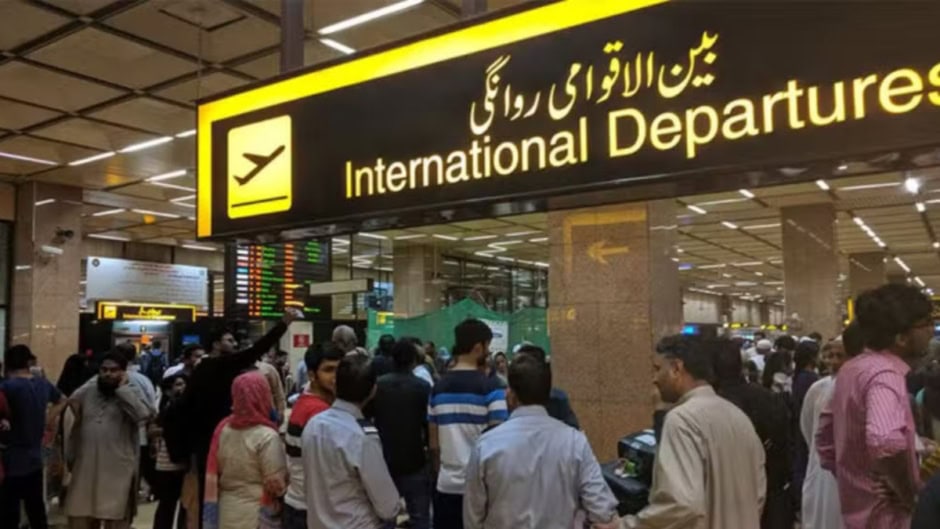
ISLAMABAD: Pakistan and the United Arab Emirates have agreed to establish a pre-immigration clearance system that would allow Pakistani travellers to complete border formalities at home before flying to the Gulf nation, effectively letting them bypass lengthy airport lines upon arrival and exit as if they were domestic passengers.
The move, announced by Pakistan’s Interior Ministry, aims to streamline travel amid a surge in labour migration and recent crackdowns on illegal departures. It follows a meeting in Islamabad between Interior Minister Mohsin Naqvi and a UAE delegation headed by Ahmed Abdullah bin Lahej Al Falasi, the director general of customs and port security. “The immigration process for passengers will be completed in Pakistan before travel,” Naqvi said, adding that the system would “facilitate travel and improve the overall travel experience.”
The initiative will start as a pilot project in Karachi, Pakistan’s largest city and a major hub for outbound flights. No start date was given, but officials from both sides pledged to coordinate on administrative and technical details. If successful, the program would expand to other Pakistani cities. The UAE delegation called the arrangement beneficial for citizens of both countries and signalled its willingness to cooperate.
Pakistan already operates a comparable setup with Saudi Arabia through the Makkah Route Initiative, which lets Hajj pilgrims handle immigration at their departure airports. That program spares arrivals in the kingdom hours of processing, enabling direct entry. The agreement follows mounting challenges in Pakistan’s visa and travel systems, including visa denials from the UAE and a spike in passengers being barred from flights due to suspect documents. Last year, more than 727,000 Pakistanis migrated abroad for work, according to the Bureau of Immigration, with Saudi Arabia drawing over 530,000 — the vast majority. Qatar followed with 68,376, the UAE with 52,664 and Bahrain with 37,726. Smaller contingents went to Kuwait, the United States, Britain, Germany, Italy, China, Japan and Romania, among others. The exodus included 222,171 skilled workers, 42,257 semi-skilled and 466,062 unskilled, highlighting Pakistan’s reliance on overseas employment across all levels.
To tackle visa hurdles, the federal cabinet has formed a six-member committee led by Law and Justice Minister Azam Nazeer Tarar. Its mandate: devise recommendations for a more transparent, secure and efficient visa process, with a report due in 14 days. Members include Mr. Naqvi, Finance Minister Muhammad Aurangzeb, Climate Change Minister Musadik Malik and the law and interior secretaries.
This follows the government’s approval of a new visa clearance regime aimed at curbing illegal migration and counterfeit documents, especially as host countries tighten rules. Visa woes with the UAE have persisted. In November, Additional Interior Secretary Salman Chaudhry told a Senate committee that the UAE had stopped issuing visas to Pakistanis, though he stopped short of calling it a ban. Earlier, in January 2025, an overseas employment promoter testified that some UAE visas were “unofficially closed” over concerns about visitors begging. But Senator Zeeshan Khanzada, the committee chairman, clarified there were “no restrictions on work visas.” Naqvi raised the issue with his UAE counterpart in July, securing assurances of “full support” in speeding up approvals. In April, the UAE ambassador in Islamabad said problems were resolved and that Pakistanis could obtain five-year visas.
Meanwhile, offloading — the practice of preventing passengers from boarding despite valid tickets — has drawn sharp scrutiny. The National Assembly unanimously passed a resolution on Tuesday demanding an inquiry into such incidents and calling for reforms to safeguard traveller rights, ensure transparency and document decisions properly. Moved by Agha Rafiullah of the Pakistan Peoples Party, the measure highlighted fears among those heading abroad for jobs or studies. Party colleague Shazia Marri described the situation as “very important,” noting that even fully documented travellers lived in dread.
The Federal Investigation Agency attributes offloadings to its anti-smuggling drive, targeting incomplete or unverified papers. In 2025, 66,000 passengers were stopped, with 51,000 cited for documentation issues, according to agency Director General Riffat Mukhtar Raja. Naqvi last week ordered stricter screening at all airports and tasked the agency with bolstering immigration enforcement. In early December, he said 50 to 70 people were offloaded daily to preserve Pakistan’s passport credibility — a pace that would yield under 22,000 annually, far below the official tally.
Copyright © 2021 Independent Pakistan | All rights reserved