By Staff Reporter
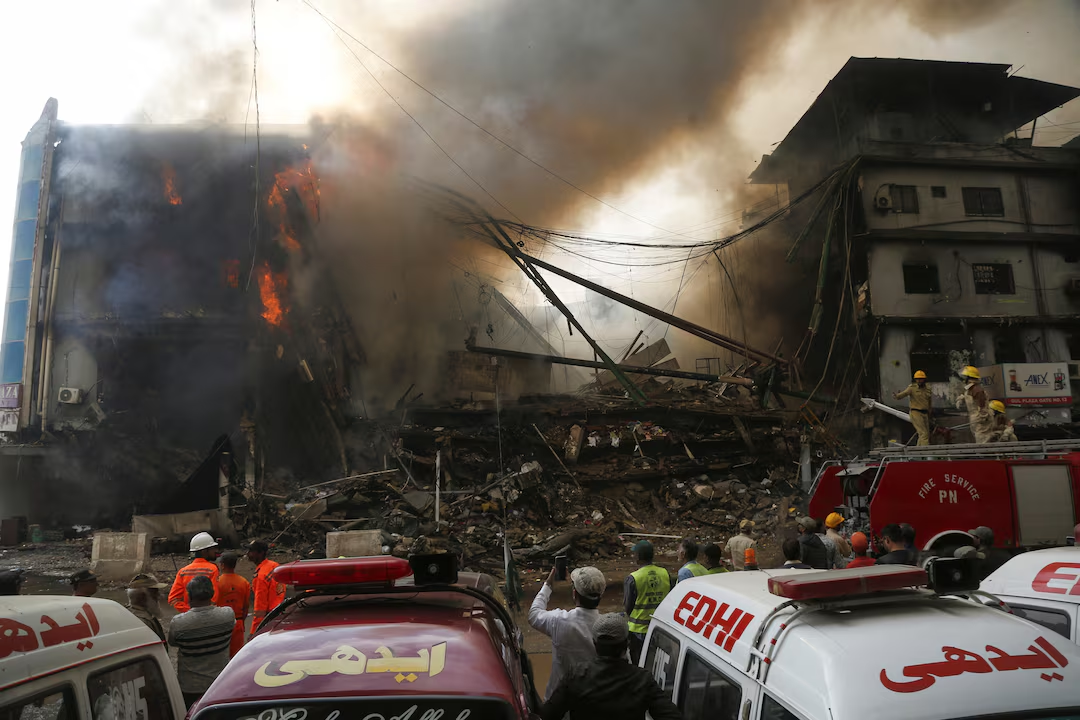
KARACHI: The death toll from a devastating fire that has raged for almost 24 hours at Gul Plaza, a crowded shopping mall in Karachi’s bustling Saddar district, climbed to six on Sunday, including a firefighter killed in the line of duty, as authorities warned that over 50 people are now feared missing and possibly trapped inside the collapsing structure.
Rescue teams, battling thick smoke and structural instability, have yet to fully extinguish the blaze that erupted late Saturday, leaving families in anguish on fears that the death toll could climb amid reports of dozens still trapped inside the gutted structure.
Flames continued to flicker in pockets of the multi-story complex, which covers about 1.75 acres and once housed over 1,200 shops selling clothes, cosmetics, electronics, toys and other goods. Officials initially reported five fatalities, but the count rose with the confirmation of a firefighter’s death. More than 20 others were injured, many suffering from burns and smoke inhalation, and were rushed to Civil Hospital’s burns ward.
The fire erupted around 10 pm Saturday on the ground floor, in a shop selling artificial flowers, and rapidly engulfed the multi-story complex. Officials suspect a short circuit or electrical fault sparked the inferno, though a full investigation is pending until the site cools. By Sunday evening, firefighters had contained 70 to 75 percent of the blaze, but pockets of fire reignited on the first floor, complicating efforts to search for survivors.
“The building is extremely dangerous,” said Abid Jalal, chief operating officer of Rescue 1122, the provincial emergency service. “Parts of it have already collapsed, making internal rescue operations highly risky.” He noted that the rear portion had given way, and the front was teetering, forcing teams to hold off on entering until the flames were fully doused.
Eyewitnesses described a chaotic scene. Flames leaping from shop to shop, fueled by flammable materials like plastics and resins that released toxic smoke. Reporters on site heard sections of the building crumble, while video footage captured long tongues of fire bursting from windows. One powerful explosion, attributed to a gas leak, intensified the blaze early Sunday, halting operations briefly before they resumed.
Among the dead was Furqan Shoukat, a firefighter from the Nazimabad station, who was pulled from the rubble and rushed to Civil Hospital’s trauma center, where he succumbed to his injuries. The other identified victims included Kashif, Faraz and Muhammad Aamir; two bodies remained unidentified as of Sunday evening. The injured, treated at the hospital’s burns ward, included Haseeb, Waseem, Daniyal, Sadiq, Hamza, Rahim, Fahad, Jawad, Ayan, Abdullah, Usman, Zain and Nadir, along with four others whose details were still being gathered.
The mounting crisis has deepened with reports of over 50 missing, up from earlier estimates of 38, as families flooded helplines and gathered at the cordoned-off site. Deputy Inspector General South Asad Raza reported 38 people missing, based on calls from frantic families. At the cordoned-off site, crowds gathered, some clutching photos of loved ones. Mansoor and Jameel, residents of nearby Delhi Colony, told reporters they had lost contact with six relatives, three women, two men and a 14-year-old girl, who were shopping at the mall around 10:10 pm Saturday. Their phones went dead soon after.
As cooling operations continued into Sunday, the scene remained grim: smoke still rising from blackened buildings, families waiting anxiously nearby, and rescue teams standing by until it was safe to enter the debris. For traders and families upended by the fire, recovery is expected to be slow.
Rescue efforts mobilised a massive response. 22 fire brigade vehicles, 10 water bowsers, four snorkels and 33 ambulances from 16 stations, bolstered by Pakistan Navy teams with seven fire tenders and 80 personnel. Over 150 firefighters worked from three sides, but the lack of ventilation, sealed windows and absence of emergency exits hampered progress. Firefighters doused the flames from three sides, containing 70 to 75 percent by Sunday afternoon, but reignitions on the first floor persisted.
Chief Fire Officer Muhammad Humayun, in a briefing, called the incident unprecedented in his 37-year career. “There was no initial firefighting system or emergency access routes,” he said, adding that public crowding posed a greater challenge than water shortages.
Sindh Labor and Social Protection Minister Saeed Ghani, surveying the damage, stressed the need for fire extinguishers and exit routes in buildings. “All efforts were made to control the fire in time, and many people were evacuated,” he told reporters, urging public cooperation. So far, 25 people had been pulled out using snorkels, but officials feared more remained on the mezzanine and first floors, where access was impossible due to heat and instability. The ground and mezzanine levels were completely incinerated, with upper floors still burning. Eyewitnesses recounted hearing crashes as sections gave way, and video showed flames engulfing shops while crowds watched in horror.
The disaster struck a devastating blow to Karachi’s trading community. Gul Plaza, a hub for small vendors selling everything from perfumes to crockery, saw billions of rupees in inventory reduced to ash. Tanveer Pasta, president of the Gul Plaza Traders’ Association, estimated 80 to 100 people, mostly staff and shopkeepers, were still inside when the fire spread. “All customers exited the building, but staff and shopkeepers were still thought to be inside,” he said, criticising the government’s response. Neither the chief minister nor the mayor had reached out, he added, though Governor Kamran Tessori visited and pledged rehabilitation aid.
South District Deputy Commissioner Javed Nabi Khoso said 16 families had already contacted them about loved ones. An information desk at the site compiled names, while police diverted traffic and deployed extra officers to keep routes clear. Sindh Chief Minister Murad Ali Shah ordered an immediate inquiry by the Karachi commissioner, demanding a review of fire safety arrangements and a report on the blaze’s cause. “Fire safety audit should be conducted immediately in commercial buildings of Karachi,” he directed, vowing strict enforcement of safety laws.
The tragedy highlights chronic fire risks in Karachi, Pakistan’s teeming economic center of over 20 million. Deadly blazes are common, driven by shoddy wiring, overcrowding and lax regulations. Gul Plaza itself burned in 2016 and 2008, both times from suspected short circuits, with no fatalities but significant damage. Experts like former chief fire officer Kazim Ali fault the system for issuing “fire fitness certificates” without ensuring real safety, such as sprinklers or alarms. Flammable goods in the mall produced hydrogen cyanide-laden smoke, which can kill quickly by starving organs of oxygen, according to the U.S. Centers for Disease Control and Prevention.
Just months ago, in October 2025, experts at a conference warned of Karachi’s vulnerability to large-scale fires, urging upgrades to international standards. In December, the Sindh Assembly passed a resolution for modernising the city’s firefighting system. Now, with Gul Plaza in ruins, the Karachi Chamber of Commerce and Industry is forming a committee to tally losses and seek compensation, drawing parallels to past aid after market fires.
Copyright © 2021 Independent Pakistan | All rights reserved