By Staff Reporter
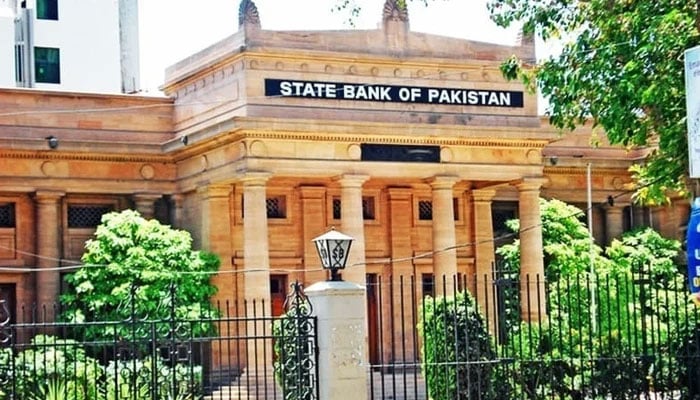
KARACHI: The central bank is poised to ease monetary policy further at its meeting next week, with most economists expecting a half-percentage-point cut that would push the benchmark interest rate deeper into easing territory amid cooling inflation and strengthening external buffers.
The State Bank of Pakistan will likely reduce its key rate by 50 basis points to 10 percent when the Monetary Policy Committee convenes on Jan. 26, according to the median forecast in a Reuters poll of 10 analysts. That would mark the latest step in a cycle that has already delivered 1,150 basis points of cuts since rates hit a record 22 percent in 2023.
Seven of the surveyed analysts anticipate the 50 basis-point move, while two project a deeper 75 basis-point reduction and one sees the bank standing pat after a surprise cut last month. The outlook reflects a broader consensus that easing inflation—down to 5.6 percent year-on-year in December, and improving foreign exchange reserves have opened room for the bank to support growth without reigniting price pressures.
“We believe the SBP is likely to deliver a 75bps cut in the upcoming MPC, potentially taking the policy rate to 9.75 percent, signalling a long-awaited return to single-digit territory,” Arif Habib Limited said in a note on Friday. The brokerage highlighted cooling inflation, a stable currency, manageable current account, easing global commodity prices including oil, and signs of recovering domestic demand and industrial growth as key factors creating space for the move. “Together, these factors create the space for the SBP to implement a cut without destabilising the economy,” AHL added, noting that a 75 basis-point reduction aligns with macroeconomic realities. “Inflation is supportive, growth needs nurturing, fiscal math demands relief, and external stability remains intact.”
AHL went further, suggesting that if conditions hold, the bank could opt for an even bolder 100 basis-point cut. “And yet, beneath this consensus, there is a subtle undertone. If conditions continue to cooperate and confidence remains intact, the space for a slightly bolder move, like a 100bps cut, quietly exists,” the firm said.
Topline Securities said 80 percent of participants anticipated a rate cut in a recent survey. Of those, 56.4 percent favored 50 basis points, 15.4 percent backed 100 basis points, 5 percent expected 25 basis points, and 3 percent predicted 75 basis points. “We also expect the central bank to reduce the interest rate by 50bps to 10.0 percent,” Topline said, attributing the shift in sentiment to lower-than-expected inflation over the past two months, robust remittance inflows bolstering external accounts, and a largely stable rupee against the dollar.
The brokerage noted that real interest rates, based on average inflation for the fiscal year ending June 2026, stand around 350 basis points, above the historical average of 200 basis points. “Nonetheless, in our view, the central bank will continue to maintain above average real rates to ensure sustainable growth in the economy,” Topline added.
Last month’s 50 basis-point cut to 10.5 percent caught markets off guard, ending a four-meeting pause and underscoring the bank’s pivot toward supporting an economy that has grappled with high borrowing costs amid efforts to tame inflation and stabilize the balance of payments.
Analysts supporting a 50 basis-point move emphasised the need for measured steps given lingering risks. “The inflation outlook has eased marginally and external buffers have strengthened, giving the SBP room to support growth,” said Waqas Ghani, head of equity research at JS Global Capital, adding that expectations remain anchored despite elevated non-food inflation.
Proponents of a larger cut argued that conditions are ripe for more aggressive action. “Pakistan appears on the verge of returning to a single-digit policy rate,” said Sana Tawfik, head of research at Arif Habib Limited, citing improving growth momentum, stable reserves, and inflation running below the central bank’s medium-term target. Cautionary voices, however, flagged potential pitfalls. “Geopolitical uncertainty and its impact on fuel prices” warrant a restrained approach, said Fawad Basir, head of research at KTrade.
Separately, AKD Securities anticipates the bank holding rates steady until July. The backdrop includes December’s inflation data, which showed a monthly decline driven by lower perishable food prices, though core inflation—excluding volatile items—remains sticky. The SBP has noted that headline inflation stayed within its 5-7 percent target range from July to November but could tick up temporarily later in the fiscal year due to base effects. Adding to the prudence, the International Monetary Fund has warned against premature easing under Pakistan’s $7 billion loan program, urging the bank to prioritize inflation control and fiscal discipline.
Falling bond yields and external stability further underpin the case for cuts, with the rupee holding broadly steady and remittances providing a cushion to foreign reserves. Still, the path forward hinges on global commodity trends and domestic demand recovery, analysts said.
Copyright © 2021 Independent Pakistan | All rights reserved