By Staff Reporter
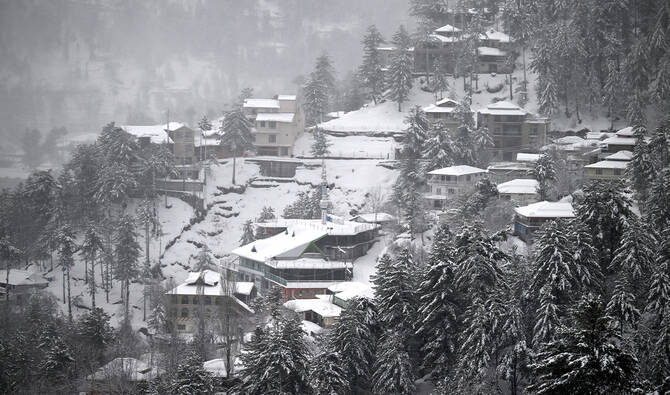
ISLAMABAD: As heavy snowfall blanketed Pakistan’s northern mountains for a fourth straight day, burying roads under feet of white and cutting off entire villages, officials issued urgent warnings of avalanches and landslides that could strand more travelers in freezing temperatures.
The harsh weather has already claimed lives, disrupted power and paralyzed daily routines, highlighting the perils that draw thousands of tourists to these scenic heights each winter, often at great risk.
The Pakistan Meteorological Department cautioned on Sunday that a potent western weather system would grip the country’s upper reaches from Monday, bringing intermittent rains, thunderstorms and snowfall to Khyber Pakhtunkhwa, Azad Kashmir, Gilgit-Baltistan, Balochistan and upper Punjab. Heavy falls, including moderate to intense snowfall in hilly areas, were expected through Tuesday, with rain or thunderstorms also likely in southern Punjab and upper Sindh.
“Heavy snowfall may cause road closure/slippery conditions” in places like Naran, Kaghan, Dir, Swat, Kalam, Chitral, Kohistan, Mansehra, Abbottabad, Shangla, Astore, Hunza, Skardu, Murree, Galliyat, Neelum Valley, Bagh, Poonch, Haveli, Quetta, Ziarat, Chaman, Pishin, Qila Abdullah, Qila Saifullah, Nushki, Harnai and Zhob, the department said in a statement. It added that there was a “possibility of landslides/avalanches in hilly areas of upper Khyber Pakhtunkhwa, Gilgit-Baltistan and Kashmir” during the period.
Tourists were advised to “remain extra cautious and avoid unnecessary travel during the next two days,” the statement said. The warnings came amid reports of widespread havoc. In Shangla, a district in Khyber Pakhtunkhwa where upper elevations received up to four feet of snow — the heaviest in 13 years, residents said — life ground to a halt. Most key and link roads, including the Bisham-Swat and Alpuri-Puran routes, remained blocked to all traffic, confining people to their homes and severing access to supplies.
Dayan Ghafar, a local leader, described the scene in Puran tehsil as dire. “Life has been completely disrupted,” he told the newspaper Dawn, noting that all entry and exit routes were blocked and that power supply poles and transformers had collapsed in more than 20 places in that area alone. Mazhar Ali, a resident of Lilownai village, said his community’s link road had been closed, leaving families isolated.
In a statement, the Chakesar tehsil administration said it had cleared four roads for traffic on Sunday and that work on others continued. But residents in Shangla called on their elected representatives to step up and aid rehabilitation efforts.
The toll of the weather was grimly illustrated on Friday, when at least nine members of a family perished in Chitral after a snow avalanche buried their house, according to officials. An injured child was rescued from the debris. Rescuers from the 1122 emergency service evacuated dozens of residents and tourists in Khyber, South Waziristan and Swat districts, where heavy snow had blocked roads. Authorities cleared routes and distributed food, clothing and bedding to those affected.
The Provincial Disaster Management Authority in Khyber Pakhtunkhwa issued its own advisory on Sunday, directing district administrations and the tourism department to monitor roads, highways and tourist spots closely, keep emergency teams on alert and coordinate with the provincial emergency operations center. Hotels and guest houses were instructed to warn visitors of risks and issue timely alerts about snowfall and landslides. The authority warned that the weather could lead to road blockages, slippery conditions, landslides, avalanches and flash floods from Jan. 25 to 27, urging people to avoid unnecessary travel and advising tourists to steer clear of upper and remote areas.
Such disruptions are not uncommon in Pakistan’s north, where tens of thousands of tourists from across the country descend each winter to witness the snowfall in Azad Kashmir, Gilgit-Baltistan, Khyber Pakhtunkhwa and Punjab. Many disregard warnings from disaster management authorities about deteriorating conditions and roadblocks, leading to crises. In January 2022, at least 21 people, including children, died after they were trapped in their vehicles during a snowstorm in the hill station of Murree, a sad reminder of the dangers lurking in these picturesque landscapes.
Copyright © 2021 Independent Pakistan | All rights reserved