By Staff Reporter
ISLAMABAD: Pakistan marked 79 years of independence on Friday with gun salutes, flag-hoisting ceremonies and a wave of messages from its civilian and military leadership calling for national unity, economic reform and continued vigilance against threats from across its western border.
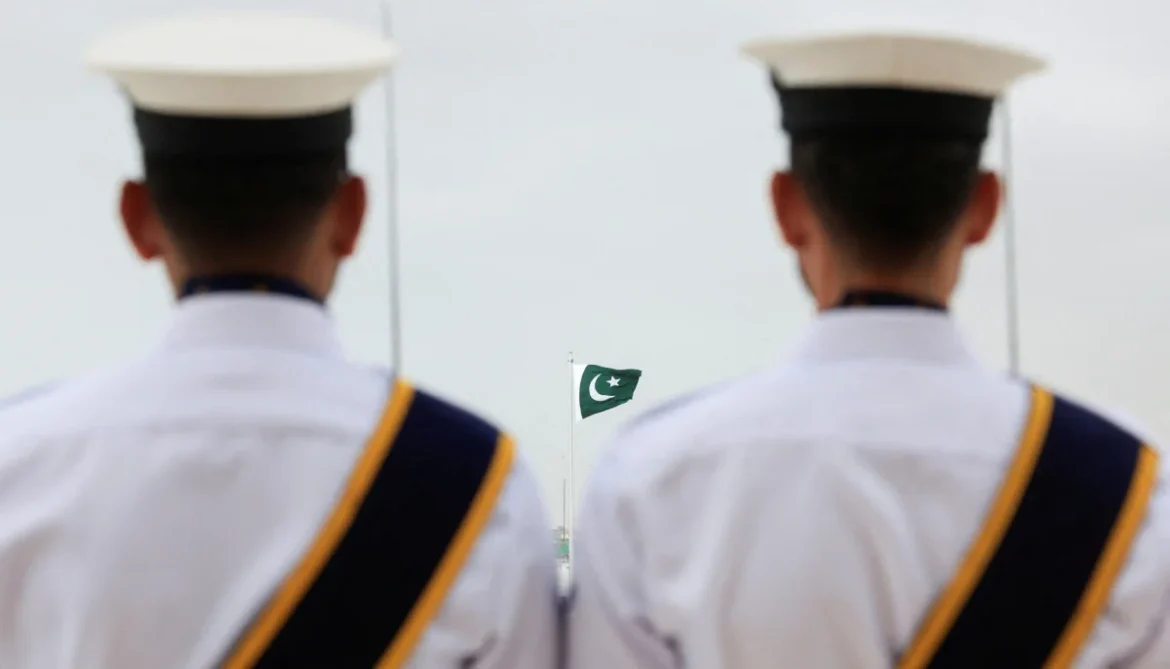
The day opened in customary fashion: a 31-gun salute sounded over Islamabad, with 21-gun salutes fired in the provincial capitals. In Karachi, soldiers staged an elegant change of guard at the mausoleum of Quaid-i-Azam Muhammad Ali Jinnah, the country’s founder, while flags were raised in ceremonies at the Supreme Court and the Federal Constitutional Court in the capital.
President invokes ‘lesson of responsibility’
In his Independence Day address, President Asif Ali Zardari framed the anniversary not merely as a commemoration but as an obligation passed between generations. Independence, he said, “is also a responsibility that each generation must carry forward,” adding that the Pakistan built on the “democratic will of its people” needed to grow “stronger, more secure and more prosperous” through the efforts of those living today, not only the achievements of those who came before.
The president’s message leaned heavily on the events of Marka-i-Haq, the four-day military confrontation with India last year that has since become a fixed reference point in official rhetoric. He said the episode had shown that Pakistan “seeks peace, but also possesses the resolve and capacity to defend its sovereignty and national interests,” arguing that a nation capable of defending itself carried a duty to use that strength to “prevent conflict, protect peace and serve the interests of its people.”
He paid tribute to members of the armed forces, law enforcement agencies and police who died safeguarding the country, saying their sacrifice had come “at a great cost” and that the security Pakistanis enjoyed today was a direct result of it.
On regional diplomacy, Zardari credited Pakistan’s geography and communication channels with helping to encourage “dialogue and de-escalation” at moments when broader conflict might have had serious consequences for the wider region. He said Islamabad’s own security was “linked to the peace and stability of our neighbourhood and the world at large,” and pledged continued support for efforts that reduce tension and build cooperation.
Turning to domestic priorities, the president called for strengthening the economy, expanding opportunity for young people, and pursuing governance, economic and social reforms so that the benefits of development reach “every part and community of the country.” He singled out the country’s youth as its greatest asset, pointing to their achievements in science, technology, business and the creative industries, and said investment in their education and skills was, in effect, investment in Pakistan’s future. He measured national progress in practical terms — a young person able to build a career, a family with access to healthcare and education, farmers and traders able to plan with confidence — and said Pakistan’s strength would ultimately be judged by whether that progress reached ordinary people’s lives.
Zardari reaffirmed Pakistan’s support for the Kashmiri people, saying Islamabad would continue to back a resolution of the dispute in line with their aspirations and relevant United Nations resolutions.
His most pointed remarks were reserved for Afghanistan. While he said Pakistan had always respected and supported Afghan sovereignty and expected reciprocity, he accused the country’s interim administration of allowing what he called “a cocktail of terror groups” to operate from Afghan soil against Pakistan and its neighbours. He went further, alleging that the Taliban government was “collaborating with India in launching terror attacks against Pakistani civilians and security personnel” in an attempt to divert attention from Pakistan’s peace-building efforts internationally. “I warn them to stop these evil actions against the people of Pakistan,” he said, adding that the country’s armed forces were capable of “defeating these evil designs.”
Sharif points to remittance growth and Gulf defence pact
Prime Minister Shehbaz Sharif’s message similarly opened with tribute to the country’s founding leaders before turning to the government’s economic record over the past two and a half years, which he said had steered Pakistan through difficult circumstances towards stability and, he argued, a path toward developed-economy status.
He pointed to a rise of $11.3 billion in remittances from overseas Pakistanis over the past two years as evidence of expatriates’ confidence in government policy, and said harnessing information technology, driving innovation in industry and agriculture, creating jobs and building a world-class education system remained top priorities.
On defence, Sharif praised the military’s conduct during Marka-i-Haq under Chief of Defence Forces and Army Chief Field Marshal Syed Asim Munir, describing it as a further chapter in the country’s defensive history. He said Pakistan would continue to defend its national interests, including its rights over shared water resources, and pointed to the newly signed Makkah Joint Defence Agreement between Pakistan, Saudi Arabia and Turkiye as evidence of the country’s expanding strategic role in the region.
He also voiced solidarity with the people of Kashmir and Palestine, and said lasting peace in South Asia depended on a diplomatic resolution of the Kashmir dispute consistent with UN resolutions, international law and the wishes of Kashmiris themselves. He closed by calling on political parties and all segments of society to set aside differences and work towards national unity.
Armed forces chiefs cite ‘unity and collective resolve’
A joint message from Munir, Chief of Naval Staff Admiral Naveed Ashraf and Chief of Air Staff Air Chief Marshal Zaheer Ahmed Baber Sidhu, issued through the military’s press wing, the Inter-Services Public Relations, paid tribute to Jinnah and those whose sacrifices had secured a sovereign Pakistan, describing their vision as “a guiding force for the nation.”
The statement acknowledged the “supreme sacrifices” of the country’s martyrs, its veterans and law enforcement personnel, and reaffirmed the military’s role as guardian of Pakistan’s sovereignty and territorial integrity, pledging to “defend the motherland against all threats” and uphold the constitution. “Pakistan’s strength lies in the unity and collective resolve of its people,” the chiefs said, calling for renewed commitment to “faith, unity and discipline.”
Dar recalls Marka-i-Haq anniversary in televised address
Deputy Prime Minister and Foreign Minister Ishaq Dar used a televised address to mark both Independence Day and the first anniversary of Marka-i-Haq, which he described as Pakistan’s “resolute and successful response to Indian aggression in 2025.” He said the anniversary reaffirmed the country’s determination to safeguard its sovereignty while remaining committed to international law and regional peace.
Dar extended greetings to Pakistanis at home and abroad, honouring Jinnah’s leadership and the sacrifices of Pakistan Movement activists. He described the country today as “a resilient nation of more than 250 million people bound together by our shared history, collective heritage and common aspirations,” and pointed to progress in education, science, sport and culture as reflective of the population’s talent and potential.
He highlighted the Makkah agreement with Turkiye and Saudi Arabia as reflecting “shared resolve to deepen strategic cooperation,” and praised the armed forces, police and paramilitary services as “a bulwark of our national security.” On Kashmir, he said last year’s conflict with India had underscored the urgency of resolving the dispute, and pledged continued Pakistani support for Kashmiris’ right to self-determination under UN Security Council resolutions.
AJK president: Kashmir ‘shoulder to shoulder’ with Pakistan
In Muzaffarabad, Azad Jammu and Kashmir President Chaudhry Latif Akbar addressed a separate flag-hoisting ceremony, thanking Pakistan for its consistent advocacy of the Kashmiri cause at international forums. He traced the two territories’ relationship to a resolution passed by Kashmiri leaders on 19 July 1947 seeking accession to Pakistan, and said Islamabad had “fought wars in defence of its position on the Kashmir dispute” — a debt, he said, Kashmiris would not forget. The people of Azad Kashmir, he added, stood “shoulder to shoulder” with Pakistan, their futures inseparably linked.
World leaders send congratulations
Messages of congratulation arrived from across the globe as the day unfolded. Saudi Arabia’s King Salman bin Abdulaziz Al Saud and Crown Prince Mohammed bin Salman congratulated Zardari and wished the country continued progress, with the Saudi Press Agency reporting that King Salman praised the “strong relations” and shared commitment to cooperation between the two states.
Iranian President Masoud Pezeshkian, in a message to Sharif carried by the IRNA news agency, called the anniversary a valuable opportunity to honour Pakistan’s achievements and said Tehran and Islamabad’s interests had become “inextricably interwoven.” He said a “new turning point” had begun in deepening the two countries’ strategic relationship and expressed readiness to take further steps to strengthen ties. His remarks came amid renewed momentum between the two capitals following Pakistan’s role in helping de-escalate tensions during the recent US-Iran conflict. Iranian Foreign Minister Abbas Araghchi separately congratulated Dar, saying continued political consultation and stronger trade, border, security and cultural cooperation would help both countries secure their shared interests.
US Secretary of State Marco Rubio praised what he called the “partnership between our nations and the bonds of friendship between our peoples,” pointing to cooperation on regional mediation, critical minerals, energy, counterterrorism, cultural heritage and trade as evidence of “real results” for both countries. In Islamabad, US Chargé d’Affaires Natalie Baker met Dar to convey the message in person.
Turkiye’s Vice President Cevdet Yılmaz wrote on X that relations with Pakistan were built on “an exceptional brotherhood,” pointing to the newly signed defence pact between Turkiye, Saudi Arabia and Pakistan as adding “a new dimension” to the relationship. Turkiye’s foreign ministry issued a separate message of congratulation.
Russian President Vladimir Putin congratulated Zardari and Sharif, with a message on the Russian embassy’s X account quoting him as expressing confidence that the two countries would “continue our constructive joint efforts to further strengthen the entire spectrum of our partnership” in the interests of international security and stability.
Further congratulations came from Qatar’s Emir Sheikh Tamim bin Hamad Al Thani and deputy emir Sheikh Abdullah bin Hamad Al-Thani; Egypt’s Foreign Minister Badr Abdelatty, who spoke to Dar by phone; China’s ambassador to Pakistan, Jiang Zaidong, who met Dar in person; the UK’s High Commissioner, Jane Marriott; Oman’s Sultan Haitham bin Tarik; Kuwait’s Crown Prince Sheikh Sabah Al Khaled Al Hamad Al Sabah; Bahrain’s Crown Prince and Prime Minister Salman bin Hamad Al Khalifa; and the foreign ministries of Jordan, Somalia, Romania, Georgia and Azerbaijan.
Germany’s ambassador to Pakistan, Ina Lepel, posted a video message on the embassy’s Facebook page wishing Pakistanis peace, prosperity and stronger bilateral ties, while Bahrain’s Crown Prince Salman bin Hamad Al Khalifa sent formal cables of congratulation to both Zardari and Sharif.
Pakistan gained independence from British colonial rule on 14 August 1947, when the United Kingdom partitioned the Indian subcontinent into the two new dominions of Pakistan and India.
Copyright © 2021 Independent Pakistan | All rights reserved