By Staff Reporter
ISLAMABAD: Pakistan has been invited to take part in talks between Iran and the United States to ease tensions between the longtime adversaries, Islamabad’s foreign ministry said on Tuesday, as regional powers work to avert a potential conflict in the Middle East.
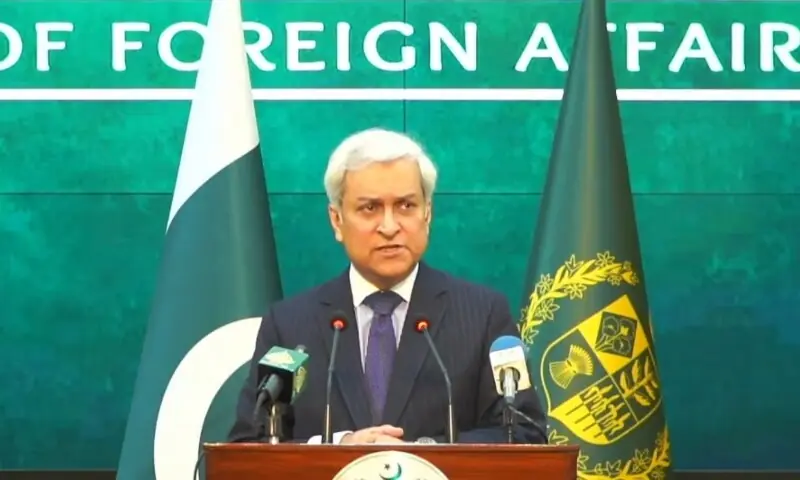
The invitation follows a diplomatic push led by Turkey to defuse escalating rhetoric over Iran’s nuclear programme, with a main meeting expected in Istanbul on Friday, according to officials familiar with the matter. “Pakistan has received the invitation for the upcoming talks between Iran and the United States,” Foreign Office spokesperson Tahir Andrabi told reporters in response to a query.
A diplomatic source, speaking on condition of anonymity, said Pakistan’s role was viewed as key to de-escalating tensions, and that Islamabad had been quietly working behind the scenes to help facilitate the dialogue. The Deputy Prime Minister and Foreign Minister Ishaq Dar was expected to represent Pakistan at the meeting.
An Arab official, who spoke on condition of anonymity, told AFP that the gathering was likely to occur in Turkey on Friday. US news outlet Axios reported, based on two unnamed sources and a US official, that Iranian Foreign Minister Abbas Araghchi was set to meet with US envoy Steve Witkoff in Istanbul to discuss a possible agreement on the nuclear issue. A regional official told Reuters that the talks’ primary focus was to prevent any conflict and reduce tensions between Tehran and Washington, adding that several regional powers had also been invited.
The official said the countries asked to participate at the foreign ministers’ level included Pakistan, Saudi Arabia, Qatar, Egypt, Oman and the United Arab Emirates. The official said that the exact format of the meetings remained unclear, but stressed that the “main meeting” would take place on Friday and that initiating dialogue was essential to prevent further escalation.
Iranian President Masoud Pezeshkian confirmed on Tuesday that he had directed Araghchi to engage in “fair and equitable negotiations” provided the atmosphere was “free from threats and unreasonable expectations. “The talks would proceed “within the framework of our national interests,” Pezeshkian said in a series of posts on the social media platform X. The directive came in response to requests from friendly regional governments following a proposal from US President Donald Trump for negotiations.
Trump has expressed optimism that the United States could “work something out” with Iran, but cautioned on Monday that “bad things would happen” if no agreement materialised. In a CNN interview broadcast on Sunday, Araghchi said that “President Trump said no nuclear weapons, and we fully agree. We fully agree with that. That could be a very good deal”. “In return, we expect sanctions lifting.” Araghchi warned, however, that Iran was prepared for war should the talks collapse, adding that any conflict could extend beyond Iran’s borders.
Turkey has spearheaded the diplomatic efforts to ease tensions, with Araghchi visiting Istanbul last week for discussions with regional counterparts, including officials from Egypt, Saudi Arabia and Jordan. Saudi Arabia and the UAE have assured Tehran that they would not permit their airspace or territory to be used for military strikes against Iran, while Jordan has stated it would not serve as a “launching pad” for such actions.
Diplomatic sources told Pakistan media that the Iran-US talks formed part of broader backchannel efforts involving multiple regional stakeholders, with Pakistan and Turkey playing roles in paving the way for the engagements.
Washington has bolstered its military presence in the region, dispatching an aircraft carrier group to the Middle East after anti-government protests in Iran intensified last month. Tehran has repeatedly emphasised its preference for diplomacy while pledging a forceful response to any aggression. Iran has insisted that negotiations should center exclusively on the nuclear issue, refusing to discuss its missile programme or other defence capabilities. Iran’s supreme leader, Ayatollah Ali Khamenei, has warned that a US attack on his country could trigger a “regional war.”
The developments follow heightened US-Iran frictions, with Trump administration officials pushing for renewed pressure on Tehran’s nuclear activities as international diplomacy has stalled. Officials from both sides have signaled cautious openness to talks, though deep-seated mistrust and competing demands over sanctions and nuclear limits continue to pose significant hurdles.
Copyright © 2021 Independent Pakistan | All rights reserved