By Staff Reporter
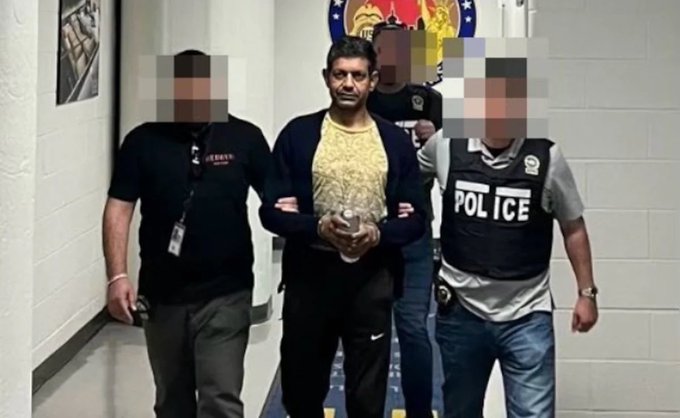
Few moments in recent diplomacy have laid bare the contradictions of America’s foreign policy quite like the guilty plea of Nikhil Gupta. The plea entered in a Manhattan federal courtroom last Friday marks a grim milestone in what US and Canadian officials have described as a brazen effort by elements within the Indian government to silence Sikh separatists abroad. Gupta, a 54-year-old Indian national, admitted to charges of murder-for-hire, conspiracy to commit murder-for-hire, and money laundering conspiracy, acknowledging his role in a failed scheme to assassinate Gurpatwant Singh Pannun, a US citizen whose crime, in the eyes of his would-be killers, was advocating for Sikh independence. This case isn’t just a courtroom drama; it’s a window into how Prime Minister Narendra Modi’s India is testing the limits of its partnerships with the West, pursuing dissidents across borders in ways that smack of old-school authoritarianism and, in many cases, state-sponsored terrorism.
Facing up to 40 years in prison, with sentencing set for May 29, Gupta’s conviction shows the deepening tensions between democratic allies and Modi’s India over allegations of transnational repression. Gupta’s confession also pulls together threads of a story that has simmered for years, linking isolated incidents into what US and Canadian officials see as a systematic campaign against the Sikh struggle for a separate homeland. The details laid out in court documents paint a picture of a plot that reads like a Cold War thriller, but with real stakes for international relations and the rule of law.
Prosecutors detailed how Gupta, with his self-professed background in international trafficking, was recruited in May 2023 by Vikash Yadav, an Indian government official employed by the Cabinet Secretariat, the bureaucratic home of the Research and Analysis Wing, the country’s external intelligence service. Yadav, who remains at large and faces similar charges in absentia, met with Gupta in Delhi to discuss the operation. Yadav tasked Gupta with arranging Pannun’s assassination in New York, providing intimate details like the target’s address and contact information to make it happen. From there, the operation unfolded with a mix of amateurism and audacity. Gupta reached out to what he believed was a criminal contact to arrange the hit in New York. Unbeknownst to him, that contact was a confidential informant working with US authorities, who then introduced Gupta to an undercover Drug Enforcement Administration officer posing as the hitman.
The communications, captured in electronic messages and recordings, reveal a chilling level of coordination. Yadav provided Gupta with Pannun’s personal details, including his New York address and phone numbers. Gupta, in turn, discussed logistics with the undercover agent, even suggesting a ruse in which the would-be assassin could pose as someone seeking legal advice to lure Pannun into vulnerability, as Pannun is a lawyer with the advocacy group Sikhs for Justice.An advance payment of $15,000 was delivered in cash to the undercover officer, part of a negotiated $100,000 fee for the job. Gupta himself confirmed in court that he had agreed with another individual to murder someone in the United States and facilitated that payment.
The timing of the plot adds a layer of diplomatic irony. It unfolded in June 2023, just as President Joe Biden was hosting Modi for a lavish state dinner at the White House, complete with pomp and strategic overtures aimed at pulling India closer to the West and away from its traditional ties to Russia and China. Biden, unaware of the brewing conspiracy on American soil, toasted the partnership. Little did the White House know that, according to the indictment, an Indian official had just signed off on eliminating an American on U.S. soil. Days after the event, Gupta was arrested in the Czech Republic at the request of US authorities; he was extradited to the United States in 2024.
US officials insist there’s no link to Modi personally, and both Biden and Donald Trump have steered clear of public comment, Trump even recently praised Modi as “one of my greatest friends” amid talks on trade and Russian oil. This reticence stands in stark contrast to Canada’s more confrontational stance. The Gupta case is inextricably linked to the June 18, 2023, murder of Hardeep Singh Nijjar, a prominent Sikh cleric and separatist leader, gunned down outside a temple in British Columbia. On the day of Nijjar’s killing, Yadav allegedly sent Gupta a video clip of the victim’s body slumped in a vehicle, which Gupta forwarded to his contacts. Prosecutors say Gupta later told the undercover agent that Nijjar was “also the target,” hinting at a broader list: “We have so many targets.” Backed by US intelligence, including surveillance of Indian diplomats, then-Prime Minister Justin Trudeau went public with accusations against India, triggering arrests of Indian nationals, reciprocal diplomat expulsions, and a sharp downturn in bilateral ties.
India rejected the claims as absurd, attributing them to domestic politics in Canada, where Sikhs wield electoral clout. At its core, this is about the Khalistan movement, a push for Sikh self-rule in Punjab that India portrays as a grave security threat. Sikhs represent roughly 2 percent of India’s 1.4 billion people, and while the separatist fervor boiled over into violence decades ago, the diaspora, communities in the U.S., Canada, and beyond, and figures like Pannun and Nijjar have sustained the cause through nonbinding referendums and vocal campaigns that irk Modi’s government. US Attorney Jay Clayton captured the American response succinctly in a statement. “Nikhil Gupta plotted to assassinate a US citizen in New York City. He thought that from outside this country he could kill someone in it without consequence, simply for exercising their American right to free speech. But he was wrong, and he will face justice.” James Barnacle, the FBI’s assistant director in charge, added that Gupta acted “at the direction and coordination of an Indian government employee.” Pannun, for his part, called the plea “judicial confirmation” that Modi’s government orchestrated a “structured murder-for-hire assassination plot on American soil,” framing it as an assault on US sovereignty and First Amendment rights.
The broader implications are profound. As the US courts India to counter China’s influence in Asia, incidents like this test the limits of realpolitik. How far will Western democracies go to overlook human rights concerns in pursuit of strategic gains? The cases highlight a pattern of what critics call Modi’s authoritarian drift: crackdowns on dissent at home, from Kashmiris to religious minorities, now extending extraterritorially. US intelligence shared with Canada helped solidify the Nijjar link, suggesting a coordinated Western awareness of India’s activities. Yet the response has been calibrated to avoid rupture, prioritizing geopolitics over principle. Gupta’s plea doesn’t close the book. Yadav, still at large with an indictment hanging over him, ensures the story isn’t over. His role, tied directly to Prime Minister Modi’s office, raises doubts about how “rogue” these elements truly are.
Copyright © 2021 Independent Pakistan | All rights reserved