By Staff Reporter
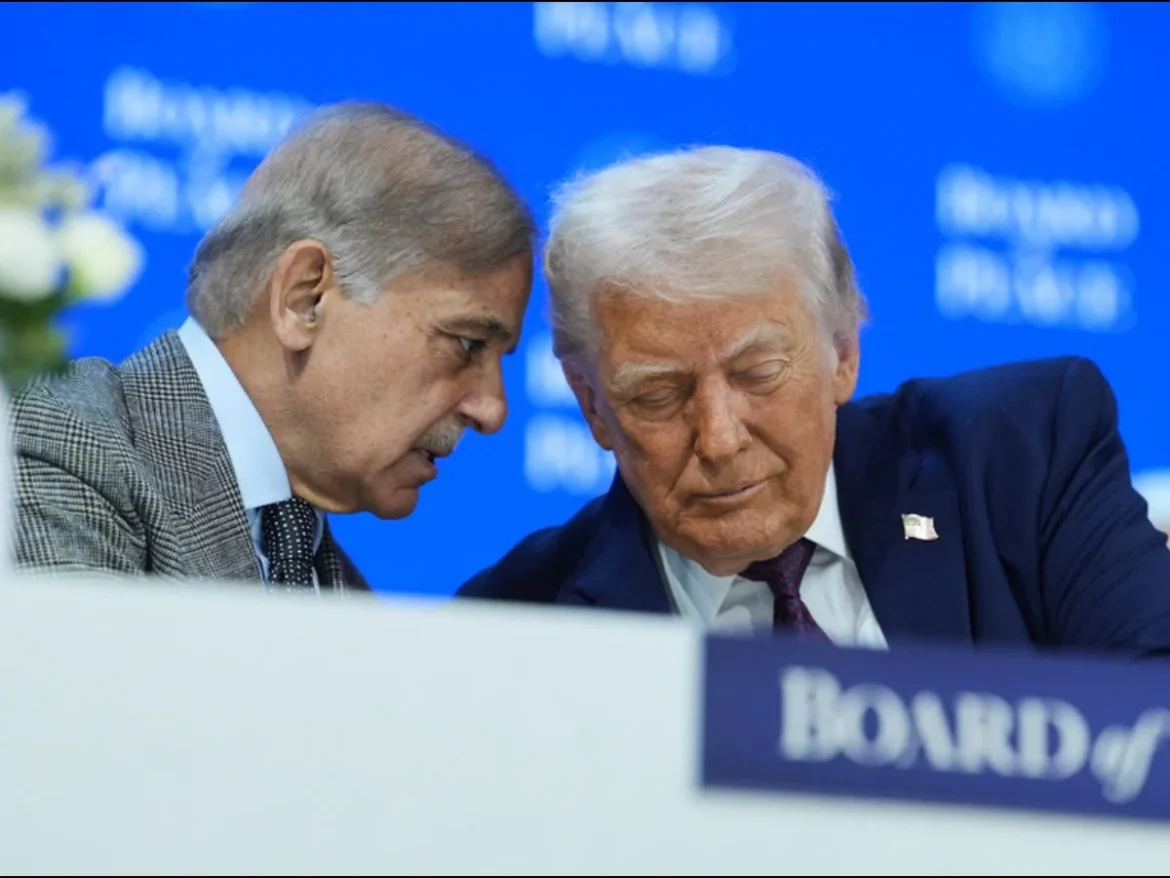
ISLAMABAD: Prime Minister Shehbaz Sharif arrives in Washington on Wednesday to attend a global summit convened by the Board of Peace (BoP), hosted by US President Donald Trump. The gathering aims to extend beyond the immediate crisis in Gaza, seeking to restore broader global peace and stability in a forum that bypasses traditional multilateral structures.
The summit’s agenda is set to centre on three core priorities: shoring up a ceasefire in Gaza, rallying financial commitments for the BoP – with the US pledging an initial $5bn – and shaping the framework for a proposed global body that Trump envisions as succeeding where the United Nations has faltered.
Discussions are also expected to address the establishment of an International Stabilisation Force (ISF), designed to secure reconstruction areas and bolster post-conflict governance in Gaza. For Pakistan, the prospect of deploying troops to the ISF has gained urgency following reported talks between the chief of army staff, Field Marshal Asim Munir, and US Secretary of State Marco Rubio on the margins of the Munich Security Conference.
Diplomatic sources indicate that several Muslim nations are willing to engage in a stabilisation effort but are wary of any combat duties that might pit their forces against Hamas. They are pressing for a defined path to Palestinian statehood and rejecting Israeli steps towards annexation in the West Bank.
The BoP’s structure – a streamlined, leader-led entity with the ISF as its operational wing and a dedicated funding mechanism – embodies Washington’s inclination for agile, coalition-driven approaches outside the UN’s more cumbersome processes. This has prompted concerns among diplomats and academics about its efficacy and legal standing.
Maleeha Lodhi, Pakistan’s former ambassador to the US, Britain and the UN, was forthright in her critique. “The jury is out on whether the Board of Peace can deliver peace. The absence of any Palestinian representation on the Board raises questions about its legitimacy,” she said. “If the principal party to the issue is excluded, how is this going to advance the peace process or carve out a post-conflict future for the people of Gaza.”
Lodhi cautioned that governance imposed from outside could echo historical imbalances of power. “Externally controlled governance arrangements make this a colonial-style project,” she observed, noting that “at least half of the countries invited to be members didn’t join the body as they had reservations about its role, legality and effectiveness as well as Trump’s pretension of turning this into a parallel body to the UN Security Council”.
She also queried Pakistan’s swift accession. “Pakistan should not have joined the Board in such haste and should have waited to see what exactly it will do, especially given the widespread view that it can end up becoming an instrument for continuing Israeli occupation.”
For Sharif, the trip transcends Pakistan’s potential involvement in this new stabilisation setup; it involves threading through a tangle of internal and foreign pressures, as outlined by Akbar Ahmed, Ibn Khaldun chair of Islamic studies at American University. “PM Shehbaz Sharif faces as sticky a wicket as can be imagined when he arrives in Washington for his meetings with President Trump,” Prof Ahmed said. “He is bringing with him two sets of dilemmas: an internal one and an external one.”
Domestically, the prime minister must navigate a precarious civil-military dynamic against a backdrop of escalating security threats. Ahmed highlighted the added sensitivity around the ongoing detention and health concerns of former prime minister Imran Khan.
The external landscape is more intricate still. “On the one hand, he must continue his newly formed amiable relationship with President Trump, which gives him access to American military and economic structures, and on the other, the consistent and immeasurable support that China has provided,” Ahmed said, underscoring border frictions with Afghanistan to the west and India to the east as compelling reasons for this equilibrium. “With both the western border with Afghanistan and the eastern border with India heating up, Shehbaz Sharif cannot ignore this balance between America and China. His performance will be watched carefully and his words weighed. He will need all his legendary skills of survival.”
In this context, Sharif’s Washington engagement serves as a litmus test for Pakistan’s shifting ties with the US, as much as for developments in Gaza. From the Trump administration’s perspective, the summit seeks to lock in troop pledges for the ISF, funding for rebuilding, and backing for a US-orchestrated stabilisation paradigm. For Muslim and Arab participants, involvement hinges on a lasting ceasefire, a viable route to Palestinian independence, and a strictly non-combat role for any international contingent. Sharif’s stance amid these divergent demands – while aligning with allied nations and preserving strategic poise between Washington and Beijing – will shape not only the summit’s short-term results but also Pakistan’s enduring position in the evolving post-conflict landscape for Gaza.
Copyright © 2021 Independent Pakistan | All rights reserved