By Staff Reporter
ISLAMABAD: Pakistan’s large-scale manufacturing sector expanded 4.82% in the first half of fiscal 2026, buoyed by surging automobile production and robust gains in petroleum refining, though a slowdown in textiles and declines in some key industries tempered the overall advance.
The growth marked a marginal uptick in industrial activity, according to data released on Tuesday by the Pakistan Bureau of Statistics. On a year-on-year basis, output rose just 0.44% in December 2025, decelerating from prior months, while month-on-month figures showed a sharper 9.26% increase, signalling some resilience heading into the new year.
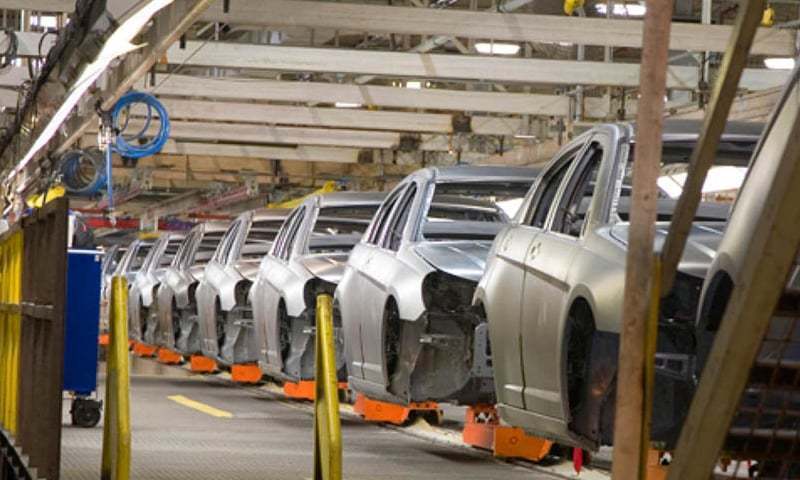
The automobile sector led the charge, with production jumping 67.21% in the July-December period, driven primarily by a 67.36% surge in jeeps and cars. Trucks output soared 107.50%, and buses climbed 42.54%, reflecting a revival in demand amid easing supply chain constraints and improved consumer sentiment. Light commercial vehicles, however, bucked the trend with a 7.17% drop.
Petroleum products also posted strong gains, up 13.39% over the six months, as most categories expanded. Petrol production increased 12.77%, while high-speed diesel advanced 22.04%, underscoring steady fuel demand from transportation and agriculture despite global energy market volatility.
In the food group, overall output edged up 0.58% year-on-year. Wheat and rice milling rose 3.62%, benefiting from better crop yields, while cooking oil climbed 5.24%. Vegetable ghee production slipped 1.63%, and blended tea fell 6.46%, highlighting pockets of weakness amid shifting consumer preferences.
Textiles, a cornerstone of Pakistan’s export economy, managed only a 1.48% increase, weighed down by softer global demand. Cotton yarn grew 2.48% and cotton cloth 0.22%, which together account for over 80% of the sector’s weight. The slowdown stemmed partly from declining export unit values, though garments bucked the trend with a 7.48% rise, pointing to a pickup in overseas orders.
Other sectors showed mixed results. Non-metallic minerals, including cement, advanced 10.52%, with cement specifically up 11.60%, supported by construction activity. Rubber products gained 10.14%, and electrical equipment rose 8.74%. Conversely, iron and steel output declined 4.47%, with billets and ingots—key inputs for building—down 11.76% and hot/cold-rolled sheets, strips, coils, and plates off 1.45%.
Pharmaceuticals dipped 5.35%, fertilizers fell 1.29%, and chemicals dropped overall, contributing a negative 0.16% to the growth index. Machinery and equipment, along with furniture, also weighed on the tally with declines. By weight in the Quantum Index of Manufacturing, the biggest positive contributors included automobiles at 1.57%, garments at 1.25%, petroleum products at 0.98%, and cement at 0.66%. Tobacco added 0.13%, food 0.09%, and paper and board 0.08%. On the downside, pharmaceuticals subtracted 0.33%, iron and steel 0.20%, chemicals 0.16%, machinery and equipment 0.07%, and furniture 0.08%.
Copyright © 2021 Independent Pakistan | All rights reserved