By Staff Reporter
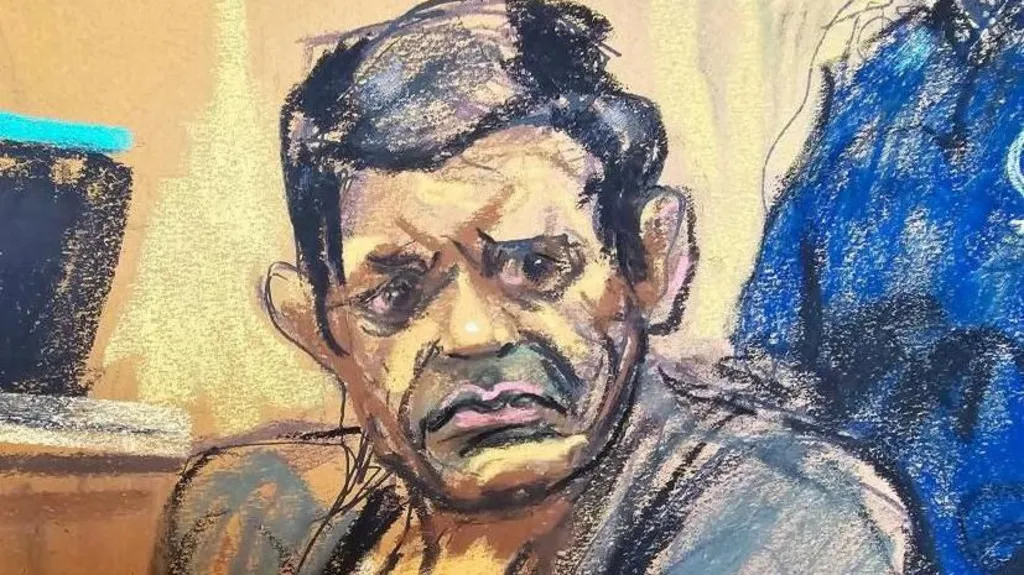
The conviction of Nikhil Gupta in a New York federal court last week has sent ripples far beyond Manhattan, reigniting a fierce debate over state-sponsored terrorism in South Asia. Gupta, an Indian national, pleaded guilty to charges in a plot to assassinate Gurpatwant Singh Pannun, a Sikh separatist and US citizen, admitting he coordinated with an Indian government official identified as Vikash Yadav, a former intelligence officer. This admission, carrying a potential 40-year sentence, has bolstered Pakistan’s longstanding accusations against India, with Islamabad pointing to what it calls “irrefutable evidence” of New Delhi’s hand in cross-border attacks. Pakistan’s Foreign Ministry spokesperson, Tahir Abdrabi, didn’t mince words in a recent briefing, asserting that his country has shared concrete proof of “Indian sponsorship of terrorism and terrorist groups operating in Pakistan from across our borders.”
This comes as no surprise to those tracking the region’s volatile dynamics, where mutual allegations of terror sponsorship have fueled decades of conflict. But the timing, aligned with Gupta’s plea, lends fresh urgency to Pakistan’s claims, prompting questions about whether the Modi government’s aggressive posture abroad masks a broader campaign of destabilization. For years, Pakistan has compiled dossiers detailing India’s alleged support for militant groups targeting its territory. In 2020, then foreign minister Shah Mehmood Qureshi and military spokesman Maj. Gen. Babar Iftikhar presented evidence at a joint news conference, accusing India of funding and training outfits like the Tehrik-i-Taliban Pakistan (TTP), Balochistan Liberation Army (BLA), and Jamaat ul Ahrar from bases in Afghanistan.
They cited bank receipts, communication intercepts, and photos linking Indian consulates to these operations, framing it as an effort to undermine Pakistan’s economic ties with China through the China-Pakistan Economic Corridor. Qureshi handed a similar dossier to the United Nations, urging international censure and warning of nuclear risks without intervention.
More recently, in 2025, Pakistan’s military unveiled what it described as forensic proof from a captured terrorist’s devices, including audio clips of coordination with Indian officers for improvised explosive device attacks. Officials like Interior Secretary Khurram Agha have tied these incidents to a pattern of “hybrid warfare,” with India using proxies to sow chaos.
The case of Kulbhushan Jadhav, an Indian spy captured in 2016 and convicted by Pakistan of espionage and terrorism, remains a cornerstone of these accusations. Islamabad views him as emblematic of New Delhi’s direct involvement. India, for its part, has vehemently denied these charges, countering with its own evidence of Pakistan’s support for groups like Jaish-e-Mohammed and Lashkar-e-Taiba, responsible for attacks on Indian soil. In 2025, India’s High Commissioner to the UK, Vikram Doraiswami, presented photos of Pakistani military officials attending funerals of sanctioned terrorists, arguing it proves state complicity.
New Delhi portrays Pakistan’s dossiers as propaganda, aimed at deflecting from its own failures in curbing militancy. Yet the Gupta case complicates this narrative. US prosecutors’ linkage of the plot to Indian officials echoes Pakistan’s warnings about extraterritorial operations. The 2023 killing of Hardeep Singh Nijjar in Canada, which Ottawa blamed on Indian agents, further amplifies these concerns, positioning India alongside nations like Russia and Iran in discussions of transnational repression. Pakistan’s former ambassador to the UN, Munir Akram, has used such incidents to argue that India’s actions constitute a “systematic campaign” of subversion.
Skeptics in Washington might dismiss Pakistan’s evidence as self-serving, given Islamabad’s history with homegrown extremism. But ignoring it risks overlooking a genuine escalation. The UN has received multiple submissions from Pakistan, including calls for action under international counter-terrorism conventions. With the Trump administration prioritizing Indo-Pacific alliances against China, there’s temptation to downplay these allegations. That would be a mistake. Strategic partnerships shouldn’t excuse violations of sovereignty or human rights. The international community, including the US, should demand transparency. Verify Pakistan’s dossiers through independent channels, press India for responses, and hold both accountable. In a nuclear-armed neighborhood, unchecked accusations of state terror aren’t just rhetoric, they’re recipes for disaster. The Gupta conviction is a wake-up call: Time to confront the evidence, from all sides, before the next plot succeeds.
Copyright © 2021 Independent Pakistan | All rights reserved