By Staff Reporter
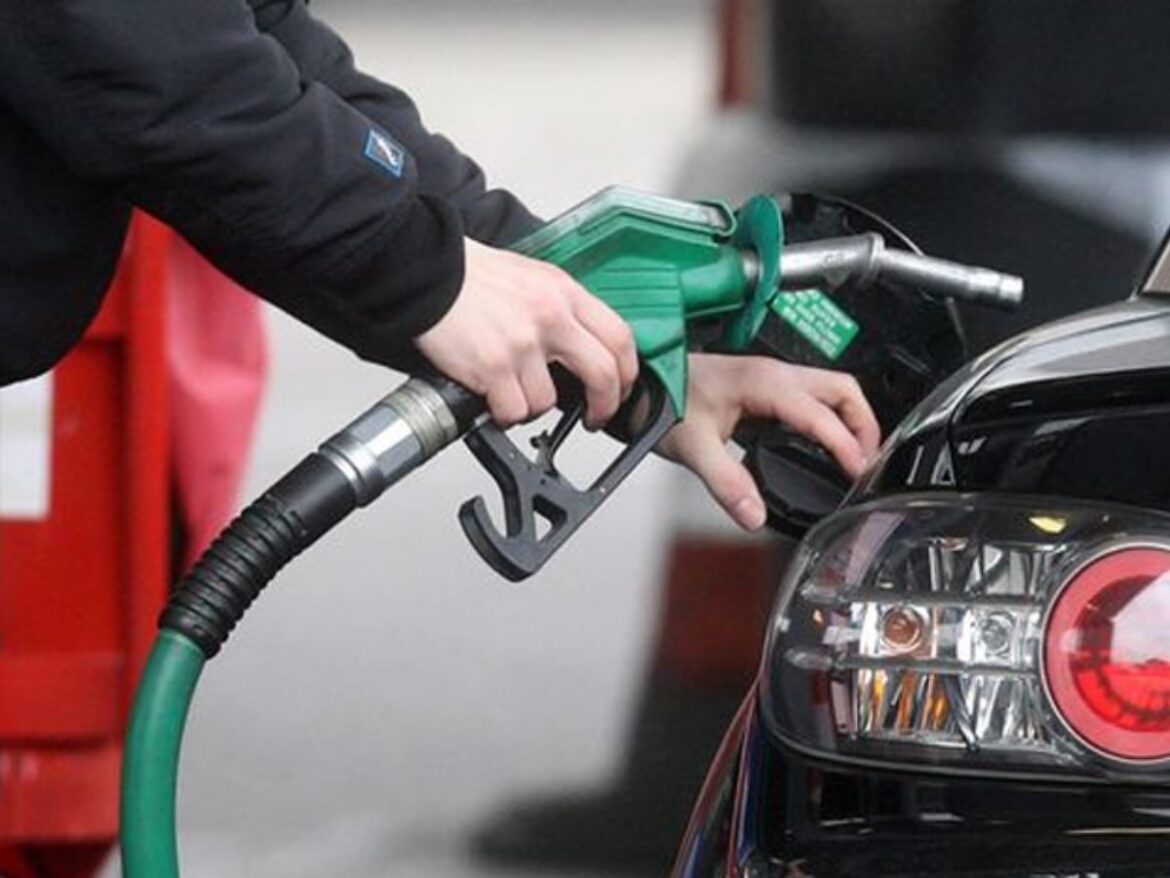
ISLAMABAD: The government raised petrol prices by Rs1.19 a liter and cut diesel by Rs1.91 on Tuesday, the latest adjustment under a daily pricing system that has left both fuels more than 40% above where they stood when the US-Iran war began on Feb. 28.
For Wednesday, Oct. 7, petrol will sell for Rs394.83 a liter and high-speed diesel for Rs395.85, the Petroleum Division said in a notification. The two fuels are now separated by barely Rs1. On Monday, the government cut diesel by Rs1.88 to Rs397.76 and raised petrol by Re0.88 to Rs393.64.
Taxes and duties remain heavy at Rs114 a liter on petrol and Rs100 on diesel, roughly 29% and 25% of the pump price.
Both fuels remain well below their highs. Diesel peaked at Rs520.35 on April 3, having started its climb from Rs281 after the war broke out. Petrol reached Rs458.41 the same day, up from Rs266 in the first week of March. Today’s prices are about Rs64 below the petrol peak and roughly Rs125 below the diesel one.
The recent path has been uneven. Petrol was cut by 14 paise to Rs387.40 for Oct. 1, then raised by Rs3.26 to Rs390.66 for Oct. 2, while diesel fell to Rs399.34. Petrol started September at Rs343.87 a liter, which puts it about Rs51 higher over the past five weeks.
Crude eased on Tuesday, a move that has yet to feed fully into pump prices. Brent futures were down $1.84, or 1.8%, at $98.48 a barrel in New York, while West Texas Intermediate fell $1.42, or 1.6%, to $88.01. Those levels put Brent on course for its lowest close since Sept. 8 and WTI for its lowest since Aug. 31.
Traders pointed to two supports for supply. G7 countries agreed on Friday to release 100 million barrels of diesel and crude from emergency reserves, and pledged to refrain from energy export restrictions after pressure from President Donald Trump. Shipments out of the Middle East have also recovered. The chief executive of trading house Vitol said about 12 million barrels a day of crude and 2 million a day of refined products have left the region on tankers in the past 7 to 10 days. Gulf oil flows excluding Iran rose to more than 81% of pre-war levels in September, led by Saudi Arabia, while Iranian exports fell to zero because of a US blockade. Saudi Energy Minister Prince Abdulaziz bin Salman said flows through the East-West Pipeline to the Red Sea hub of Yanbu had reached 5.8 million barrels by Tuesday morning.
The risks have not gone away. Attacks on tankers around the Strait of Hormuz have increased in recent days, and talks between Washington and Tehran are stalled. Saudi-backed Yemeni forces advanced on Monday to retake the coast near the Bab el-Mandeb Strait up to the city of Mocha, and the Houthis said they responded by attacking sites in Saudi Arabia, including an Aramco refinery in Rabigh; the claims couldn’t be verified. Low inventories and record Gulf-to-Asia freight rates are also keeping traders wary of calling lower prices durable. Brent traded near $100 earlier in Asian hours.
Pakistan has been repricing fuel more often as volatility rose. The government announced weekly revisions from early March, alongside conservation measures against possible supply disruptions, and announced targeted subsidized-fuel relief in April. On July 17, Petroleum Minister Ali Pervaiz Malik said prices would be fixed daily because of swings in international markets after renewed hostilities between Iran and the US. The cabinet and Prime Minister Shehbaz Sharif gave the Oil and Gas Regulatory Authority responsibility for setting prices each day based on global trends. The regulator works from a seven-day moving average of international reference prices and no longer needs federal approval for each revision.
The system has drawn pushback from the trade. The Pakistan Petroleum Dealers Association postponed a nationwide strike planned for Aug. 15 after the government raised dealers’ margins by Rs1.34 to Rs9.98 a liter.
The government has also brought back austerity steps in response to higher fuel costs and the continuing conflict in the Middle East. Markets must close by 9 p.m., and fuel allocations for official vehicles have been cut by 50% for three months. On Sept. 13, Sharif announced a relief scheme for users of motorcycles, auto-rickshaws and vehicles up to 800cc to ease the burden of higher global oil prices.
Petrol is used mainly in private transport, small vehicles, rickshaws and two-wheelers, so price changes fall hardest on the middle and lower-middle classes. Diesel, used mainly in heavy transport, power plants and large generators, affects the public more broadly. The two fuels are the biggest revenue earners, with combined monthly sales of about 700,000 to 800,000 tonnes, against roughly 10,000 tonnes of monthly demand for kerosene.
Copyright © 2021 Independent Pakistan | All rights reserved