By Staff Reporter
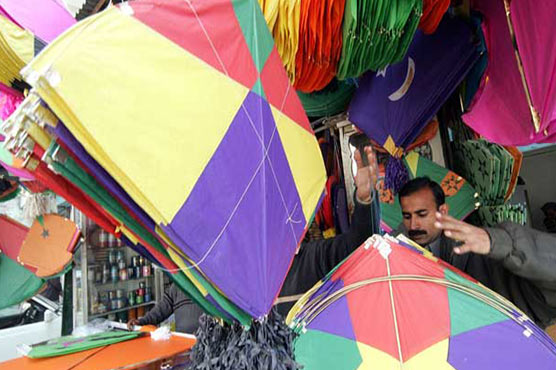
LAHORE: The Punjab government informed the Lahore High Court on Wednesday that 17 people were killed in Lahore during the Basant kite-flying festival, which was revived this year after nearly two decades of restrictions.
The traditional Punjabi spring festival, marked by rooftop kite flying, had been banned in Punjab since 2007 after repeated fatalities linked to metallic or chemically treated kite strings, electrocution from power lines, rooftop falls and injuries to motorcyclists. This year’s three-day event, held Feb. 6 to 8, went ahead under the Punjab Regulation of Kite Flying Ordinance 2025 and a series of regulatory measures intended to prevent such tragedies.
A supplementary report submitted by provincial authorities in compliance with a court order dated Feb. 17 broke down the deaths in Lahore district: three from electrocution, 12 from falls off rooftops and two from falls from trees. “It is respectfully submitted that during kite flying festival 2025, 17 casualties have been reported in District Lahore due to electrocution (3), falling down from rooftop (12) and trees (2),” the report stated.
The filing came during proceedings initiated by the Judicial Activism Panel against the Province of Punjab. The petitions challenge aspects of the new ordinance that lifted the long-standing prohibition. The case is being heard by Justice Owais Khalid, who directed authorities to provide full details of deaths and injuries from the festival. In addition to the 17 fatalities, more than 100 accidents were reported in connection with the celebrations. The court also asked for information on injuries specifically caused by kite strings, but that data was not included in the government’s submission, according to Advocate Azhar Siddique, the lawyer for the petitioner.
Under the revival rules, authorities banned metallic or chemical-coated “killer strings,” permitting only conventional thread-based versions. Every kite and string had to carry an individual QR code for traceability. More than 4,600 producers registered with officials to sell the equipment. Rooftops expected to host 30 or more people had to be registered in advance, and dozens were declared off-limits after inspections.
Lahore was divided into three designated kite-flying zones placed under 24-hour surveillance. Motorcyclists were required to attach safety rods, or protective antennas, to their bikes to guard against stray threads. Aerial firing and the consumption of alcohol on rooftops were also prohibited. Punjab Chief Minister Maryam Nawaz Sharif praised the arrangements after the festival, describing it as a “safe Basant” and stating that there was not a single death caused by injuries from kite strings. Further hearings in the matter are expected before the Lahore High Court.
Copyright © 2021 Independent Pakistan | All rights reserved