By Staff Reporter
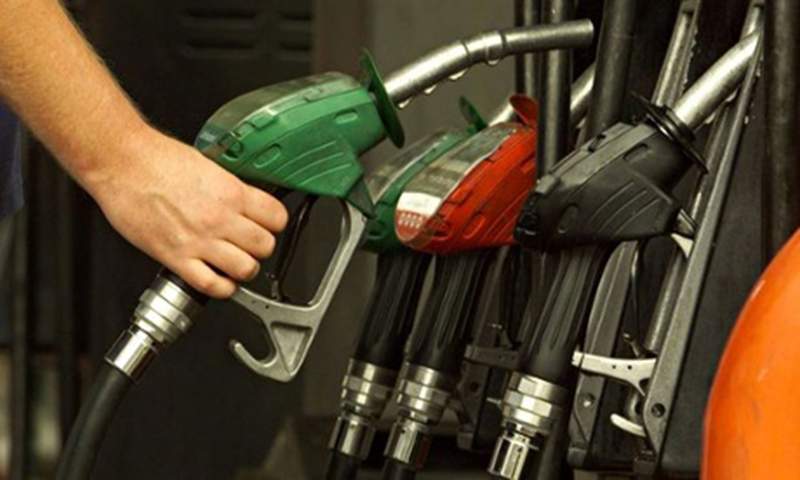
ISLAMBAD: Pakistan raised petrol and diesel prices for delivery Friday, the Petroleum Division said on Thursday, as crude oil climbed to a three-week high after President Donald Trump threatened sweeping economic measures against countries that continue trading with Iran.
Petrol will rise 27 paisa to 337.78 rupees a liter, according to a notification from the Ministry of Energy’s Petroleum Division. High-speed diesel, the fuel that moves Pakistan’s trucking fleet and much of its agricultural sector, will increase 1.64 rupees to 364.70 rupees a liter. The government continues to collect 114 rupees a liter in taxes on petrol and 100 rupees a liter on diesel.
The increases track a rally in global crude that has now stretched to a fifth consecutive session. Brent crude climbed as much as $2.20, or 2.4%, to $93.82 a barrel by late Thursday morning in New York, while West Texas Intermediate futures for September delivery rose $2.33 to $88.16, according to Reuters. Both benchmarks touched their highest levels since late July.
The catalyst was familiar. Trump wrote on social media that he was announcing what he called the most crushing economic operation ever taken against any country, threatening tremendous economic consequences for any nation working with Iran, after he said Tehran had rejected an offer to reach an agreement with Washington.
The remarks extended a rally that has repeatedly tracked the American president’s public statements on Iran since fighting resumed following a brief ceasefire earlier this year.
Oil prices climbed to more than three-week highs on Thursday, driven by concerns that the impasse in the Iran war will continue to disrupt supply from the key Middle Eastern producing region, Reuters reported. The UAE’s decision to suspend all financial and economic transactions with Iran until further notice has refocused attention on the fraught ties between the major Gulf Arab oil producer and Iran.
“Tensions in the Middle East remain high, leaving room for further supply disruptions,” Giovanni Staunovo, an analyst at UBS, said in emailed comments. “Lower oil exports from the Middle East are once again tightening the oil market.”
Pakistan has had little choice but to absorb the volatility. The conflict, which began with joint U.S. and Israeli strikes on Iran on February 28, sent fuel costs surging through the spring — diesel peaked at 520.35 rupees a liter and petrol at 458.41 rupees on April 3, both up sharply from roughly 280 rupees and 266 rupees, respectively, in early March. Prices have since eased but remain elevated as fighting has resumed intermittently despite a memorandum of understanding reached in June aimed at ending the war.
To keep pace, Islamabad abandoned the weekly price-revision schedule it had used since early March in favor of daily adjustments, a shift Petroleum Minister Ali Pervaiz Malik announced in July. The federal cabinet, under Prime Minister Shehbaz Sharif, assigned the Oil and Gas Regulatory Authority responsibility for setting ex-depot prices each day using a seven-day rolling average of international benchmarks, with the stated aim of curbing the supply manipulation that critics said the old weekly cycle had encouraged.
Petrol is the fuel of choice for private cars, motorcycles and rickshaws, making it a direct pressure point for Pakistan’s middle and lower-middle-income households. Diesel’s reach is broader still, powering the heavy trucks, buses, power plants and generators that keep goods moving and, in a country prone to electricity shortfalls, often keep the lights on. Together, the two account for roughly 700,000 to 800,000 tons of monthly sales, dwarfing the 10,000 tons of kerosene Pakistan consumes each month.
The exposure reflects a structural weakness laid bare by the war. Petroleum products rank among Pakistan’s largest import categories, with domestic refineries covering only part of national demand. Every increase in global oil prices widens the import bill, pressures foreign exchange reserves and feeds inflation — a dynamic Pakistan has tried to manage in the past through subsidies and administrative price controls that ultimately widened fiscal deficits and added to public borrowing when governments delayed passing costs to consumers.
The war’s fallout has already reached Pakistan’s shores once. Shipping disruptions tied to Iranian attacks on tankers transiting the Strait of Hormuz — one of two chokepoints, along with the Red Sea, through which the bulk of Middle Eastern crude exports pass — have periodically driven up both crude prices and freight costs, developments that translate quickly into higher pump prices in a country that imports the majority of its petroleum needs. Iranian oil exports through the strait have collapsed as the war has ground on, with Kpler data showing volumes falling from more than 1.5 million barrels a day in late June to under 47,000 barrels a day by mid-August as Washington reimposed its blockade on Iranian ports.
Copyright © 2021 Independent Pakistan | All rights reserved