By Staff Reporter
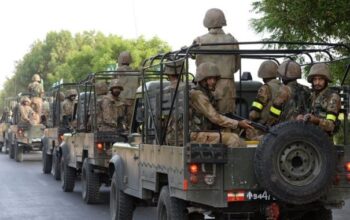
ISLAMABAD: Pakistani forces carried out airstrikes and ground operations targeting Taliban military installations across multiple provinces inside Afghanistan early on Friday, destroying command centers, ammunition depots and other key infrastructure as cross-border clashes intensified sharply along the shared border, officials said.
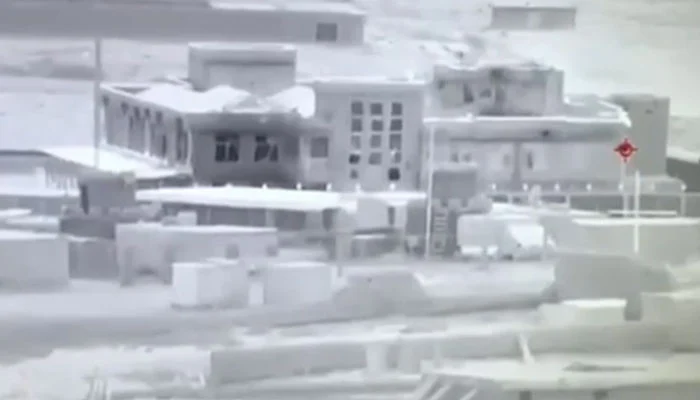
The action followed unprovoked attacks by Afghan Taliban forces on Pakistani positions in Khyber Pakhtunkhwa province late on Thursday. Security sources said the Pakistan Air Force struck a major ammunition depot in Nangarhar province and hit targets in Kabul, Kandahar and Paktia, in Operation Ghazab-lil-Haqq.
A government official said 133 Afghan Taliban personnel were killed in the retaliatory operation, with more than 200 others wounded. Pakistani security sources reported that 12 Afghan border posts were completely destroyed and five others captured, with Pakistani flags raised over them. More than 30 tanks, artillery guns and armoured personnel carriers were also destroyed, they said.
Prime Minister Shehbaz Sharif’s spokesperson for foreign media, Mosharraf Zaidi, provided successive updates on social media. In a latest update at 3:45 am, Zaidi raised the toll to 133 killed and more than 200 wounded, with further casualties expected from strikes on military targets in Kabul, Paktia and Kandahar. “Twenty-seven Taliban posts have been destroyed, and nine more have been captured by our security forces,” he said. The infrastructure destroyed included two corps headquarters, three brigade headquarters, two ammunition depots, one logistics base, three battalion headquarters and two sector headquarters, along with more than 80 tanks, artillery guns and armoured personnel carriers.
Zaidi added that reports suggesting territorial losses or casualties on the Pakistani side were unfounded and driven by Indian proxies operating from Afghan soil.
“Alhamdolillah, not only have no Pakistani posts been captured or damaged, but the Pakistani side has inflicted heavy losses across the Pakistan-Afghanistan border in response to unprovoked Taliban aggression. As of right now, there have been no Pakistani soldiers captured…. Any claims of damage to Pakistan thus far are little more than the fantasy of India’s proxies in Afghanistan. InshaAllah, rest assured, all aggression targeting Pakistan will get the same response: immediate and effective.”
Security sources gave further details of the targets. In Kandahar province, an ammunition depot and a logistics base were destroyed. A corps headquarters of the Afghan Taliban was hit in Paktia. In Kabul, two brigade headquarters were destroyed. Pakistani jets conducted aerial patrols over Kandahar after the strikes. Along the border, Pakistani forces destroyed the Dawood post and another check post in Angoor Adda, captured a check post in Paktika province, and struck several Taliban positions at the Kharlachi terminal in the Kurram district. Posts near the Mohmand sector were abandoned by Taliban militants, who retreated under pressure, officials said. Troops also destroyed multiple posts at the Torkham border and captured one in the Shawal sector in South Waziristan.
State broadcaster PTV reported Pakistan’s air strikes targeted Afghan Taliban’s important military installations in Kabul, Kandahar and Paktia. “In those strikes, two brigade headquarters have been destroyed in Kabul, while one corps headquarters and one brigade headquarters have been destroyed in Kandahar… An ammunition depot and logistics base have also been destroyed in Kandahar, and a corps headquarters has been destroyed in Paktia.”
Information Minister Attaullah Tarar said two Pakistani security personnel were martyred and three were injured. Tarar, writing on X, said the “Afghan Taliban’s unprovoked actions along the Pak-Afghan border will continue to be responded to in an effective manner”. He added that Pakistan’s forces were “crushing the attackers’ aims”.
Officials said the Afghan Taliban’s attempts to attack Pakistani check posts with quadcopters failed, with all the drones shot down. Pakistani forces responded with light and heavy weapons and drones. Afghanistan also claimed to have captured more than a dozen Pakistani army posts. Pakistani officials dismissed those claims. Tarar said the Afghan Taliban regime had initiated the hostilities and then tried to deflect attention with “false and baseless propaganda” on social media. “These rumours have no connection with reality,” he said. Such narratives were being spread to “cover up embarrassment” after setbacks on the ground.
The minister described the Pakistani response as a successful operation against “Fitna al-Khawarij” militants and said the cross-border firing from the Afghan side had exposed the Taliban regime internationally. “We will keep neutralising the malicious intentions of every enemy who casts an evil eye on our country.”
Cross-border firing began around 6 p.m. local time (1300 GMT) on Thursday and continued into the night, prompting residents to take refuge in safer locations. The Afghan Taliban had launched similar but unsuccessful attacks on the same areas – Wragha Sar, Maro Sar and Shahkot Sar – on Tuesday. Border security forces at the Torkham crossing were placed on high alert. The crossing has remained closed since Oct. 12 last year amid ongoing tensions between the two countries.
The Afghan side described its actions as retaliatory. Taliban spokesperson Zabihullah Mujahid said in a post on X that Afghanistan had launched large-scale offensive operations against Pakistani military bases along the Durand Line in response to Pakistani military actions. Afghanistan’s Defense Ministry said the attacks occurred along the border in six provinces.
The Associated Press reported at least three explosions in Kabul, with no immediate details on locations or casualties. Mujahid confirmed Pakistani airstrikes in Kandahar and Paktia as well. Two senior Pakistani security officials told the AP that the military had targeted Afghan military facilities in those three provinces, destroying two brigade bases.
Defence Minister Khawaja Asif posted on X that Pakistan’s armed forces were “currently delivering a decisive response to the Taliban and Afghan aggression backed by India.” “Defeat of the enemy is inevitable, Insha’Allah.”
Asif said the Taliban had turned Afghanistan into a proxy of India, providing a base for global terrorists after NATO’s withdrawal from the country. “Pakistan had long hoped that peace would follow NATO’s withdrawal from Afghanistan, expecting the Taliban to focus on the welfare of Afghan citizens and regional stability. Instead, the Taliban government turned Afghanistan into a “proxy of India,” providing a base for global terrorists, denying fundamental rights to the people, and stripping women of the rights Islam guarantees them, he added.
The minister said Pakistan had made sustained diplomatic and direct efforts to stabilise the region and had been a consistent supporter of Afghan welfare, hosting over five million Afghan refugees for decades. “Millions of Afghan citizens continue to earn their livelihoods in Pakistan today.”
Asif said Pakistan’s patience had reached its limit. “Our forces are now delivering a decisive response,” he added. “This is open confrontation — the army is not coming from across the sea. We are your neighbours and know your limits.”
Prime Minister Sharif, in a statement, said there would be no compromise on national defence and that every act of aggression would be met with a firm response. He praised the armed forces under Field Marshal Syed Asim Munir. President Asif Ali Zardari echoed the sentiment, warning that anyone mistaking Pakistan’s pursuit of peace for weakness would face a strong response.
UN Secretary-General António Guterres urged both sides to protect civilians under international law and to resolve differences through diplomacy, UN spokesperson Stephane Dujarric said.
The latest clashes occurred less than a week after Pakistani airstrikes targeted seven terrorist camps and hideouts in Afghanistan’s Nangarhar, Khost and Paktika provinces, killing more than 100 militants. The information ministry said those strikes were carried out in response to a series of terrorist attacks, Islamabad blamed on militants operating from Afghan soil, inside Pakistan, including a suicide bombing at an Imambargah in Islamabad and attacks in Bannu and Bajaur during the holy month of Ramadan.
Tension between the two countries has remained high for months. Deadly border clashes in October killed dozens of soldiers, civilians and suspected militants. A Qatari-mediated ceasefire has largely held but has been repeatedly strained by cross-border firing. Several rounds of peace talks in November failed to produce a formal agreement.
Pakistan was a major backer of the Taliban after its ouster in 2001 following a US-led invasion. Relations deteriorated after Islamabad accused the group of providing safe haven to the Pakistan Taliban, which has launched an armed insurgency against government forces. The group has carried out at least 600 attacks on Pakistani forces over the past year, according to the Armed Conflict Location & Event Data Project. Pakistan and Afghanistan share a 1,600-mile (2,574 km) mountainous border.
Pakistani officials, including Minister of State Bilal Azhar Kayani, noted that intelligence on militant activity had been shared with the Taliban, but no action was taken. Kayani referred to the Doha Agreement, under which the Afghan side had pledged not to allow its territory to be used against other countries.
Copyright © 2021 Independent Pakistan | All rights reserved