By Staff Reporter
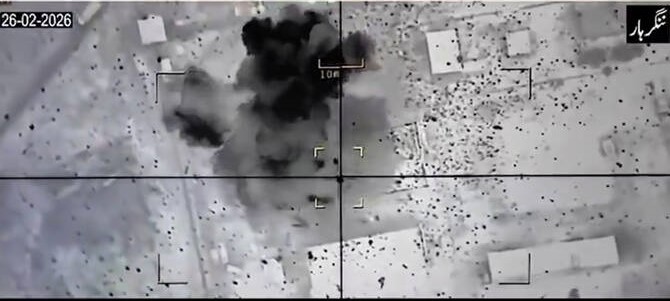
The explosions that shattered Kabul before dawn on Friday were not the opening shots of an unprovoked war. They were the sound of a neighbour’s patience finally snapping – and the first ominous notes of a conflict that could spiral far beyond anyone’s control. Residents described up to eight powerful detonations starting at 1.50am local time, homes shuddering, fighter jets roaring low overhead, then nearly an hour of gunfire echoing through the capital’s central districts. Similar strikes hit Kandahar – the spiritual heartland of the Taliban movement, where supreme leader Hibatullah Akhundzada is believed to keep his austere court – and the southeastern province of Paktia.
Defence Minister Khawaja Asif was brutally explicit. “Our patience has reached its limit. Now it is open war between us and you.” The justification for Islamabad’s fury is not in doubt. The data are devastating. In 2025 the Tehreek-e-Taliban Pakistan (TTP) claimed responsibility for 3,573 attacks and the killing of 3,481 Pakistani security personnel. The Armed Conflict Location & Event Data Project (ACLED) recorded more than 1,000 violent incidents involving the group across Pakistan, including more than 200 deliberate attacks on civilians. The suicide bombing at a Shia mosque in Islamabad on 6 February that killed at least 31 people was only the latest chapter in a campaign of slaughter that has claimed thousands of Pakistani lives since the Taliban returned to power in Kabul in 2021. No government on earth could watch its soldiers and citizens butchered on this scale and do nothing.
Pakistan’s accusation is equally clear: the TTP, ideological blood brothers of the Afghan Taliban, have been allowed to use Afghan territory as a launch pad and sanctuary. Islamabad has presented conclusive evidence of cross-border direction and support. The Taliban deny everything, while offering little more than ritual condemnation. So when Afghan forces launched what they called retaliatory attacks on Pakistani border posts on Thursday night, Islamabad responded with overwhelming force.
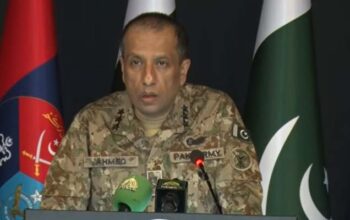
Pakistani officials claimed 133 Taliban militants killed, more than 200 wounded, dozens of posts and ammunition depots destroyed. The Taliban, as expected, produced their own numbers. Independent verification is impossible in the fog of such fighting. What is not in dispute is the scale of the threat that provoked them. Pakistan’s military says all 78 militants involved in the ten deadliest terror attacks of 2025 were Afghan nationals. The ISPR reported a total of 5,397 terror incidents across the country last year, with the great majority taking place in Khyber Pakhtunkhwa (3,811) and Balochistan (1,557). Security forces stopped several large attempts by militants to cross from Afghanistan, including one in April when 71 were killed in North Waziristan. They also killed 16 high-value targets, among them Amjad Ali, who was second-in-command in the TTP’s shura council. Tensions rose sharply in October during Operation Khyber Storm, when Pakistan carried out precision strikes on TTP hideouts inside Afghanistan, including locations in Kabul and Paktika, which led to direct fighting between Pakistani forces and Afghan Taliban militants. The military spoke of a political-terror-crime nexus, in which Afghan militants receive backing from certain domestic political figures and use non-custom-paid vehicles in vehicle-borne bomb attacks.
Pakistan’s case is now brutally documented. Half a million pieces of sophisticated American military equipment left behind in 2021 – M4 carbines, night-vision devices, armoured vehicles, even components that have enabled drone capabilities – have been lost, sold or smuggled. UN monitors and the BBC have reported the Taliban admitting that at least half the arsenal is unaccounted for. The Washington Post traced 63 US-origin weapons seized from militants inside Pakistan. Pakistani officials state plainly that the Taliban have been diverting these arms to the TTP, giving the group a lethality it never possessed before 2021. Quadcopter drones and advanced rifles that once belonged to Afghan government forces are now turned against Pakistani border posts and civilians. Worse, the sanctuaries are not remote mountain hideouts. They are in the very cities Pakistan struck. UN reports and independent monitoring confirm that TTP maintains a significant presence across provinces, including Kandahar, with training camps and logistical support tolerated, if not facilitated, by the Afghan Taliban. Al-Qaeda has helped establish joint facilities. Senior TTP commanders operate with relative impunity from Afghan urban centres; operational decisions for cross-border attacks on Pakistan are taken where the Taliban’s own leadership resides. When a neighbour’s capital and spiritual heartland become the planning rooms for the slaughter of your people, the distinction between “civilian” and “military” target begins to blur – not in morality, but in the brutal logic of self-preservation. This is not unique to Pakistan. In recent months, the world has seen the United States and Israel strike deep into Iranian territory, including nuclear sites and military infrastructure, when they even wrongly judged their security to be existentially threatened. Sovereign states do not politely ask permission when the enemy’s command nodes sit inside another country’s cities. They act. Pakistan, facing thousands of its own dead, has now done the same.
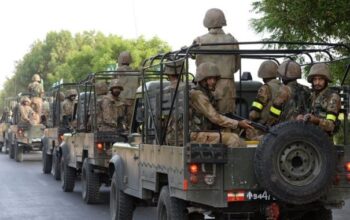
But, none of these excuses the human cost. A mortar round reportedly struck a camp for returning Afghan refugees near Torkham, wounding seven. Ordinary Afghans woke to the terror of jets and detonations in their capital. Pakistan knows better than most the suffering of Afghan civilians; it has hosted millions of them for decades. But the alternative – continued passivity while the TTP uses Afghan soil as a launch pad – was no longer tolerable. The porous 2,600km Durand Line, never accepted by Kabul, has become a conveyor belt for fighters, funds and now advanced weaponry. Pearl Pandya of ACLED has documented how the Afghan Taliban appear unwilling to dismantle these networks, caught between old ideological ties and fear of driving the TTP into the arms of Islamic State Khorasan. The military disparity is obvious. Pakistan fields a professional army of more than 600,000, a modern air force and a nuclear deterrent. The Taliban have no effective air power. And Pakistan’s powerful military establishment is always a guarantee of victory in Afghanistan—not the Afghan forces themselves, as recent history shows. But Islamabad is under no illusion that Friday’s strikes will end the problem. They are a message: the era of sanctuary is over.
Inside Pakistan, the government is treating terrorism as the national emergency it is – convening federal and provincial leaders, reviving the spirit of the National Action Plan, dismantling domestic IS-K cells. That internal resolve is essential. But it cannot succeed while the command-and-control nodes remain untouched across the border. The only sustainable exit is the one the Taliban have so far refused: verifiable, sustained action against TTP leadership, training camps and supply lines on their soil. Until that happens, Pakistan will continue to defend its people by the means available. Friday’s strikes were not the beginning of an endless war; they were the necessary assertion that one neighbour cannot indefinitely host the killers of another. The Afghan Taliban now face a simple choice: dismantle the TTP threat they have sheltered, or accept that Pakistan will continue to strike wherever that threat is nurtured.
Copyright © 2021 Independent Pakistan | All rights reserved