By Staff Reporter
ISLAMABAD: Pakistan’s military operation against Afghan Taliban positions is set to continue until its objectives are fully met, officials said on Sunday, as the two countries became embroiled in the most serious fighting along their shared border in years.
The cross-border campaign, codenamed Operation Ghazab Lil-Haq, was launched late on Thursday night after Taliban forces attacked Pakistani military installations. By Sunday afternoon, Pakistan said it had inflicted heavy losses on its adversary. Attaullah Tarar, the information minister, said at least 415 Afghan Taliban militants had been killed and more than 580 wounded. Pakistani forces had destroyed 182 posts, seized 31 others and put 185 tanks and armoured personnel carriers out of action. Airstrikes were carried out on 46 locations inside Afghanistan.
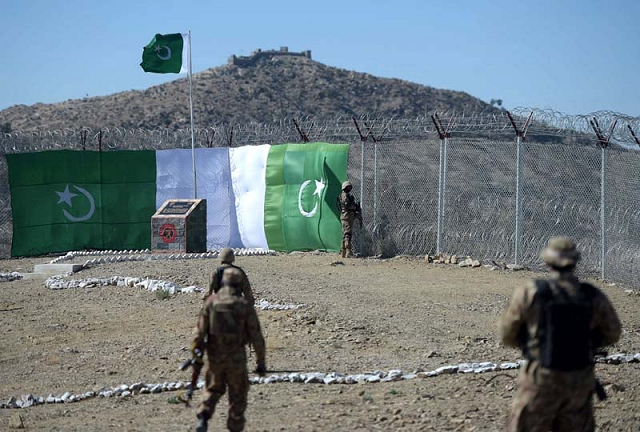
State media reported that the Pakistani army had captured an Afghan Taliban border post in the North Waziristan district, sharing video of soldiers apparently crossing into Afghanistan to secure the position.
Security officials said that Pakistani ground forces were still in control on Sunday of a key Afghan post and a 32-square-kilometer (12-square-mile) area in the southern Zhob sector near Kandahar province, after having sezied it during fighting Friday. The captured post and surrounding area remain under Pakistani control, they added. The officials spoke on condition of anonymity, because they weren’t authorized to speak publicly.
The clashes come amid deep Pakistani frustration with the Taliban government in Kabul. Islamabad accuses its neighbour of sheltering militants from the Tehreek-e-Taliban Pakistan (TTP), the terrorist group that has carried out numerous deadly attacks inside Pakistan. Afghan officials deny providing any such support. That frustration boiled over last week after a suicide bombing at the Imambargah Khadijah al-Kubra Shia mosque in Islamabad during Friday prayers, killing 36 people and injuring around 169 others – the deadliest attack in the capital for more than a decade and the worst nationwide since the Peshawar mosque bombing in January 2023.
Pakistani officials said the network behind the attack had been trained in Afghanistan; an Afghan national identified as the Daesh-linked mastermind was captured, along with four local facilitators arrested in raids in Nowshera and Peshawar. The bombing followed an earlier round of Pakistani airstrikes inside Afghanistan that targeted TTP and Islamic State Khorasan Province camps and killed more than 80 militants. Friday’s actions represented a significant intensification, with strikes hitting Taliban installations as far inside Afghanistan as Kabul and Kandahar. After Thursday’s Afghan attack, Pakistani Defense Minister Khawaja Mohammad Asif declared that “our patience has now run out. Now it is open war between us.”
In the Afghan capital, explosions were heard on Sunday. The Taliban government’s spokesperson, Zabihullah Mujahid, said they were the result of air defence systems engaging Pakistani aircraft overhead. “Kabul residents should not be concerned,” he wrote on X. Pakistan has repeatedly raised the issue of terrorist sanctuaries on Afghan soil at international forums, including the UN Security Council. Officials said the armed forces remain fully committed to defending national security and responding decisively to any unprovoked aggression.
The escalation has triggered urgent diplomatic intervention from regional powers. China expressed deep concern and called for both sides to remain calm, implement a ceasefire as soon as possible and avoid further bloodshed. Russia urged an immediate halt to cross-border attacks and offered mediation if requested. Iran’s foreign minister, Abbas Araghchi, said Tehran stood ready to facilitate dialogue and provide any assistance necessary to improve understanding between the neighbours. The European Union and the United Nations have also appealed for restraint and a return to talks.
Border clashes in October killed dozens of soldiers, civilians and suspected militants until a Qatari-mediated ceasefire ended the intense fighting. But several rounds of peace talks in Turkey in November failed to produce a lasting agreement, and the two sides have occasionally traded fire since then.
The 2,600km (1,615-mile) frontier, much of it running through remote and mountainous terrain, has long been a source of friction and one of the most porous borders in the world. With Pakistani officials signalling that the operation will not end until its goals are achieved, there are growing fears that the latest confrontation could spiral into a more prolonged and dangerous conflict.
Copyright © 2021 Independent Pakistan | All rights reserved