By Staff Reporter
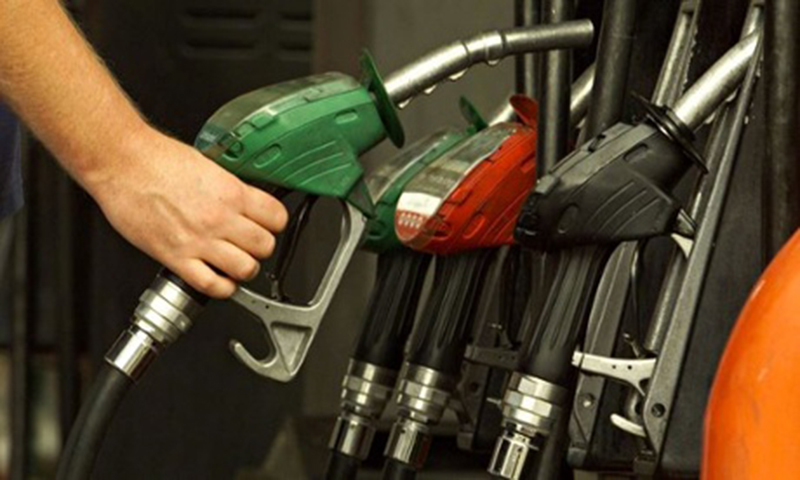
ISLAMABAD: Pakistan raised petrol prices by 1.54 rupees a liter and diesel by 2.16 rupees, passing on a rise in crude costs after Houthi attacks on Saudi Arabia kept oil near six-month highs.
Petrol will sell for 379.25 rupees a liter on Tuesday and diesel for 395.82 rupees, according to a Petroleum Division notification covering Oct. 27. Taxes and duties make up 114 rupees of each liter of gasoline and 100 rupees of diesel.
Brent futures rose 49 cents, or 0.4%, to $117.21 a barrel in New York after falling by more than $2 earlier in the session. West Texas Intermediate fell 35 cents to $102.92. Brent gained more than $3 on Friday and finished the week up 6%.
The Houthis, Yemen’s Iran-aligned movement, said they struck pumping stations on Saudi Arabia’s East-West crude pipeline and Riyadh airport over the weekend. Saudi Arabia said Sunday it had intercepted more missiles and drones, and a Saudi-led coalition said Monday it destroyed three drones aimed at Riyadh and the kingdom’s south. The pipeline, which lets Saudi crude bypass the Strait of Hormuz, had already been knocked offline by an earlier attack, according to reports in mid-September.
Pakistani pump prices have retreated from their highs but remain well above pre-war levels. Diesel peaked at 520.35 rupees on April 3, after starting its climb from 281 rupees when the US-Iran war broke out on Feb. 28. Gasoline topped out at 458.41 rupees the same day, up from about 266 rupees in the first week of March. Both are still roughly 40% above where they began. Gasoline came close to 399 rupees on Oct. 8 before easing.
Petroleum Minister Ali Pervaiz Malik announced on July 17 that prices would be set daily after fighting between Iran and the US resumed and international prices swung. The government had issued weekly revisions since early March, alongside fuel-conservation measures and, in April, targeted subsidized fuel. The cabinet and Prime Minister Shehbaz Sharif gave the Oil and Gas Regulatory Authority responsibility for the daily calls. Ogra has started publishing the prices on its website. Malik said they are based on a seven-day average of international prices, in line with international practice.
The government has reintroduced austerity measures in response to higher fuel costs. Markets must close by 9 p.m., and fuel allocations for official vehicles have been cut by 50% for three months. On Sept. 13, Sharif announced a relief scheme for owners of motorcycles, rickshaws and vehicles of up to 800cc. Motorcycle and rickshaw owners get a 100-rupee-a-liter discount on up to 20 liters a month, and owners of vehicles up to 800cc can buy up to 30 liters at the discounted rate.
Gasoline is used mainly in private transport, small vehicles, rickshaws and two-wheelers, so price changes fall hardest on the middle and lower-middle classes. Diesel powers heavy transport, power plants and large generators, which spreads its effect across the economy. The two fuels are the main revenue earners, with monthly sales of about 700,000 to 800,000 tons, compared with about 10,000 tons of demand for kerosene.
Shipping disruptions in the Strait of Hormuz and the Bab el-Mandeb Strait are still forcing companies to adjust. October has been the worst month for attacks on commercial vessels in the Hormuz area and nearby waters, according to data from the Washington Institute for Near East Policy
Copyright © 2021 Independent Pakistan | All rights reserved