By Staff Reporter
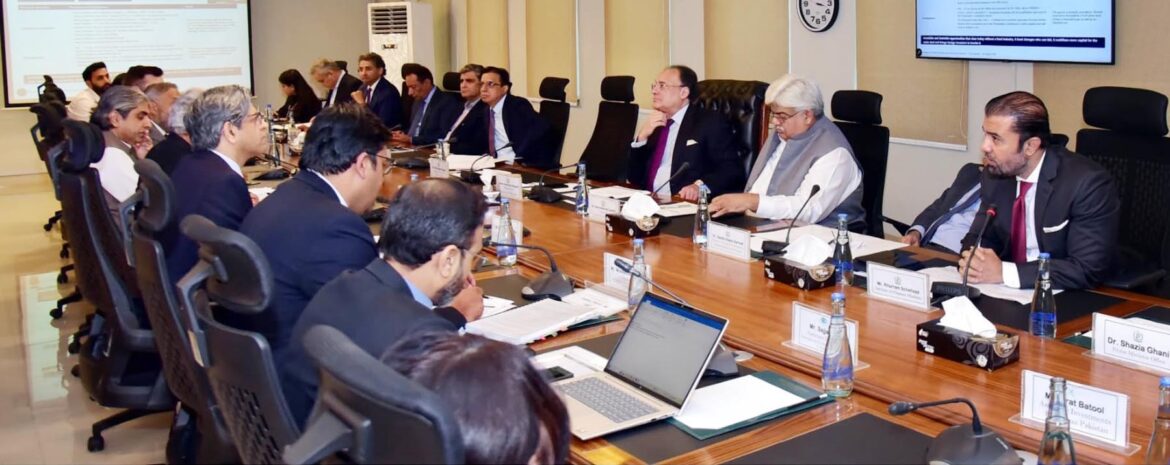
ISLAMABAD: Pakistan will prioritise tapping domestic savings over courting foreign investors in building a private equity market, Finance Minister Muhammad Aurangzeb said after chairing a committee meeting on a national framework.
Mobilising local capital is the foundation for a credible market that can later draw foreign institutions and international co-investment, Aurangzeb told the committee on Monday in Islamabad, according to a government statement.
The State Bank of Pakistan briefed members on recent regulatory changes, including raising the cap on a bank’s investment in a single private equity fund to 20% from 10%. On taxation, the committee reviewed proposals to treat funds as pass-through vehicles, with tax applied at the investor level.
The tax idea builds on the previous meeting, held on Sept. 3, when the panel considered tax neutrality for private equity structures to avoid an extra layer of taxation at the fund level.
Aurangzeb told members to study international tax models and adapt them to Pakistan. Any arrangement must support legitimate investment while closing off tax arbitrage, unintended distortions and regulatory inconsistencies, he said. The committee also called for coordination between regulators and tax authorities so that different investment vehicles are treated consistently.
The meeting focused on the pool of institutional money in Pakistan: banks, insurers, mutual funds, pension schemes and development finance institutions. Local corporations and family offices could also take part. Members discussed structures and mechanisms for channeling those funds into private equity vehicles and commercially viable businesses and projects.
Members see a substantial pipeline of investable deals over the next five to 10 years, the statement said, drawn from acquisitions, business consolidation, new projects and exits by existing investors. It didn’t put a figure on the domestic liquidity available or give a timeline for finishing the framework.
Aurangzeb directed stakeholders to resolve outstanding regulatory and tax questions, and to press ahead on mobilising domestic capital and identifying viable investments, to move the framework toward implementation. He said he wants the framework to be transparent, commercially viable and friendly to investors, and to deepen domestic capital markets and improve access to long-term risk capital.
Prime Minister Shehbaz Sharif formed the committee. At its first meeting on Aug. 19, members agreed to set up four workstreams covering taxation, the regulatory framework, business strategy and the identification of bankable business plans. Their recommendations will be combined into one framework and submitted to the prime minister. Aurangzeb said then that the framework isn’t intended to provide direct government funding.
At the second meeting, Aurangzeb said he wanted Pakistan’s $3 billion Eurobond success to translate into real investment, and the committee reviewed work by the SBP on institutional participation, investment, repatriation and exit, along with the Securities and Exchange Commission’s work on a legal framework for private equity and venture capital.
Aurangzeb has also made the case outside the committee room. At a J.P. Morgan event, he said public balance sheets alone couldn’t finance Pakistan’s next phase of growth and that private capital would have to play a larger role.
Monday’s meeting was attended by the prime minister’s adviser on privatization, the finance secretary, the chairman of the Federal Board of Revenue and other members from public- and private-sector institutions.
Copyright © 2021 Independent Pakistan | All rights reserved