By Staff Reporter
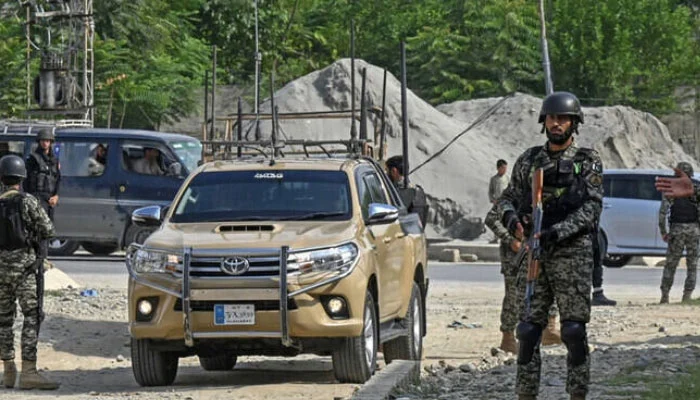
ISLAMABAD: Security forces killed 13 militants in a series of intelligence-driven raids across Khyber Pakhtunkhwa province over two days, the military said on Sunday, part of an escalating counterterrorism campaign as violence in the region surges and border tensions with Afghanistan intensify.
The Inter-Services Public Relations, the armed forces’ media wing, said the operations were conducted on March 6 and 7 and targeted members of “Indian proxy Fitna Al Khawarij” — the Pakistani state’s term for the banned Tehreek-i-Taliban Pakistan. Five militants were killed in Bajaur district after an intense firefight, three more in separate encounters in Bannu and Dera Ismail Khan districts, and five additional fighters in engagements in Khyber and South Waziristan districts, the ISPR said in a statement.
Weapons and ammunition were recovered from the slain militants, who the military said had been actively involved in multiple terrorist attacks in the area. Sanitization operations were continuing to clear any remaining fighters, the statement added. The raids are the latest in what the military described as a “relentless counter-terrorism campaign” under the national strategy known as Azm-i-Istehkam, which was endorsed by the Federal Apex Committee on the National Action Plan. “These operations are being conducted concurrently as Pakistan continues to counter emerging challenges along its borders with Afghanistan,” the ISPR noted. It reaffirmed that “the security forces of Pakistan remain resolute and unwavering in their commitment to defend the nation’s frontiers.”
President Asif Ali Zardari praised the operations, according to a statement from his office carried by the state-run Associated Press of Pakistan. He commended the “professional capabilities” of the troops involved in the actions in Bajaur, Bannu, Dera Ismail Khan, Khyber and South Waziristan, and described the strikes against the “Indian-backed Fitna al Khawarij terrorists” as “significant for securing peace in the country.”
The operations follow a sharp rise in militancy in Khyber Pakhtunkhwa province. According to the Centre for Research and Security Studies’ Annual Security Report 2025, fatalities in the province jumped from 1,620 in 2024 to 2,331 last year — an absolute increase of 711 deaths that accounted for more than 82 percent of the national rise and represented a nearly 44 percent year-on-year surge in violence. The resurgence has been particularly acute in Khyber Pakhtunkhwa and Balochistan, where attacks frequently target security personnel and law enforcement.
Just two weeks earlier, on Feb. 24, security forces killed 26 TTP-linked militants in four engagements in Khyber Pakhtunkhwa and eight members of what the state calls Fitna al Hindustan — a designation for Balochistan-based groups allegedly backed by India — in a single operation in Sambaza. The day before that, four militants were neutralized in Dera Ismail Khan and five, including a suicide bomber, in Pishin.
Those earlier actions followed the martyrdom of a lieutenant colonel and a sepoy in a suicide attack during an intelligence-based operation in Bannu, underscoring the persistent threat to Pakistani forces. Since the Taliban’s return to power in Afghanistan in 2021, Islamabad has accused Kabul of allowing TTP and other groups to operate from Afghan soil. In response, Pakistan launched Operation Ghazab lil-Haq
Tensions boiled over in October 2025 when Afghan Taliban fighters and allied militants launched unprovoked attacks on Pakistani border posts. The ensuing clashes left more than 200 Taliban and affiliated fighters dead and 23 Pakistani soldiers martyred, according to Pakistani accounts. Multiple rounds of talks between the two countries have failed to produce an agreement, largely because of what Islamabad describes as the Afghan Taliban’s reluctance to crack down on terrorist sanctuaries. Pakistani officials have repeatedly linked the uptick in domestic attacks to external sponsorship, particularly from India — a charge New Delhi has consistently denied.
Copyright © 2021 Independent Pakistan | All rights reserved