By Staff Reporter
ISLAMABAD: Pakistan has raised its indicative wheat price for 2027 by about 29% to Rs4,500 per 40-kg maund, with Prime Minister Shehbaz Sharif saying the increase aims to encourage farmers to expand cultivation after two years of imports.
The price, announced Friday by the Prime Minister’s Office, is still 500 rupees below the 5,000 rupees per 40 kilograms that the Pakistan Kissan Ittehad, a farmers’ group, demanded last month. The group warned then that growers might skip wheat this season if the government delayed its crop policies. It said farmers could not afford balanced fertilizer use because they were not recovering their costs.
The indicative price is 1,000 rupees above last year’s 3,500 rupees per maund, and the government has not said whether federal or provincial food departments will buy wheat at the new rate. That question matters to growers. The Markazi Kisan League welcomed the announcement but said the price will mean little unless the state buys the crop and rebuilds its reserves, and the Kissan Ittehad estimates farmers lost about 2.2 trillion rupees over three years as prices fell below production costs.
Sharif made the decision with guidance from President Asif Ali Zardari and Nawaz Sharif, president of the ruling Pakistan Muslim League-Nawaz, and after consulting the chief ministers of Punjab and Sindh, the PMO said. The prime minister thanked Punjab’s Maryam Nawaz and Sindh’s Murad Ali Shah for their cooperation.
“In view of the increase in production costs, the price had been raised by Rs1,000 per maund compared to last year,” the PMO said in a statement. It said the move was meant to promote agriculture, protect farmers’ economic interests and increase wheat output next year.
Sharif said the government wanted to give farmers relief from rising production and fuel costs and from inflation. He said he hoped the price would let growers cover their costs and make a profit.
“Over the past years, farmers have faced financial difficulties due to inflation and rising agricultural expenses while Pakistan has also had to import wheat in the last two years,” Sharif said. He called the decision an important step toward “strengthening the country’s food security, encouraging local production, and bringing stability to the agriculture sector.”
The government expects the price to draw more farmers to wheat and to produce ample sowing in the coming season, according to the PMO. It said the step would help “make the country more self-reliant in meeting its nutritional needs.”
The announcement comes as cost pressures bear down on households. The Sensitive Price Index, the Pakistan Bureau of Statistics’ weekly gauge of short-term inflation, rose 11.85% from a year earlier in the week ended Oct. 22. That compares with 11.38% a week earlier. The index rose 0.65% from the previous week. The bureau’s data, released Friday, showed wheat flour among the main drivers. Short-term inflation has stayed in double digits for several consecutive weeks, largely because of persistently higher petroleum prices.
The index covers 51 essential items whose prices are collected from 50 markets in 17 cities. Of those items, 19 (37.72%) rose from the previous week, 12 (23.53%) fell and 20 (39.22%) were unchanged. Flour is up 36.49% from a year earlier and 1% on the week.
Wheat supply and pricing have been a political focus for weeks. On Oct. 13, Sharif chaired the first meeting of the National Agriculture and Food Security Council. He said the government wanted farmers to get a fair price and consumers to have affordable wheat. He said stocks were enough to meet domestic demand and promised no leniency for hoarders. In early October, Sindh Chief Minister Shah approved the release of government wheat at 12,500 rupees per 100-kilogram bag from Oct. 15, to steady flour prices and ensure supply in the province. That works out to 5,000 rupees per 40 kilograms, above the new indicative price.
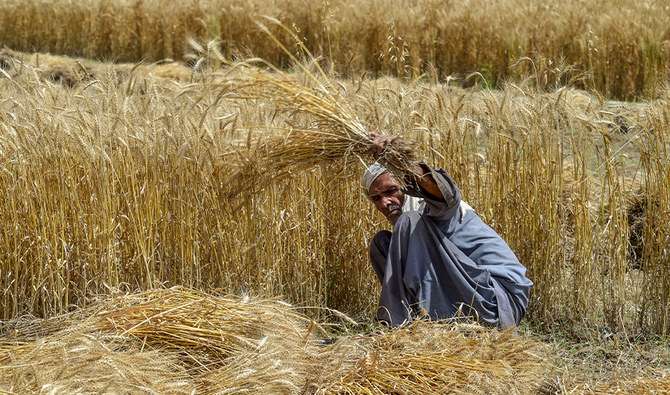
Wheat sowing is under way across Punjab, so the price signal arrives just as farmers decide how much land to plant.
Copyright © 2021 Independent Pakistan | All rights reserved