By Staff Reporter
KARACHI: Pakistan’s meteorological authorities warned on Monday that winds could carry pollutants from US and Israeli airstrikes on Iranian oil facilities into western parts of the country, potentially worsening air quality as the regional conflict intensifies.
The Pakistan Meteorological Department said in a statement that the recent attacks had released large volumes of smoke and toxins from burning refineries and fuel depots, and prevailing winds might push some of that contamination across the border. “Due to the recent situation in Iran, the winds may carry pollutants and deteriorate air quality in the western parts of the country,” the department said.
Iran has been locked in open conflict with the United States and Israel since Feb. 28, when Israeli strikes assassinated its supreme leader, Ayatollah Ali Khamenei. Major follow-up airstrikes on March 7 targeted Tehran’s refineries and fuel depots. Additional overnight raids hit five more oil facilities in and near the capital, an official with the National Iranian Oil Products Distribution Company told state television.
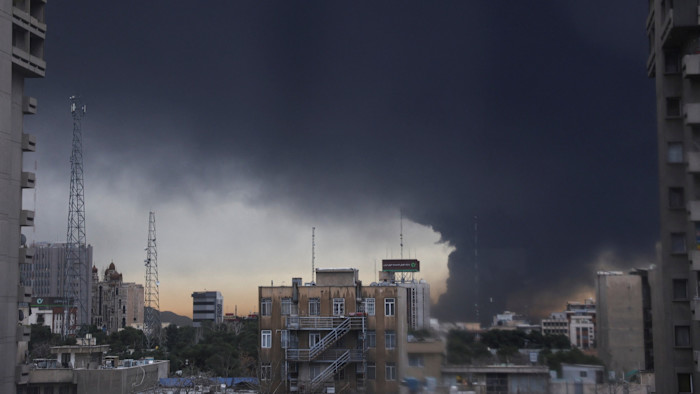
In Tehran, thick black smoke from the smoldering installations blotted out the sun and left the city under a toxic gloom. Oily rain fell on Sunday. CNN reporting from the Shahran oil depot, described the scene as “apocalyptic” and said “breathing the air feels quite toxic.” The Iranian Red Crescent Society warned civilians of serious health hazards from the cocktail of chemicals released, cautioning that “significant quantities of toxic hydrocarbons, sulfur and nitrogen oxides” could cause chemical burns and lung damage.
The Pakistani weather office said it had detected no effects from the reported “black acid rain” in Tehran so far but was monitoring the situation closely. Iranian meteorological data are no longer available because of internet disruptions caused by the fighting, forcing experts here to rely on satellite imagery. Tehran lies northwest of Pakistan, so any pollution plume would probably reach Afghanistan first. Iran’s southern provinces, however, sit closer to Pakistan’s Balochistan region.
Officials noted that the surge in carbon emissions could also raise temperatures in the upper atmosphere, increasing the air’s capacity to hold moisture and potentially altering rainfall patterns in the broader region in coming weeks and months.
Copyright © 2021 Independent Pakistan | All rights reserved