By Staff Reporter
ISLAMABAD: Pakistan’s armed forces carried out a fresh round of precision airstrikes inside Afghanistan overnight, destroying key Taliban-linked terrorist infrastructure, including a corps headquarters in Kabul and training camps near the border, the information minister and military sources said on Friday.
The operation, part of an ongoing campaign Operation Ghazab lil-Haq, targeted only “terrorists’ affiliated installations” and their support networks — logistic bases, camps and ammunition depots — Information Minister Attaullah Tarar said in a post on X. “No civilian population or civilian infrastructures were targeted,” he said, directly rebutting claims from Afghan officials that the bombs had killed women and children and damaged residential areas.
Security sources provided a more granular account of the targets. In Kabul, Pakistani jets struck the headquarters of the Afghan Taliban’s 313 Corps along with an associated ammunition depot. In Kandahar, they hit the Tarawo terrorist training camp and an adjacent oil storage facility. A third camp, Sher-e-Nau, was destroyed in Paktia province. Pakistani forces also used electronic warfare to shoot down three drones launched by what the military calls Fitna al-Khawarij — its term for the banned Tehreek-i-Taliban Pakistan (TTP) — before they could reach Pakistani territory.
The strikes came hours after Tarar had posted updated casualty figures from the broader campaign, which began in late February. According to those numbers, 663 Afghan Taliban operatives have been killed and more than 887 injured. Pakistani forces have destroyed 249 check posts, captured 44 others, and eliminated 224 tanks, armored vehicles and artillery pieces. Seventy terrorist and support locations across Afghanistan have been hit from the air, the minister said.
The Taliban government offered a starkly different version of events. Spokesman Zabihullah Mujahid, writing on X, accused Pakistan of bombing civilian homes in Kabul, Kandahar, Paktia and Paktika provinces, claiming the attacks “martyred women and children” in some places while striking “empty deserts and vacant spots” in others. Kabul police spokesman Khalil Zadran told AFP that four people were killed and 15 wounded in the capital, with residential buildings among those damaged. Mujahid added that a fuel storage facility belonging to the private airline Kam Air near Kandahar International Airport had been set ablaze — a depot that, he said, supplied civilian airlines and United Nations aircraft.
The Afghan Ministry of National Defense claimed its air force responded by striking Pakistani military positions in Kohat, in Khyber Pakhtunkhwa province, hitting a fort, a command center for Durand Line operations and the fort commander’s office, with “heavy human casualties.” Pakistani officials dismissed that account, saying the Afghan side had sent three rudimentary drones that were downed before crossing meaningfully into Pakistani airspace; debris from the intercepts lightly injured two civilians, they said.
A senior Pakistani security official, speaking on condition of anonymity, framed the latest action in uncompromising terms. “The message is clear: no let-up, no negotiations, and no delegation sent by Pakistan,” the official said, referencing a recent visit to Kabul by former militant leaders. “There is just one consistent demand from the Afghan Taliban regime: stop supporting terrorists and harboring terrorist leadership or face the consequences.”
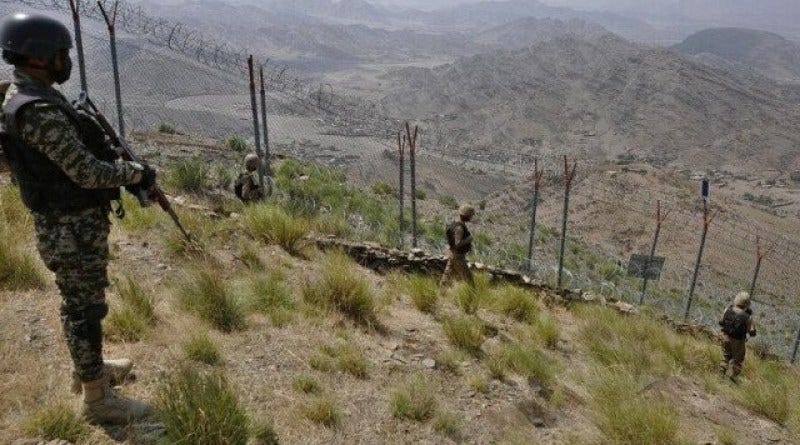
The escalation traces directly to a surge in TTP attacks inside Pakistan since the Afghan Taliban seized power in Kabul in 2021. Islamabad has repeatedly pressed the new rulers in Kabul to dismantle TTP sanctuaries, only to be met with denials. Tensions boiled over after a Feb. 16 vehicle-borne suicide bombing on a joint security post in Bajaur district, near the Afghan border. Eleven Pakistani soldiers were killed when TTP militants rammed an explosives-laden truck into the Malangi check post. Investigators identified the bomber as a member of the Afghan Taliban’s special forces from Balkh province; the TTP claimed responsibility.
Five days later, on Feb. 21, a lieutenant colonel and a sepoy died in another suicide attack during an intelligence operation in Bannu district. The military’s public-relations arm, the Inter-Services Public Relations, said the attackers were operating from Afghan soil and had violated the sanctity of Ramadan. “Pakistan will not exercise any restraint,” it warned, promising continued operations “irrespective of their location.”
Defense Minister Khawaja Asif had already signaled the shift in policy on Feb. 19, stating that military strikes inside Afghanistan remained very much on the table if cross-border attacks continued. The current campaign followed that logic. Earlier hints of Pakistani action — unconfirmed strikes reported in Khost, Kunar and Paktika provinces last November, and deadly border clashes in October 2025 that left 23 Pakistani soldiers dead and more than 200 Taliban fighters and affiliates killed — had already frayed relations to a breaking point.
Border trade has slowed to a crawl and villages on both sides have emptied. For now, Pakistan shows no sign of pausing. The message from Islamabad, repeated in every official statement since late February, is that the TTP’s safe havens in Afghanistan will be treated as legitimate military targets until they are eliminated.
Copyright © 2021 Independent Pakistan | All rights reserved