By Staff Reporter
ISLAMABAD: Pakistan has cut its vulnerability to global liquefied natural gas disruptions by steadily shifting electricity generation toward indigenous sources, including a surge in rooftop solar, nuclear reactors, local coal and hydropower, Power Minister Awais Leghari said.
About 74% of the country’s power now comes from domestic resources, up from levels that once left it exposed to volatile international markets, the minister told Reuters in an interview. The government is targeting more than 96% self-sufficiency by 2034 — figures that have not been disclosed before.
The Middle East conflict has already rattled LNG flows. Qatar, the world’s second-largest producer after the US and the main supplier of Pakistan’s imported cargoes, halted production earlier this month. Asian buyers, who take roughly 80% of Qatari output, are scrambling to cover the shortfall. LNG still meets about 10% of Pakistan’s generation, primarily to cover evening demand peaks and stabilize the grid.
“Pakistan has been steadily increasing reliance on indigenous energy resources,” Leghari said. “Even if LNG was disrupted or became too expensive, the impact on production capacity, industry or agriculture would be minimal.”
That marks a sharp departure from recent history. During the 2022 global energy crisis triggered by Russia’s invasion of Ukraine, Pakistan was forced to impose extended blackouts after failing to secure spot-market LNG cargoes. The country has long battled chronic power shortages, with hours of daily load-shedding once routine during summer peaks. Now it sits on surplus capacity. New coal, LNG and nuclear plants have come online while demand growth has slowed and rooftop solar installations have exploded. Outages that persist in parts of the country stem from theft, transmission losses and financial constraints rather than any outright shortage of generation.
In a worst-case scenario — if LNG cargoes stopped for several months — Pakistan might face only one to two hours of load-shedding during peak summer evenings, Leghari said. Those interruptions would hit some urban and rural areas but spare industry and agriculture. The government is accelerating battery-storage projects to shift excess daytime solar output to evening peaks. Pakistan has already canceled 21 LNG cargoes scheduled for 2026-27 under a long-term contract with Italy’s Eni, reflecting the rapid drop in gas demand from domestic power and solar growth.
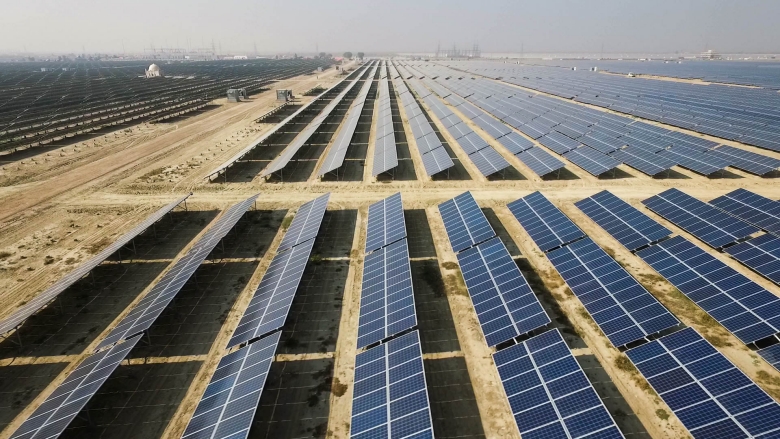
Leghari was blunt about future policy: “Pakistan is not expected to invest in any source of power that could put it at risk in terms of energy security.” For the next six to eight years the focus will remain squarely on indigenous clean power. Clean sources already account for 55% of generation; the target is above 90% by 2034. Hydropower produces about 40 terawatt-hours annually, nuclear roughly 22 TWh and domestic coal about 12 TWh — all without imported fuel. Rooftop solar installations have surged past 20 GW nationwide, with behind-the-meter capacity estimated at 12-14 GW and possibly as high as 18 GW, slashing daytime grid demand in some hubs to the point where solar output occasionally exceeds local consumption. Hydropower provides an additional seasonal lift. Summer river flows boost output by as much as 7,000 megawatts, helping meet the surge in air-conditioning demand.
The minister credited a “people-led solar revolution” alongside earlier state decisions to build nuclear, hydropower and local coal plants. The combination has transformed Pakistan’s energy balance, turning a chronic importer’s weakness into a source of resilience at a time when global LNG markets remain fragile.
Copyright © 2021 Independent Pakistan | All rights reserved