By Staff Reporter
ISLAMABAD: Pakistan on Tuesday forcefully dismissed allegations from the Afghan Taliban that its armed forces had struck a hospital in Kabul, asserting that the actual target was a military installation known as Camp Phoenix, located several kilometers away from any civilian medical facility.
The rebuttal came as Pakistan’s military pressed ahead with Operation Ghazab lil-Haq, a campaign of targeted strikes launched late on Feb. 26 after an unprovoked cross-border firing by the Afghan Taliban. On Monday night, Pakistani forces carried out precision strikes on Taliban military installations in Kabul and Nangarhar provinces, the government said.
The information ministry released a detailed fact-check on X, accompanied by satellite imagery. The ministry stated that Omid Hospital — the facility the Taliban claimed was hit — sits multiple kilometers from Camp Phoenix, which it described as a “military terrorist ammunition and equipment storage site” that was the precise target of the overnight operation.
The imagery, the ministry said, clearly shows the hospital as a multi-story civilian structure distinct from the targeted military site. “The difference and lie is clear to see,” the post read. Officials further questioned why a purported drug rehabilitation center would be co-located with a lethal ammunition depot inside a military camp, noting that the Taliban had yet to explain the arrangement.
In a separate post, the ministry highlighted that the Taliban’s official account had deleted an earlier claim that a “drug rehab” facility had been struck. “Was this [a generative] AI clip that could not stand the multiple fact checks being made?” it asked, suggesting the Taliban were retreating from their initial narrative. The ministry also debunked a photograph posted by Taliban spokesperson Zabiullah Mujahid as supposed evidence of the strike. The image, officials said, dated to May 2023 and had originally been released by the Taliban’s interior ministry at the time.
Information Minister Attaullah Tarar called the Taliban’s accusations “yet another falsehood” and “entirely baseless” and insisted that Pakistan’s operations were limited to “military and terrorist targets, along with the infrastructure of the Afghan Taliban regime, that are being directly or indirectly used to plan, facilitate, shelter, train, or abet terrorist attacks inside Pakistan.” “The strikes carried out on Monday night in Kabul and Nangarhar were precise, deliberate, and professional,” Tarar said. “No hospital, no drug rehabilitation centre, and no civilian facility was targeted. The targets were military and terrorist infrastructure, including ammunition and technical equipment storage sites and other installations linked to hostile activity against Pakistan.”
The minister pointed to video footage of all six strikes, released by the information ministry, as conclusive proof. “The visuals leave no room for doubt,” he said. “The flames and secondary detonations witnessed in Kabul further confirm that the intended ammunition storage site was hit with precision.” He described the Taliban’s allegations as part of a “same worn-out pattern of deceit.” “Pakistan and the wider world continue to face the grave threat of terrorism emanating from territory under the control of the Afghan Taliban regime,” he said. “The threat has become more barbaric.”
Pakistan, the minister added, would “continue to take every necessary measure to defend our citizens, degrade terrorist capability, and deny safe haven to those who wage terror against Pakistan from across the border.” The strikes, Tarar said in an earlier X post, targeted “Afghan Taliban regime terrorism-sponsoring military installations” supporting two groups the Pakistani state labels as terrorist proxies: Fitna al Khawarij (a reference to the banned Tehreek-i-Taliban Pakistan, or TTP) and Fitna al Hindustan (designating Baloch militant organizations).
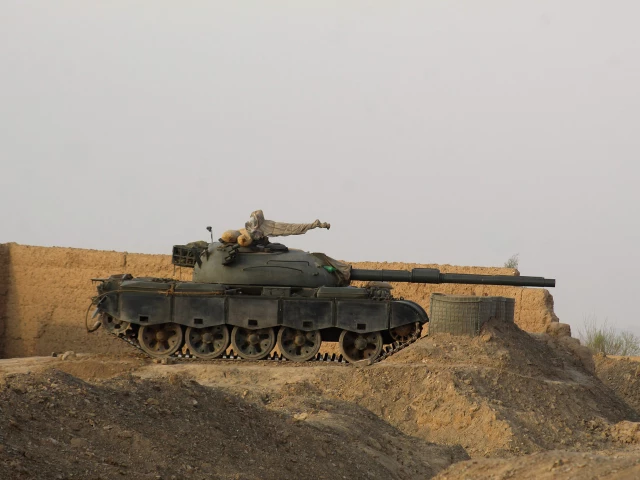
Security sources separately reported that Pakistani forces used anti-tank guided missiles to destroy Taliban military posts adjacent to the Khyber sector and leveled the Taliban’s “Jhanda post” in North Waziristan. The sources said the Taliban had suffered casualties and significant financial losses.
The escalation prompted measured calls for calm from international actors. China’s Foreign Ministry spokesperson Lin Jian expressed hope that Afghanistan and Pakistan would “stay calm and exercise restraint,” according to Reuters. Beijing urged both sides to ensure the safety of Chinese personnel and said it would continue playing a “constructive role” in promoting de-escalation. A day earlier, China had reiterated its willingness to help ease border tensions.
Separately, the United Nations human rights office called for a swift and independent investigation into the reported incident, with spokesman Thameen Al-Kheetan telling reporters in Geneva that any findings “be made public.” Operation Ghazab lil-Haq — named in reference to a concept of divine justice in Islamic terminology — shows no signs of winding down. Pakistani officials have described it as a calibrated response to what they view as Taliban-sponsored terrorism flowing across the porous border, a longstanding grievance that has strained relations between Islamabad and Kabul since the Taliban’s return to power in 2021.
Copyright © 2021 Independent Pakistan | All rights reserved