By Staff Reporter
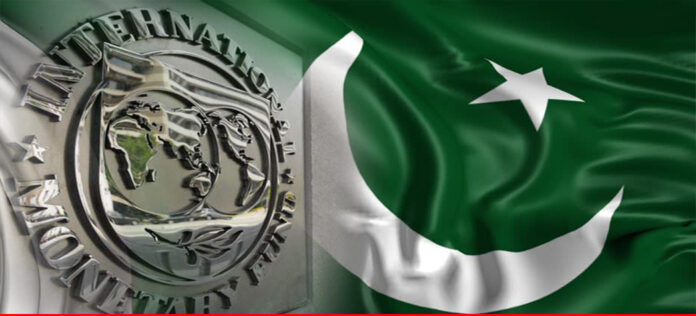
When the International Monetary Fund signalled its staff-level agreement with Pakistan on 27 March, the timing was no coincidence. It came on the same day that Prime Minister Shehbaz Sharif overruled the Oil and Gas Regulatory Authority and blocked a rise in domestic fuel prices despite soaring international costs. Four weeks into a conflict that has upended energy markets across the Gulf, the Fund’s move looks less like business as usual and more like reluctant recognition that geopolitics has rewritten the script.
The $1.21bn now in prospect — $1bn from the Extended Fund Facility and $200m from the Resilience and Sustainability Facility — will bring total disbursements under the twin programmes to roughly $4.5bn once the board signs off. In purely cash-flow terms the relief is real. Pakistan’s external debt repayments were looming uncomfortably large; trade lanes are strained, and remittances from the Middle East are already forecast to drop. Yet the deeper message is about flexibility born of necessity. The Fund has quietly accepted that rigid conditionality makes little sense when the shocks are coming from the Strait of Hormuz rather than Islamabad’s own policy choices. It has done so before, during the pandemic, and it is doing so again.
That pragmatism, however welcome, does not erase the awkward realities the Fund’s statement still highlights. Take the real economy. Official statistics from the Pakistan Bureau of Statistics paint a picture of respectable growth. Factory owners tell a different story: more than 150 large-scale manufacturing units have shut down in recent months because power, transport and raw-material costs remain stubbornly higher than those faced by competitors across the region. Any measures now under discussion to ease those costs risk breaching the very pledges Pakistan has made to the Fund. The war is only intensifying the squeeze; even the modest success in guiding 20 ships through the strait leaves open the question of how much of that cargo will actually reach Pakistani consumers rather than being re-exported.
Monetary policy faces its own bind. Inflation has climbed to 7 per cent in February and shows every sign of accelerating further as global food and fuel volatility feeds through. The State Bank has already indicated it will raise rates if pressures intensify — and the policy rate is already double the level seen in rival economies. Higher borrowing costs will hit manufacturers who are already uncompetitive; higher utility tariffs compound the damage. The Fund’s language is blunt: the central bank “stands ready to raise interest rates” to protect its inflation target. That stance is orthodox, but in the current climate it risks choking off the very growth the government is desperate to defend.
Then there is the perennial problem of energy. Nearly a trillion rupees of subsidies were baked into this year’s budget with the Fund’s tacit approval. Circular debt, supposedly tamed, has in fact been managed not through efficiency gains but by borrowing 1.25tn rupees from commercial banks that are already overstretched in the sector; the interest bill is simply being passed on to consumers. The Fund repeats its decades-old warning that untargeted subsidies must end and sectoral viability must be restored. Yet the current fuel subsidy is still not properly channelled through the Benazir Income Support Programme to reach only the poor and vulnerable. The statement’s talk of “strengthening the generosity, coverage and delivery” of BISP — an odd word for taxpayer-funded spending — feels more like pre-emptive damage limitation than a genuine policy pivot.
Even the exchange rate, long presented as the main shock absorber, is being handled with visible caution. The Fund continues to call for flexibility in the face of Middle East spillovers. In practice the rupee has been held broadly steady for months, largely to keep debt-servicing costs from exploding. The contradiction is hard to ignore.
Revenue targets tell their own tale of strain. The current fiscal year’s collection goal has already been cut twice — from Rs14.13tn to Rs13.79tn and then to Rs13.4tn by June. For next year the IMF is understood to want Rs15.08tn. Hitting those numbers while shielding households from further fuel-price pain and trying to keep growth alive will demand fiscal gymnastics that have so far proved elusive. After years of tax hikes and tariff increases, ordinary Pakistanis were hoping for respite in the 2026-27 budget. What they are likely to get instead is higher taxes and steeper pump prices. Real wages have stagnated while the price level has kept rising; the war has simply layered fresh pressure on an economy that was already struggling to breathe.
None of this is the government’s fault in the narrow sense. The energy shock now emanating from the region is of a magnitude not seen for decades, and shielding the population from its full force is an understandable political impulse. The staff-level agreement itself is necessary; without it the external accounts would have come under immediate strain. But necessity is not the same as strategy. The IMF’s current willingness to bend — shaped in part by Pakistan’s diplomatic efforts to help contain the conflict — buys time. It does not absolve Islamabad of the responsibility to use that time wisely
.For three or four decades successive administrations have promised the same things: genuine energy reform, targeted social support, a tax base that captures more revenue without punishing the formal sector, and a decisive shift toward indigenous renewables to reduce the country’s dangerous reliance on imported fuels. The pledges have been made to the Fund time and again; they have rarely survived the collision with domestic politics. The risk now is that this latest geopolitical reprieve will simply become another excuse to postpone the hard choices rather than accelerate them.
The Fund has, for the moment, chosen pragmatism over purity. Pakistan’s leaders must now choose substance over short-term relief. If they do not, the next review will be far less forgiving — and the breathing space far shorter.
Copyright © 2021 Independent Pakistan | All rights reserved