By Staff Reporter
The United States-Israeli war on Iran, now well into its fifth week, has become intolerable — to the region, to global energy markets and, increasingly, to the governments trying to contain the damage. When Pakistan’s deputy prime minister and foreign minister, Mohammad Ishaq Dar, stood up at the end of the day-long talks between foreign ministers of Pakistan, Saudi Arabia, Turkey and Egypt and said Islamabad was prepared to host “meaningful talks” between Washington and Tehran “in the coming days” for a “comprehensive and lasting settlement,” he was not indulging in hopeful language. He was stating the only realistic path still open.
The quadrilateral format, which began earlier this month in Riyadh, has now produced something concrete: a joint call for an immediate end to hostilities, a committee of senior officials to keep the process moving, and explicit backing for Pakistan’s offer to serve as host. The ministers spoke with one voice about the “devastating impact on lives and livelihood,” warned that the war “is not in favour of anyone,” and stressed the need for Muslim-country unity. . The ministers assembled in Islamabad have done what regional powers rarely do: they have created a mechanism that aligns their interests with the urgent need for de-escalation. They have given Washington and Tehran a narrow but genuine opening.
On the sidelines, Dar held one-on-one meetings with each counterpart, and the visitors met Prime Minister Shehbaz Sharif, who reinforced the message. Dar’s trip to Beijing on Monday for consultations with his Chinese counterpart, Wang Yi, adds a crucial external layer. China has already endorsed Islamabad’s role and is now positioned to help underwrite any emerging deal.
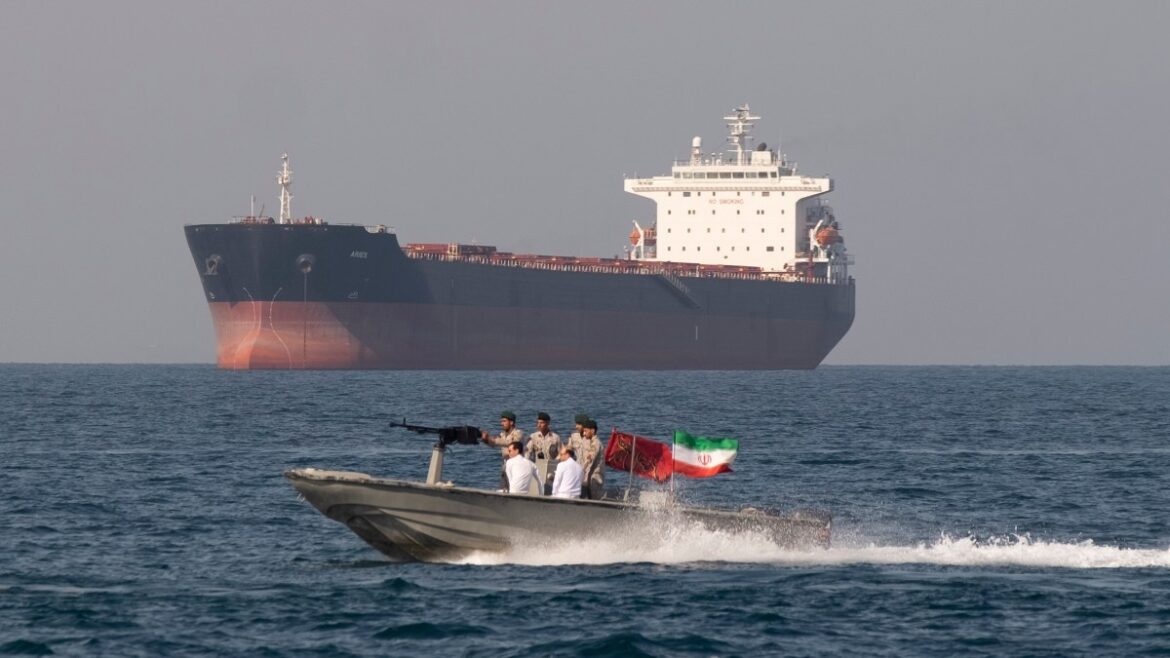
The initiative is timely, even urgent. More than 3,000 people are dead. Iranian authorities report nearly 1,900 killed in their country; Lebanese officials say more than 1,200 have died in the fighting there. Over a million Lebanese have been displaced. Yemen’s Houthis have entered the fray with their first attacks on Israel. Israeli forces are expanding their ground operations in southern Lebanon. The Revolutionary Guard has warned that it will treat American and Israeli universities in the region as legitimate targets unless Iranian academic institutions are spared. Civilian infrastructure on both sides is being hit; critics are already warning of possible war crimes. The economic toll is not abstract: Iran’s grip on the Strait of Hormuz has produced the largest supply disruption in the history of the global oil market. Prices have spiked, supply chains have buckled, and the threat to food security is real.
So, the Islamabad process is not a luxury. It is a necessity. Yet the obstacles are formidable, and pretending otherwise would be naïve. The window of opportunity almost as quickly as it opened. The first and most immediate problem is the persistent gap between diplomatic words and battlefield reality. Direct talks have not been confirmed. Diplomats say any meeting would depend on developments on the battlefield — a candid admission that guns still speak louder than envoys. Also, contacts between the United States and Iran remain indirect, funneled through Pakistan. Iran’s parliament speaker, Mohammad Bagher Qalibaf, has dismissed the talk of negotiations as a tactic “to manipulate the financial and oil markets and escape the quagmire” in which the United States and Israel find themselves. Iranian officials have rejected Washington’s 15-point “action list” as excessive and unreasonable. In its place, Tehran has offered its own five-point framework. For its part, the Trump administration continues to send mixed signals. President Trump has claimed negotiations are “doing extremely well” and that Iran accepted “most of the points” of the American plan. But thousands of additional U.S. troops, including Marines trained in amphibious operations, have arrived in the region, and reports persist of Pentagon planning for possible ground action. Israeli Prime Minister Benjamin Netanyahu announced an expansion of operations in Lebanon even as the ministers met in Islamabad
The deeper problem is trust — or, more accurately, the complete absence of it. Iran has twice this year watched negotiations serve, in its view, as cover for military strikes. The Oman-mediated nuclear talks were underway when the war began on Feb. 28. And positions are maximalist on both sides. Bridging them will require each side to accept that it cannot achieve everything it wants.
Pakistan’s role, for all its promise, is also a limitation. Pakistani officials have spent weeks quietly passing messages. Yet, Pakistan is still more messenger than mediator. It lacks the leverage to impose outcomes. Dar must perform a delicate balancing act — condemning Israeli actions while avoiding direct criticism of the United States, protecting ties with Saudi Arabia while shielding its own economy from the fallout of a wider war. If the initiative collapses, Pakistan will be among the countries most harmed.
The economic pressure that brought the ministers to Islamabad may be the one force strong enough to overcome these barriers. Gulf states have watched their energy exports collapse and have been forced to declare force majeure after repeated Iranian attacks on infrastructure. Pakistan depends on remittances from Gulf workers; any prolonged disruption risks a domestic crisis. Turkey and Egypt share the alarm over disrupted navigation and rising prices.
Anwar Gargash, an adviser to the United Arab Emirates, has already signaled what any settlement must include: clear guarantees that Iranian attacks on neighbors will not be repeated, and compensation for damage. Iran, for its part, insists it will not simply return to the pre-war status quo. Both demands are reasonable. Neither is easy. The way forward is therefore straightforward, even if politically painful. Pakistan should move immediately from announcement to arrangement — turning its hosting offer into concrete modalities for talks, whether direct bilateral sessions or a structured format with the four foreign ministers (and, ideally, China) as guarantors. The agenda must address the core issues head-on: verifiable limits on Iran’s nuclear program and an end to proxy threats against Gulf shipping and territory for Washington and its partners; credible security guarantees, reparations and respect for sovereignty over the strait for Tehran. Small steps like the vessel transits already agreed upon should be expanded and publicized. The newly formed committee of senior officials should begin drafting a road map that allows each side to claim domestic victories without appearing to surrender.
Israel remains the complicating factor. Its operations continue, and its interests may not align with a swift diplomatic exit. Washington will have to decide whether it can — or will — restrain its closest partner. The alternative is a protracted war of attrition that keeps oil markets in turmoil, deepens a global recession and leaves the Middle East more unstable than before. History offers no comfort: the regime-change fantasies of earlier American wars in the region produced neither stability nor gratitude.
Copyright © 2021 Independent Pakistan | All rights reserved