By Staff Reporter
ISLAMABAD: Pakistan has sent a senior delegation to the northwestern Chinese city of Urumqi for talks with Afghan officials aimed at resolving escalating border tensions, even as its military continues a counterterrorism operation inside Afghanistan, the Foreign Office said on Thursday.
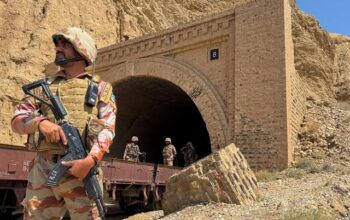
The discussions, held under a trilateral mechanism involving China, marked the first significant diplomatic contact between Islamabad and Kabul since Pakistan launched Operation Ghazab lil-Haq on Feb. 26 in response to unprovoked cross-border firing by Afghan Taliban forces.
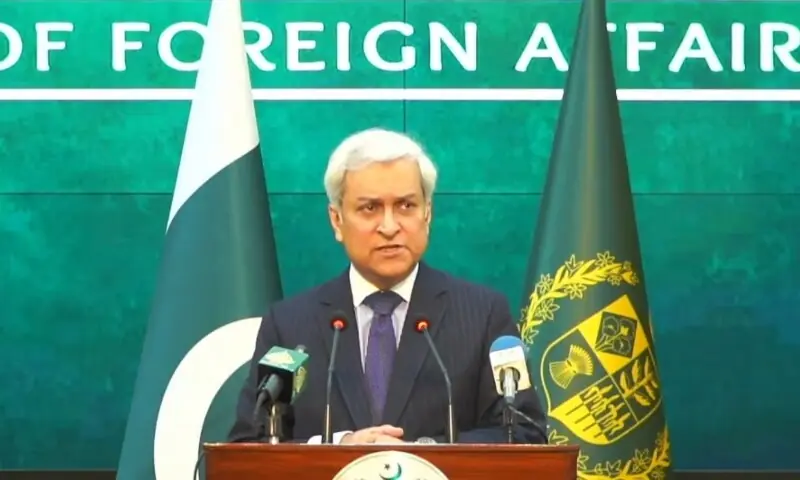
Foreign Office spokesperson Tahir Andrabi told reporters in Islamabad that the talks focused on the latest escalation and that Pakistan’s longstanding position remained unchanged: Kabul must take “visible and verifiable actions” against terrorist groups, particularly the banned Tehreek-i-Taliban Pakistan (TTP), using Afghan soil to launch attacks inside Pakistan. “Our participation is a reiteration of our core concerns,” Andrabi said. “The burden of real progress, however, lies with Afghanistan, which must demonstrate visible and verifiable actions against terrorist groups using Afghan soil against Pakistan.”
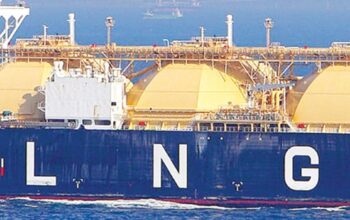
The resumption of dialogue came as Pakistan has also emerged as a central diplomatic player in efforts to de-escalate the month-old conflict between the United States and Iran, which has raised fears of broader regional instability and disruptions to global energy supplies through the Strait of Hormuz.
Andrabi’s weekly briefing painted a picture of intense, multifaceted diplomacy, including a recent high-level visit to Beijing by Deputy Prime Minister and Foreign Minister Ishaq Dar and a quadrilateral meeting of foreign ministers in Islamabad. Dar traveled to Beijing on March 31 at the invitation of Chinese Foreign Minister Wang Yi, despite medical advice to rest after suffering a hairline shoulder fracture during earlier talks in Islamabad. The visit produced what Pakistani officials described as a “milestone”: a five-point initiative by China and Pakistan for restoring peace and stability in the Gulf and Middle East.
The plan calls for the immediate cessation of hostilities and prevention of the conflict’s spread, with unimpeded humanitarian assistance to war-affected areas; the start of peace talks as soon as possible, with all parties safeguarding sovereignty, territorial integrity and national independence while committing to dialogue and refraining from the use or threat of force; protection of civilians and nonmilitary targets in line with international humanitarian law; ensured security of shipping lanes, including safe passage for crew members stranded in the Strait of Hormuz and restoration of normal commercial traffic; and reaffirmation of the primacy of the U.N. Charter in establishing a comprehensive peace framework.
Andrabi said the initiative had drawn appreciation “across the region and beyond” and shared significant commonalities with an eight-point summary issued after the March 29-30 quadrilateral consultations in Islamabad involving the foreign ministers of Pakistan, Saudi Arabia, Türkiye and Egypt. That meeting, chaired by Dar, reviewed the Middle East situation, expressed concern over the conflict’s devastating impact on lives and livelihoods, and stressed the unity of the Muslim world. The ministers reaffirmed support for dialogue and diplomacy, backed Pakistan’s offer to host and facilitate U.S.-Iran talks in Islamabad, and discussed strengthening cooperation among the four countries.
Pakistan has been actively engaged with both Washington and Tehran, as well as with European partners and members of the Organization of Islamic Cooperation. Andrabi noted that both Iran and the United States had expressed confidence in Pakistan’s facilitation role. “As we said, we will be honored to host and facilitate meaningful talks between the two sides in coming days for a comprehensive and lasting settlement of the ongoing conflict,” he said.
Prime Minister Shehbaz Sharif and Dar held multiple telephone conversations with regional and international counterparts in recent days, including calls with leaders from Kuwait, Iran, the European Council, China, Egypt, Türkiye, Qatar, Indonesia and the United Nations secretary-general. In one notable development, Iran agreed to allow 20 additional Pakistan-flagged ships to pass through the Strait of Hormuz — two per day — a step Islamabad welcomed as a “constructive gesture” and “harbinger of peace.”
On Afghanistan, Andrabi made clear that Operation Ghazab lil-Haq remained fully active. “There is no change in that operation due to any talks,” he said, noting that Pakistani security forces had conducted additional counterterrorism actions in recent days. A five-day pause had been observed from March 18 to 23 during Eid al-Fitr, but the operation would continue until its objectives were met.
The uptick in militancy inside Pakistan since the Afghan Taliban returned to power in Kabul in 2021 has been a persistent source of friction. Islamabad has repeatedly pressed the Taliban administration to dismantle TTP sanctuaries, officials say, with little result. Andrabi reiterated that Pakistan sought a “credible process that can lead to a durable solution” to stop cross-border terrorism.
The spokesperson also addressed other regional issues. A joint statement issued Tuesday by the foreign ministers of Pakistan, Egypt, Jordan, the United Arab Emirates, Indonesia, Türkiye, Saudi Arabia and Qatar condemned Israeli restrictions on Muslim and Christian worship in occupied Jerusalem, including access to Al-Aqsa Mosque and the Church of the Holy Sepulchre. The ministers rejected any attempts by Israel to alter the historical and legal status quo at the holy sites.
Andrabi declined to speculate on reports of a possible visit by U.S. Vice President JD Vance or the precise timing of any U.S.-Iran talks in Islamabad, saying those details were for the parties themselves to decide. He expressed optimism about Pakistan’s facilitation efforts, calling it “a professional hazard” for diplomats engaged in peace processes. On questions about Israeli involvement in the talks or potential Chinese guarantees regarding Afghanistan, he referred inquiries to the relevant parties or said he lacked specific details.
Copyright © 2021 Independent Pakistan | All rights reserved