By Staff Reporter
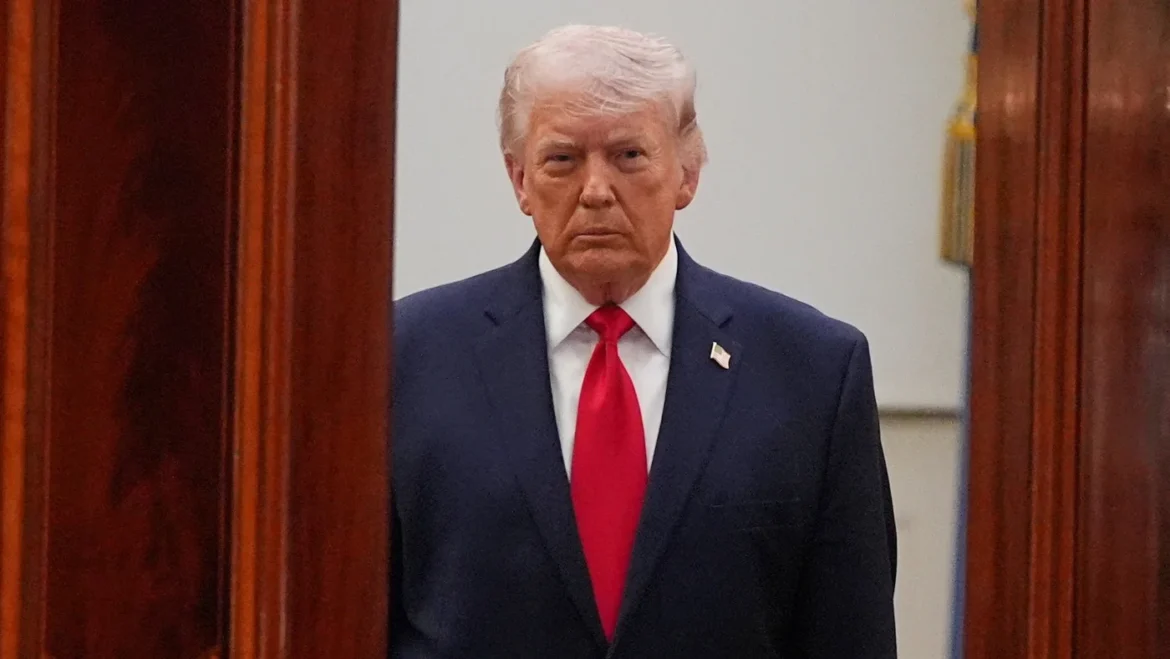
President Trump’s primetime address on the war with Iran was never going to be easy listening. But even by the standards of a conflict that has already claimed thousands of lives, drained billions of dollars and sent global energy prices soaring, Wednesday night’s 19-minute performance was astonishingly empty. Billed as a moment for Americans to hear how the fighting would end, it delivered only the same threats, the same boasts and the same timeline — two or three more weeks of ferocious bombing — that everyone has heard for weeks. There was no new diplomatic formula. No acknowledgement of Iranian demands. No realistic path to reopening the Strait of Hormuz. Just the familiar vow to “hit them extremely hard” and “bring them back to the Stone Ages, where they belong.” This was not resolve. It was stalling.
The verdict from the markets was instantaneous. Brent crude rose nearly 5 percent to $106 a barrel in early Asian trading. Japan’s Topix index fell 1.2 percent, South Korea’s Kospi dropped 3.8 percent, and S&P 500 futures declined 1 percent. Investors had been hoping for any hint of closure; instead, they got more uncertainty. Trump’s language offered no comfort because it offered no plan. Far from charting an exit, Trump simply extended the war he insists is already won.
The contradictions piled up from the first minutes. Trump insisted regime change had never been America’s goal — and then immediately claimed it had happened anyway because Iran’s original leaders were dead. In the same breath, he boasted that the nuclear program had been “obliterated” months ago, only to promise two or three more weeks of bombing to finish the job. He declared the Iranian navy destroyed, the air force crippled, the missile program exhausted — yet the Strait of Hormuz, the artery carrying one-fifth of the world’s oil, remains closed. The economic pain this closure has inflicted on the pumps across the globe is real and immediate. Trump’s solution? Let them handle it. The countries that actually need the oil, he said, must “cherish” the strait and take the lead in reopening it. Washington would be “helpful,” nothing more. It was a breathtaking abdication of responsibility from the superpower that helped trigger the crisis.
Inside Iran the speech landed as confirmation of what many already feared: collective punishment. Strikes have already devastated power plants and civilian infrastructure. The people suffering most are not the mullahs but the 90 million ordinary citizens left in the dark, their hospitals running on generators, their factories idle. Trump’s promise to hit “each and every one of their electric-generating plants very hard and probably simultaneously” if no deal is reached by April 6 reads less like targeted pressure than a threat to turn an entire society back to pre-industrial misery. Tehran has rejected the American 15-point proposal outright and is now demanding security guarantees and reparations. Nothing in Wednesday’s remarks suggested any American willingness to compromise. The gap between the two sides remains as wide as ever, and Trump’s rhetoric only widened it.
The speech did, however, play well in Jerusalem. Israeli officials welcomed the American commitment to keep the pressure on for at least another two or three weeks — a timetable that aligns neatly with Prime Minister Benjamin Netanyahu’s own assessment that his forces are only slightly past the halfway mark of their expanded target list. That list now reaches far beyond military sites into the broader infrastructure that keeps Iranian society functioning. Trump’s framing of the war as the necessary answer to the October 7 attacks and the only way to prevent a nuclear Iran echoed the most hawkish arguments heard in Israel. For now, the two partners remain in lockstep. But the alignment carries its own risks: Israeli goals may not stop where American ones do, leaving open the possibility that Jerusalem will keep striking even if Washington eventually declares victory.
In the US, the reaction was predictably harsher. Public opinion polls have shown consistent majority opposition to the war since it began. Trump’s approval ratings have slipped. Democratic critics were quick to call the address what it was: a recycling of the same talking points that have failed to rally the public for more than a month. The “Stone Ages” rhetoric struck many as not merely bellicose but morally grotesque when applied to an entire nation. The immediate five-dollar spike in oil prices after the speech ended only underscored the self-inflicted economic damage. And the claim that the United States had already “won,” repeated even as the conflict drags into its sixth week, rang especially hollow. Even allies are growing restless. Australia’s prime minister spoke for many when he noted that the objectives Trump laid out at the outset have largely been met and called for de-escalation. The longer the war continues, he warned, the heavier the toll on the global economy. That judgment is hard to dispute. The White House originally projected the campaign would last four to six weeks. We are now well into the fifth, with no end in sight beyond the president’s latest promise of “very shortly.”
Trump tried to reassure Americans that the pain would be temporary. Keep the conflict in perspective, he urged; it is shorter than other American wars, and once Iran needs to sell oil to rebuild, the strait will “open up naturally,” prices will drop and stocks will rebound. The argument rests on a fragile assumption: that a country whose navy is gone, whose air force is crippled and whose leadership has been decapitated will nevertheless choose capitulation on American terms. Iranian officials have given every indication of the opposite. They see no new offer, only the same threats. They intend to continue the fight, focus on defence and retaliation, and let the United States bear the growing costs of prolongation.
This is where the speech’s deeper failure lies. It was not the performance of the US commander-in-chief executing a coherent strategy. It was the performance of a leader who has backed himself into a corner and is buying time with bombs. The United States has indeed delivered devastating military blows. More than 12,300 targets struck in less than five weeks. Iran’s conventional power projection shattered. Its nuclear ambitions set back. These are real achievements. But military success is only meaningful if it produces a political outcome the other side can accept. Wednesday’s address offered no such outcome. It offered only escalation without an endgame. Trump’s first preference, he insisted, was always diplomacy. The record tells a different story. He has treated negotiation as an afterthought to bombardment, issuing ultimatums rather than bridging gaps. The result is a conflict that has outlived its original timetable and now risks becoming exactly what critics feared: an open-ended entanglement with no clear victory condition. History is littered with wars that began with maximalist rhetoric and ended in negotiated compromise or prolonged stalemate. By refusing to articulate a credible exit ramp — one that addresses Iranian demands for security while locking in American gains on nuclear weapons and regional power projection — Trump has chosen the path of prolongation. The coming weeks will test whether more force can produce the diplomatic breakthrough that 19 minutes of recycled belligerence could not. The early evidence is not encouraging. The cost of testing that proposition is already high, and it is rising with every additional day this war is allowed to grind on.
Copyright © 2021 Independent Pakistan | All rights reserved