By Staff Reporter
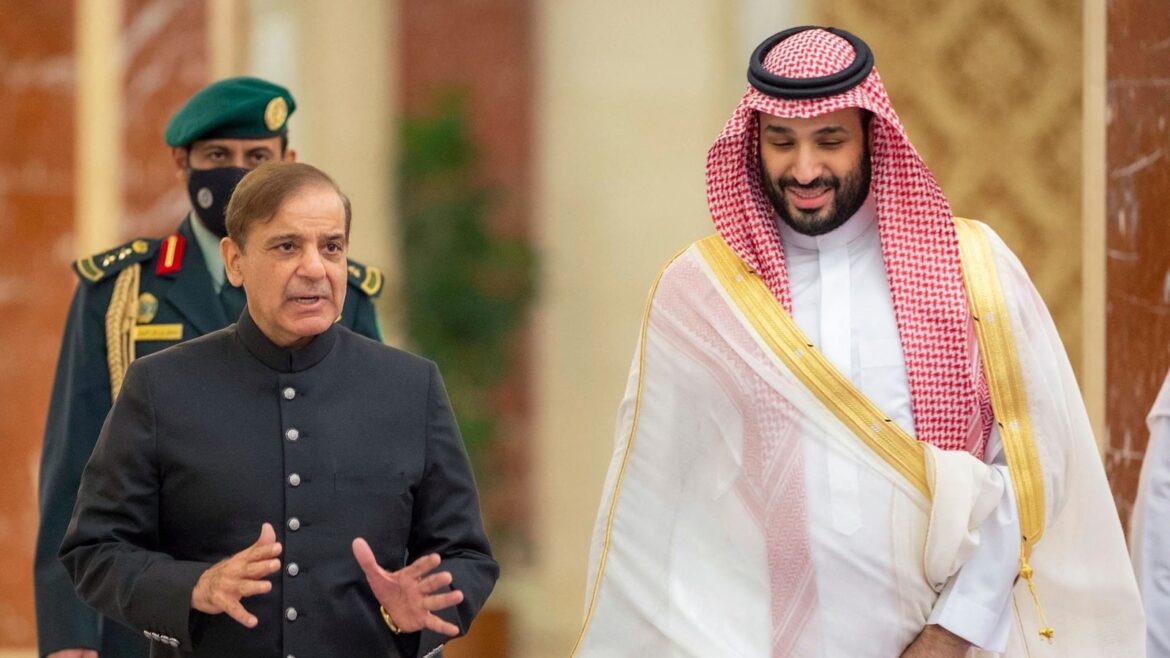
ISLAMABAD: Minister Shehbaz Sharif held a telephone conversation on Tuesday with Saudi Crown Prince Mohammed bin Salman and offered his country’s “unflinching solidarity” with the kingdom after Iran launched ballistic missiles and drones at its Eastern Province, striking near a sprawling petrochemical complex in the industrial city of Jubail.
Sharif’s office described the call as “warm and cordial” and said the two leaders reviewed the escalating hostilities that have roiled the Persian Gulf since the United States and Israel began military strikes on Iran on Feb. 28. Sharif praised the “wisdom and sagacity” of Saudi leadership for exercising maximum restraint amid repeated Iranian attacks, and he briefed the crown prince on Pakistan’s ongoing mediation efforts to de-escalate the crisis.
“The Prime Minister reaffirmed Pakistan’s unwavering and unflinching solidarity and support for the Kingdom of Saudi Arabia in the wake of the ongoing attacks, and reiterated Pakistan’s condemnation of the attack at the Al Jubeil oil facility in Saudi Arabia earlier today,” Sharif’s office said in a statement. Sharif told the crown prince that “the people and the Government of Pakistan would always stand shoulder to shoulder with their Saudi brothers and sisters,” just as Saudi Arabia has long supported Pakistan “through thick and thin.”
The crown prince, according to the Pakistani readout, appreciated Islamabad’s peace initiatives aimed at restoring stability in the region. The conversation came hours after Saudi Arabia’s defence ministry announced that it had intercepted missiles and drones targeting the Eastern Province. Debris from the projectiles fell near key energy infrastructure, authorities said. It was not immediately clear which specific facilities were struck, but a witness who spoke on condition of anonymity told Agence France-Presse that overnight explosions rocked a petrochemical complex in Jubail, home to one of the world’s largest industrial zones. The area houses multibillion-dollar joint ventures involving Saudi Aramco, its petrochemical arm SABIC and Western energy companies that produce steel, gasoline, petrochemicals, lubricating oils and chemical fertilisers. The witness said the blasts caused a fire at SABIC plants, prompting the evacuation of workers from nearby living quarters. The sounds of explosions were described as “very loud.”
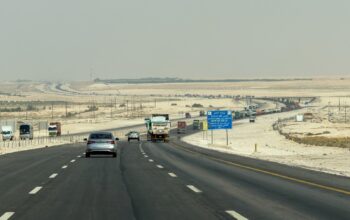
The Iranian attacks prompted precautionary measures across the Gulf. Bahrain, Saudi Arabia and the United Arab Emirates issued public safety alerts, and the King Fahd Causeway linking Saudi Arabia and Bahrain was briefly closed.
Sharif later posted on X that he had conveyed Pakistan’s “unwavering solidarity” with Saudi Arabia, condemned the strike on the Al Jubeil facility and reiterated his country’s commitment to de-escalation.
Pakistan’s Foreign Office issued a separate statement on Tuesday condemning the Iranian strikes as “a dangerous escalation” that violated Saudi sovereignty and undermined regional peace. The ministry expressed deep concern over the loss of life and damage to vital infrastructure, offered condolences to the victims’ families and reaffirmed “unwavering support for the Kingdom’s security.”
The diplomatic moves reflected the depth of the longstanding Pakistan-Saudi relationship. In September, the two countries signed a Strategic Mutual Defence Agreement in Riyadh under which an attack on either nation would be treated as an attack on both. Pakistan’s deputy prime minister and foreign minister, Ishaq Dar, said at the outset of the current conflict that Islamabad had reminded Iran of the pact. Dar disclosed last month that Pakistani diplomatic intervention had helped deter even heavier Iranian strikes on Saudi targets.
Pakistan has sought to position itself as a mediator throughout the crisis, consistently condemning Iranian attacks on Gulf states while also denouncing the initial US-Israeli strikes on Iran. Officials in Islamabad have worked to facilitate communication between Washington and Tehran and have coordinated with other regional capitals to end the fighting.
Separately, Pakistan’s military leadership weighed in Tuesday during the 274th Corps Commanders’ Conference at General Headquarters in Rawalpindi. Field Marshal Asim Munir, who serves as chief of defense forces and chief of army staff, presided over the meeting, according to a statement from the Inter-Services Public Relations directorate. The commanders “vehemently condemned the latest attacks on Saudi Arabia’s petrochemical and industrial complex as an unnecessary escalation which spoils sincere efforts to resolve the conflict through peaceful means,” the statement said. They noted that Saudi Arabia’s restraint despite “grave provocations” had created space for mediation and diplomatic resolution, but warned that such “unwarranted aggressions” threatened to derail those efforts.
The military forum also reviewed Pakistan’s broader security environment. It praised the government’s “hectic efforts” to end the Middle East war and reaffirmed Islamabad’s commitment to “principled diplomacy and constructive engagement.” The commanders reiterated Pakistan’s role as “a responsible regional stakeholder” and “regional security stabiliser.”
On the domestic front, the conference directed continued pressure on terrorist networks, including those operating from Afghan soil. The statement said the pace of Operation Ghazab lil-Haq, launched against the Afghan Taliban on Feb. 26, would be maintained until terrorist safe havens are eliminated. The forum also rejected what it called “persistent disinformation, baseless allegations, and false flag narratives attributed to India” and expressed concern over alleged human rights violations and “fake encounters” in Indian Illegally Occupied Jammu and Kashmir.
Copyright © 2021 Independent Pakistan | All rights reserved