By Staff Reporter
ISLAMABAD: Pakistan is running its furnace-oil power plants at full capacity and postponing scheduled nuclear-plant maintenance to contain the worst electricity shortages in years, after Qatar declared force majeure on liquefied natural gas deliveries amid the Iran conflict.
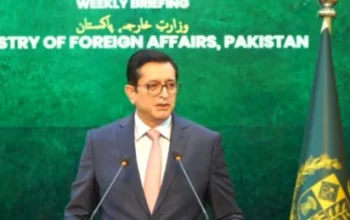
Power Minister Awais Leghari told a press conference in Islamabad on Thursday that the country is grappling with a roughly 4,000-megawatt shortfall, split between a collapse in LNG imports and sharply lower hydropower output. Load-shedding of up to six to seven hours hit parts of the country on Wednesday, with the government implementing what it called a “judicial” two-hour daily schedule nationwide to prevent even steeper price increases.The disruptions trace directly to Qatar’s force majeure, declared after the outbreak of hostilities involving Iran, which halted LNG shipments that Pakistan had counted on under long-term contracts.
The fuel crunch has slashed output from the country’s 6,000 MW of LNG-fired capacity to about 500 MW. At the same time, hydropower generation has fallen to 1,671 MW from 3,200 MW in April 2025, as reservoirs release water only for irrigation rather than power. “Installed capacity exists, which is why there was no load-shedding before April,” Leghari said, pushing back against social-media criticism that Pakistan’s total power infrastructure should prevent blackouts. “The ongoing load management was primarily due to the Iran war.”
To bridge the gap, authorities have turned to more expensive furnace-oil generation — which played almost no role last April — and are scrambling for alternative supplies. Leghari said the government is pursuing government-to-government LNG deals, including with Azerbaijan’s SOCAR, while Petroleum Minister Ali Pervaiz Malik signaled the possibility of spot-market purchases if necessary. Both ministers emphasised a preference for negotiated contracts to avoid premiums now quoted at $20 to $30 per million British thermal units.
Pakistan typically imports eight to 10 LNG cargoes a month under long-term deals. In recent years it had actually canceled shipments because domestic generation needs fell and rooftop solar surged. That solar boom — now estimated at 12-14 gigawatts and possibly as high as 18 GW — has cut daytime grid demand, shifting the shortage to evening peaks when solar output drops and LNG plants are normally needed most.
Demand itself has swung wildly. In the first half of April it fluctuated between a low of 9,000 MW and a high of 20,000 MW as temperatures climbed. Leghari noted that once demand exceeds 16,500 MW, even after exhausting coal, nuclear, hydro and solar resources, the system has no buffer without gas. Each 500 MW shortfall translates into roughly one additional hour of nationwide load-shedding.
The minister offered an unusually direct apology for the inconvenience. “If the public is facing any inconveniences due to us not providing electricity at night and during peak hours, I am directly answerable,” Leghari said. “We apologise too but the circumstances are such that they are not in our control. Even then, we ought to apologise.” He added that the government had initially spared daytime, off-peak hours from cuts and applied load management evenly across urban and rural areas. Only when consumer outages exceeded three hours did authorities extend restrictions to industry. In southern regions served by Hyderabad Electric Supply Company and K-Electric, there has been no additional load-shedding beyond the usual “economic” outages tied to system losses.
Leghari also sought to frame the crisis against longer-term progress. He credited the PML-N government with eliminating chronic load-shedding after 2017 and said Pakistan’s rapid shift toward renewables — driven by private rooftop investments rather than expensive independent power producer contracts — had been recognized internationally and helped cushion the current shock. Diversification into coal, renewables and nuclear, he said, had limited the damage from the external fuel shock.
Still, the immediate arithmetic is stark. Last April, Pakistan generated about 3,000 MW from LNG and 3,200 MW from hydro with almost no furnace-oil use. This year, the combined LNG and hydro shortfall alone exceeds 4,000 MW. The government has ruled out daytime load-shedding for now but warned that evening peaks will continue to require managed outages until additional fuel arrives.
Copyright © 2021 Independent Pakistan | All rights reserved