By Staff Reporter
ISLAMABAD: Pakistan’s large-scale manufacturing sector expanded 5.89% year-on-year in the first eight months of fiscal 2026, as a sustained rebound in industrial production offset weakness in textiles and steel, data from the Pakistan Bureau of Statistics showed.
Industrial output rose 6.45% in February from a year earlier, marking the fifth consecutive month of year-on-year gains. That followed a string of stronger readings: 8.99% in July, 0.54% in August, 2.69% in September, 8.33% in October, 10.37% in December and 10.5% in January. On a month-on-month basis, however, production contracted 8.97% in February.
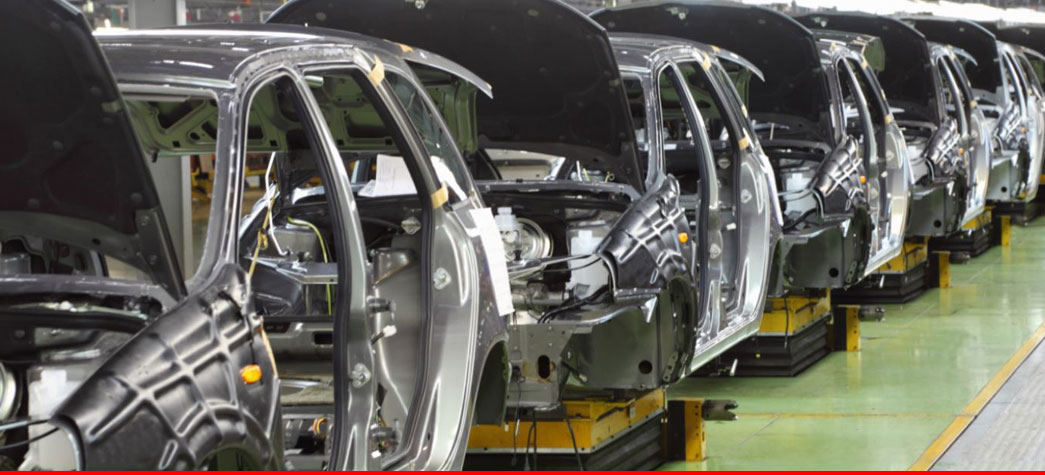
The pickup has been driven by a handful of sectors. The automobile industry surged 61.66% in the eight-month period, led by a 62.29% jump in jeep and car output, an 88.79% rise in trucks and a 37.21% increase in buses. Light commercial vehicle production was the outlier, falling 2.43%. Coke and petroleum products climbed 11.98%, with broad-based gains across most categories: petrol output rose 13.51%, high-speed diesel 19.72%, LPG 12.96% and kerosene 10.39%. Furnace oil was the lone decliner, down 2.08%.
Food processing advanced 5.26%, supported by a 2.32% rise in wheat and rice milling on improved harvests. Cooking oil production edged up 2.95%, though vegetable ghee fell 2.48% and blended tea dropped 9.64%. Rubber products gained 13.19%, non-metallic minerals 10.11% and electrical equipment 9.99%.
Weaker areas dragged on the headline figure. Textiles managed just 1.61% growth, with cotton yarn up 2.23% and cotton cloth — which accounts for more than 80% of the sector — rising a marginal 0.20%. The slowdown reflected softer export unit values and lower demand. Garment production, however, showed signs of revival, with exports climbing 7.16% year-on-year over the period.
Pharmaceuticals contracted 4.94%, fertilizers slipped 0.15% and iron and steel fell 5.70%. Within steel, billets and ingots — heavily used in construction — plunged 15.03%, while hot- and cold-rolled sheets, strips, coils and plates declined 1.85%.
FDI Slumps 27% in Nine Months as Regional Tensions Persist
Separately, foreign direct investment inflows fell 27% to $1.354 billion in the first nine months of fiscal 2026 from $1.856 billion a year earlier, according to State Bank of Pakistan data released on Thursday. The decline came despite a sharp monthly rebound: FDI jumped 165% to $167 million in March from $63 million a year earlier.China and Hong Kong remained the dominant sources, providing $928 million of the nine-month total — China $678.6 million and Hong Kong $253 million. In March alone, the two contributed $78 million of the $167 million inflow, with China at $43 million and Hong Kong at $35 million.
Other notable investors included the United Arab Emirates ($144 million), Switzerland ($153 million), the UK ($88 million) and Japan ($66 million) over the nine months. Analysts said the broader trend reflects caution among foreign investors after years of political and economic uncertainty, compounded by the recent conflict in the Gulf. “Last month’s outflow was largely driven by foreign investors reducing exposure to higher-risk assets, particularly bonds, as Pakistan’s credit default swap widened by around 200bps,” said Komal Mansoor, head of research at Tresmark. “That pressure has eased this month as market sentiment has improved. However, long-term FDI remains weak, indicating investors are still cautious about Pakistan’s outlook.”
Experts tracking the ceasefire that ended 40 days of fighting expressed little optimism for a quick pickup in inflows while the regional outlook remains unclear.
Auto Loans Hit Fresh High as Buyers Bet on Lower Rates
The automobile sector’s strength was mirrored in financing data. Outstanding auto loans rose for the 16th straight month, climbing to Rs345.34 billion in March from Rs336 billion in February, the central bank said, as lower interest rates continued to support demand. Car, SUV, pick-up and van sales totaled 15,531 units in March, up 40% from a year earlier but 9% lower than February. The monthly drop was led by a 23% decline at market leader Pak Suzuki and a 9% fall at Hyundai Nishat; other assemblers posted gains of 1% to 29%. Cumulative sales for the first nine months reached 144,029 units, 43% higher than the same period last year.
Imports of completely and semi-knocked-down kits by local assemblers rose to $170 million in March from $157 million in February, pushing the nine-month import bill up 116% to $1.471 billion. The figures signal continued optimism among assemblers despite the onset of Middle East hostilities on Feb. 28.Ajeet Kumar, an analyst at BMA Capital Management, attributed the March sales dip partly to fewer working days during Ramadan and Eid holidays, as well as potential supply-chain disruptions from the geopolitical climate. He expects a gradual normalization in volumes but cautioned that near-term momentum could stay subdued because of the economic fallout from the Iran-US conflict and rising inflationary pressures. Some analysts see sustained support for auto sales through 2026 from lower borrowing costs, with higher fuel prices also pushing some buyers toward electric vehicles.
Copyright © 2021 Independent Pakistan | All rights reserved