By Staff Reporter
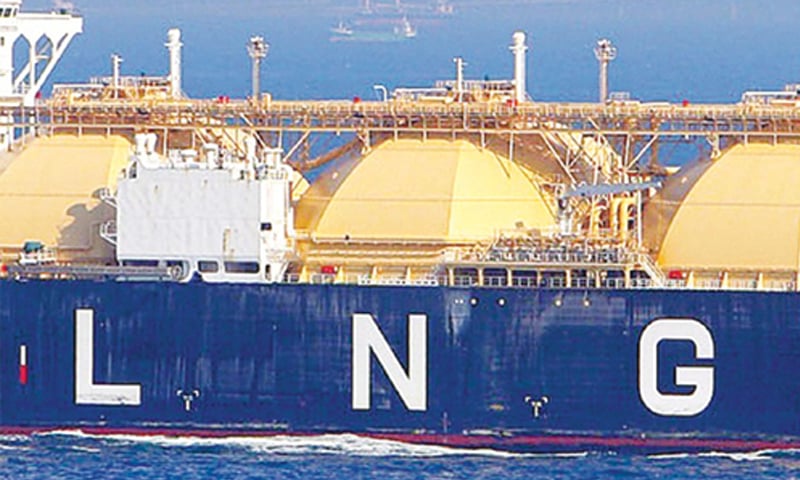
ISLAMABAD: Pakistan and Qatar are in advanced discussions for the supply of at least four cargoes of liquefied natural gas that would have to pass through the Strait of Hormuz, people familiar with the matter told Dawn newspaper.
The negotiations come as Pakistan’s Power Division has already ordered the Petroleum Division to arrange around 400 million cubic feet a day of LNG for power generation, after facing early criticism over loadshedding even before the start of the summer season. LNG imports into Pakistan were disrupted early last month after the Strait of Hormuz was closed amid the Middle East war that began with US-Israel attacks on Iran. In retaliation, Iran targeted fuel installations in some Gulf countries hosting US assets and bases. Against that backdrop, Qatar declared force majeure on all its global LNG contracts, including those with Pakistan.
Qatari LNG cargoes bound for Pakistan had earlier turned back from the Hormuz chokepoint. At present, at least 25-30 loaded cargoes from Qatar Petroleum are believed to be stranded between processing stations and the strait, the people said. Pakistan has requested at least four of those cargoes at the highest level and is prepared to deploy renewed diplomatic capital if necessary, they added. Technical teams from both sides have been engaged on the details.
Prime Minister Shehbaz Sharif concluded a tri-nation tour this week that included a stop in Qatar as part of broader diplomatic efforts to de-escalate tensions between the US and Iran. A senior government official at the Petroleum Division told Daen that while there is a possibility of international fuel supply routes, particularly through the Strait of Hormuz, returning to smoother operations, the Power Division has nevertheless placed an order for more than 400 million cubic feet a day of LNG to meet electricity demand in the service areas of both K-Electric and the distribution companies.
Electricity shortfalls are expected to widen as temperatures rise in the coming weeks, the people said. Stabilizing the national grid will be nearly impossible without output from major LNG-fired power plants, particularly those in Punjab with a combined generation capacity of around 6,000 megawatts. Turning instead to high-speed diesel or furnace oil at current market prices would significantly raise fuel costs. Even one or two cargoes sourced from the open spot market could prove economically viable within the overall power mix, they added.
In a letter to the Petroleum Division reviewed by people familiar with its contents, the Power Division wrote: “With the onset of the summer season, electricity demand has started to rise significantly across the country. In this regard, the availability of regasified liquefied natural gas (RLNG) remains critical for ensuring optimal power generation and maintaining system stability.”
The letter warned that any shortfall in RLNG supply would force greater reliance on expensive alternative fuels such as high-speed diesel. “This would not only result in a substantial increase in the overall cost of generation but would also lead to prolonged hours of load management, thereby increasing the fuel cost adjustment (FCA) burden on end consumers,” it said.
All four mega LNG plants operated by the federal and Punjab governments, as well as the medium-sized Nandipur plant, are technically capable of switching to high-speed diesel as an alternate fuel. The generation price difference when using HSD is normally more than Rs25 per unit and is estimated to be even higher now given volatile oil pricing that changes weekly. Those plants are also essential for system stability and for evacuating surplus power from the southern part of the country.
To ensure smooth operations and avoid those outcomes, the Power Division has supplied a detailed weekly forecast of RLNG requirements—broken down for solar and non-solar hours along with average demand—for the National Grid Company system. K-Electric has also conveyed its RLNG needs for its own network, the letter said. The Power Division formally asked the Petroleum Division to manage and allocate Qatar-contracted RLNG cargoes to match the demand plan for both the NGC and K-Electric systems, thereby supporting uninterrupted and cost-effective power generation.
Officials noted that the cost of HSD-based generation, which exceeded Rs45 per unit before the US-Israel strikes on Iran, may now have climbed beyond Rs80 per unit. Even so, using HSD for power generation is difficult at present because of its high cost and competing demand for the fuel in transport and agriculture, particularly with the crop harvest in its final stages.
Summer peak demand typically climbs above 28,000 megawatts, compared with current peak-hour consumption of 19,000-20,000 megawatts and daytime demand below 9,000 megawatts. Greater reliance on solar power has helped trim grid demand during daylight hours, but even solar customers draw from the grid after sunset.
Copyright © 2021 Independent Pakistan | All rights reserved