By Staff Reporter
ISLAMABAD: The health authorities on Friday confirmed two new cases of wild poliovirus in the northwestern province of Khyber Pakhtunkhwa, bringing the country’s total for the year to three and illustrating the stubborn obstacles that continue to hinder the final stages of global polio eradication.
The National Emergency Operations Center for Polio Eradication said the infections — one in the Jani Khel union council of Bannu district and one in the Garyom union council of North Waziristan district — were detected through the national poliovirus surveillance network and verified by the World Health Organization-accredited Regional Reference Laboratory for Polio Eradication at the National Institute of Health in Islamabad.
The cases come barely a month after the first infection of 2026 was recorded in Sindh province, and they arrive as officials warn that unusually high temperatures have already triggered the conditions for accelerated viral spread. A program official, speaking on condition of anonymity to discuss internal assessments, noted that the virus remains largely dormant in cooler weather but becomes far more active as temperatures rise. The high-transmission season, which normally runs from the end of May through September, now appears poised to begin weeks earlier than usual, the official said.
Access constraints in parts of southern Khyber Pakhtunkhwa — long a redoubt of insecurity and pockets of vaccine hesitancy — continue to limit vaccinators’ reach and allow the virus to circulate, the official added. Those challenges have kept Pakistan, along with neighboring Afghanistan, as the only two countries in the world where wild poliovirus remains endemic.
Pakistan has nonetheless recorded dramatic progress over more than three decades of vaccination drives. The country has reduced reported cases by more than 99 percent since the early 1990s. Infections fell from 74 in 2024 to 31 in 2025, continuing a long-term decline even as the disease clings to its last footholds. The latest cases underscore the fragility of those gains. Polio is a highly contagious viral illness that invades the nervous system and can cause irreversible paralysis, primarily in young children. In rare instances it can be fatal. There is no cure, but the disease is entirely preventable through repeated doses of oral polio vaccine.
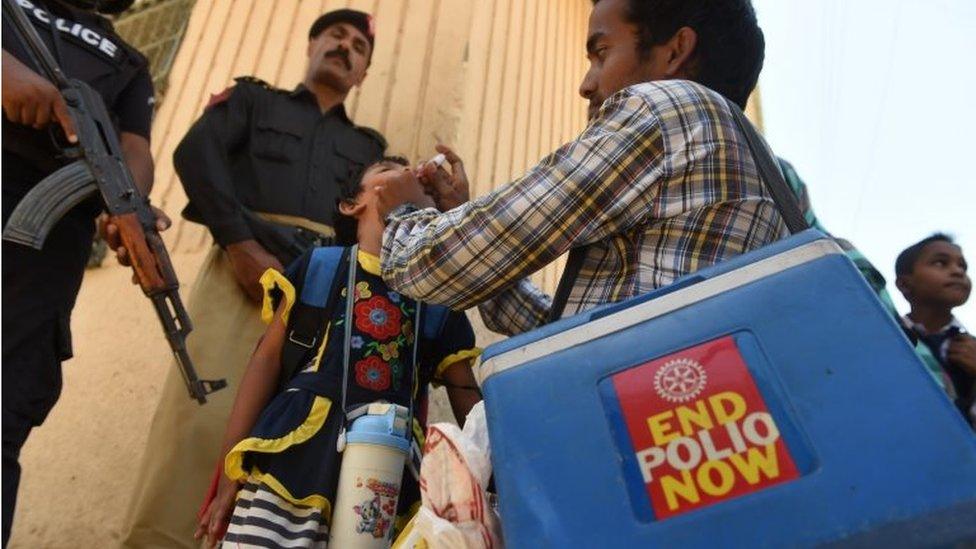
Health authorities emphasize that every child under age 5 must receive multiple doses, along with the full routine childhood immunization schedule, to achieve robust protection. The Pakistan Polio Programme conducts several nationwide and targeted mass vaccination campaigns each year, dispatching teams door-to-door to reach children in even the most remote or restive areas. A nationwide drive from April 13 to 19 reached more than 44.7 million children. Another campaign is scheduled for May, aiming to vaccinate nearly 19 million youngsters.
Officials said they are intensifying efforts in high-risk districts through community-based vaccination teams, engagement with local leaders and the integration of polio drops with other basic health services in an attempt to close immunity gaps and break transmission chains. The World Health Organization has maintained polio-related travel restrictions on Pakistan since 2014. All international travelers from the country are required to carry proof of polio vaccination, a measure intended to prevent the international spread of the virus from its remaining reservoirs.
Copyright © 2021 Independent Pakistan | All rights reserved