By Staff Reporter
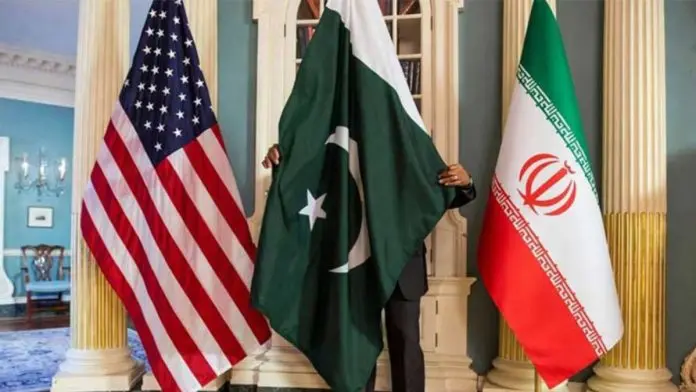
ISLAMABAD: Iran has formally transmitted its response to the latest US proposal aimed at ending the more than two-month-old war in the Persian Gulf, delivering the reply through Pakistani mediators, Iranian state media reported Sunday.
The official Islamic Republic News Agency, citing a source familiar with the matter, said Tehran’s counterproposal envisions the immediate phase of any negotiations focusing exclusively on the cessation of hostilities across the region. No further details of Iran’s position were released.
The diplomatic exchange comes as the United States and its mediators press for a temporary memorandum of understanding that would pause the fighting, reopen the Strait of Hormuz to commercial shipping and create space for later talks on thornier issues, including Iran’s nuclear program. U. officials, including Secretary of State Marco Rubio, had indicated they expected Tehran’s answer within hours. President Donald Trump, who is scheduled to visit China this week, told a French broadcaster on Saturday that he still anticipated a response “very soon.”
The war erupted Feb. 28 when the United States and Israel launched attacks on Iran, triggering a conflict that has disrupted global energy markets, driven up gasoline prices all over the world and prompted Iran to largely block non-Iranian vessels from the Strait of Hormuz — the narrow chokepoint that once carried roughly one-fifth of the world’s oil supply.
A fragile ceasefire, brokered by Pakistan and extended indefinitely by Trump in mid-April, has held only intermittently. Sunday’s developments unfolded against a backdrop of renewed volatility. The United Arab Emirates reported that its air defenses had intercepted two drones launched from Iran, the defense ministry said in a social media post. Kuwait’s military said it detected and neutralized several hostile drones in its airspace at dawn. A bulk carrier sailing northeast of Doha was struck by a projectile, causing a small fire that was quickly extinguished, according to the British maritime security agency UKMTO; no casualties or environmental damage were reported.
Iran has denied involvement in the recent strikes on the UAE but has repeatedly warned of a “crushing response” should any operations against it be launched from Emirati soil. The UAE has shifted some schools to remote learning in response to the security situation, though officials said classes would resume in person Monday.
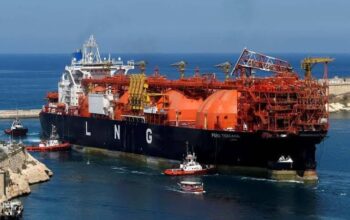
In a separate maritime development that appeared calibrated to build confidence among mediators, a Qatari liquefied natural gas tanker crossed the Strait of Hormuz on Sunday for the first time since the war began, heading for Pakistan’s Port Qasim. Shipping data from Kpler and LSEG confirmed the transit of the Qatar Energy-operated vessel Al Kharaitiyat. Sources familiar with the arrangement said Iran had approved the passage to ease pressure on Pakistan, which has suffered widespread power blackouts after gas imports were halted.
Iranian authorities, however, signaled limits to such gestures. The semi-official Tasnim news agency reported on Sunday that vessels from countries adhering to US sanctions against Iran would continue to face difficulties transiting the strait. Iranian lawmakers are drafting legislation to formalize Tehran’s management of the waterway, including prohibitions on passage by ships from “hostile states,” according to Iranian media.
The diplomatic track has been led by Pakistan, which both Washington and Tehran have described as the sole mediator. The first round of direct US-Iran talks, held in Islamabad on April 11 and 12, produced no agreement but preserved the ceasefire. On Sunday, Pakistani Prime Minister Shehbaz Sharif and his Qatari counterpart, Sheikh Mohammed bin Abdulrahman Al Thani, reaffirmed in a phone call their joint support for “constructive dialogue” and ongoing peace efforts. Qatar’s foreign ministry said Sheikh Mohammed had stressed the need for all parties to engage seriously with mediation to create conditions for a comprehensive agreement.
Qatar’s prime minister separately told Iran’s foreign minister that treating the Strait of Hormuz as “a pressure tool” would only deepen instability. The call followed Sheikh Mohammed’s recent meetings in Miami with Rubio and US Special Envoy Steve Witkoff. Iranian officials have repeatedly framed their current priority as ending the immediate conflict. Foreign Ministry spokesman Esmaeil Baghaei told Press TV that “for now, we have decided to focus on ending the war, because this issue is a matter of concern for the entire region, for our nation, and for the international community.”
Foreign Minister Abbas Araghchi has accused Washington of undermining diplomacy with “reckless military adventure” whenever a solution appears near. On the Iranian side, military leaders continue to project readiness. The commander of the armed forces, Ali Abdollahi, met Supreme Leader Mojtaba Khamenei and received what state-linked Fars news agency described as new “guiding measures” for operations. Abdollahi was quoted as saying the armed forces were “ready to confront any action by the American-Zionist enemies” and that any enemy misstep would draw a “swift, severe, and decisive” response. The timing of the meeting was not specified.
The United States has struggled to rally international support for its position. NATO allies have declined to commit naval forces to reopen the strait absent a full peace deal and a formal multinational mandate. After meeting Italian Prime Minister Giorgia Meloni on Friday, Rubio publicly questioned why allies were not assisting more forcefully. Britain announced it was pre-positioning a warship in the Middle East in preparation for a potential multinational escort mission once conditions stabilize; France is pursuing a parallel coalition approach and has deployed assets to the southern Red Sea.
A senior U.S. intelligence official pushed back Sunday on earlier reports, first published by The Washington Post, that a CIA assessment had concluded Iran could withstand the economic effects of a US blockade for months. The official called such characterizations inaccurate. A separate US official familiar with the assessment said Iran was not expected to face severe pressure for about four months. Trump, facing domestic political pressure over rising fuel costs, has described the ceasefire framework as still intact despite the flare-ups. Iran, for its part, has accused the United States of repeated violations.
Copyright © 2021 Independent Pakistan | All rights reserved