By Staff Reporter
ISLAMABAD: The federal government is struggling to piece together next year’s budget around a roughly Rs1.7 trillion fiscal hole and is pressing the country’s wealthiest provinces to absorb a substantial share of the shortfall, according to Khyber Pakhtunkhwa’s finance adviser — the latest sign that Islamabad’s annual budget exercise has devolved into open coalition brinksmanship.
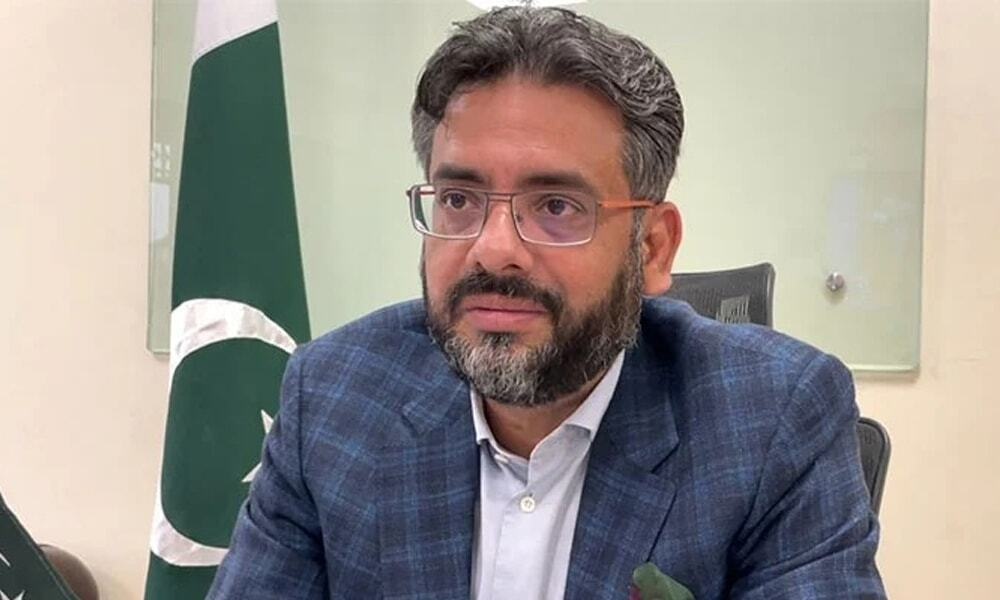
Speaking at a news conference on Wednesday, KP Adviser on Finance Muzammil Aslam said Finance Minister Muhammad Aurangzeb had floated a plan to claw back provincial allocations from the divisible pool by reclassifying certain levies, including customs duties — a move that would redirect roughly Rs700-800 billion from Punjab, Rs500 billion from Sindh, and Rs200 billion from KP itself back to the federal treasury.
No follow-up decision has been taken on that proposal, Aslam said, but the overture alone signals how dire the Centre’s fiscal arithmetic has become. The government, he added, is no longer counting on robust corporate profits materialising next year and is instead banking on petroleum levy collections and increased provincial transfers to plug the gap.
The admission puts a rare public face on tensions that have been simmering inside the finance ministry for weeks. PPP leader Syed Naveed Qamar made similar remarks in a recent television appearance, saying the federal government lacked sufficient funds to meet obligations across major expenditure heads — including defence, debt servicing and pensions — and that provinces had already been approached to contribute.
Cancellations Rattle Markets
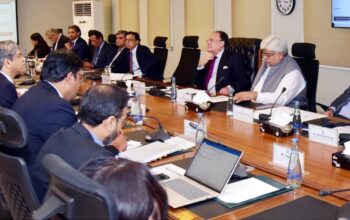
For Aslam, equal concern surrounds the abrupt unravelling of the federal government’s own planning calendar. The National Economic Council meeting scheduled for June 3 was canceled without explanation and without a replacement date. The Annual Plan Coordination Committee meeting was scrapped without notice on May 21 before eventually convening on June 1. Together, he argued, the disruptions were feeding uncertainty that was already visible in equity markets — Pakistan’s benchmark stock index has suffered a sharp recent selloff.
“When you formulate budgets under such pressures, there will always be infighting, and coalition partners will not get the budget passed,” Aslam said.
IMF Targets Compound the Squeeze
At the core of the government’s predicament is what Aslam described as an “over-commitment” to the International Monetary Fund on revenue — a pledge that has left the finance ministry with little room to manoeuvre and few allies willing to help on the spending side. Islamabad is targeting a primary budget surplus of 2% of GDP under its IMF program, a bar that officials are struggling to clear while simultaneously satisfying the demands of a fractious coalition.
Planning Minister Ahsan Iqbal has expressed frustration at the pace of progress, according to Aslam, who characterised the Centre as caught between IMF conditionality and coalition politics, unable to fully satisfy either.
PPP leadership has been logging lengthy sessions at the finance ministry in recent days — a development Aslam described as a matter of serious concern, suggesting the party is pressing hard for concessions before lending its support to the final budget document.
Provinces Stare Down Fresh Revenue Demands
Beyond the divisible pool dispute, the Centre has separately asked provinces to generate an additional Rs430 billion in revenue in the coming fiscal year through expanded taxation of property and agricultural income. KP was initially assigned Rs35 billion of that target; a subsequent letter revised the figure upward to Rs60-65 billion. Aslam attributed the escalating demands directly to the ongoing infighting among coalition partners, as the Centre scrambles to reassign pressure wherever it can.
On proposed income tax relief — widely expected to raise the minimum monthly threshold from Rs100,000 to Rs150,000 — Aslam was dismissive, calling the measure “an eyewash.” Any revenue foregone at the bottom of the income bracket, he said, would simply be shifted onto other taxpayers, producing no net relief to the system.
He also questioned the federal government’s stated commitment to water infrastructure development. While provinces were recently briefed on a coordinated push to build water resources, Aslam said the development allocations embedded in the budget framework told a different story — one in which no such plan was actually funded.
The federal budget is expected to be presented to parliament on June 10.
Copyright © 2021 Independent Pakistan | All rights reserved