By Staff Reporter
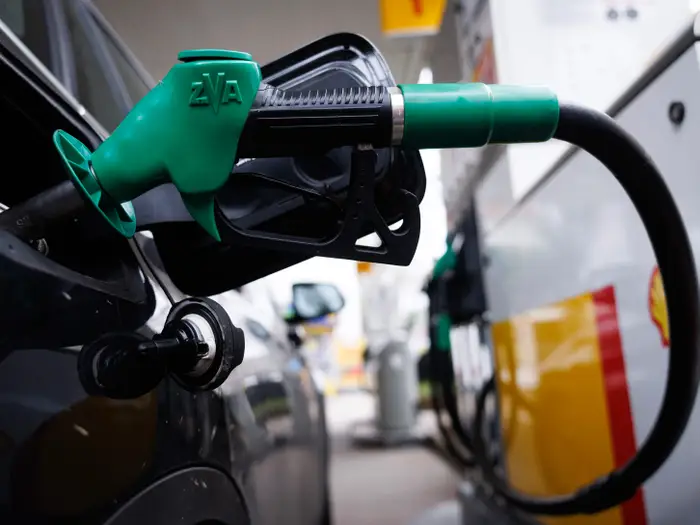
ISLAMABAD: Pakistan cut petrol prices by Rs4 per litre on Friday while holding diesel rates unchanged, extending a run of consecutive weekly reductions as a slide in global crude prices filters through to consumers still reeling from the inflationary shock of earlier this year.
The ex-depot price of petrol fell to Rs377.79 per litre from Rs381.78, effective June 6 through June 12, according to a notification issued by the Petroleum Division. The adjustment marks the fourth straight weekly cut, bringing the cumulative reduction to roughly Rs37 per litre over the past month.
High-speed diesel remained fixed at Rs380.78 per litre. Officials said they had made offsetting adjustments to taxes and levies to hold that price, acknowledging the rate would otherwise have moved lower — a sign of the government’s continued reliance on petroleum duties as a revenue backstop.
The government currently collects roughly Rs100 per litre on diesel in the form of customs duty, petroleum levy and climate support levy, in addition to the inland freight equalisation margin. The total tax take on petrol is higher still, at around Rs125 per litre, encompassing petroleum levy, customs duty and the climate levy.
The weekly pricing mechanism has been in place since late February, when the United States and Israel struck Iranian military infrastructure, triggering a sharp disruption to global energy markets. The conflict prompted the closure of the Strait of Hormuz, through which roughly one-fifth of the world’s oil and gas supplies transit, sending international crude prices sharply higher and forcing Islamabad to revise fuel rates on a rolling weekly basis rather than the previous fortnightly schedule.
Diesel peaked at Rs520.35 per litre on April 10, a record that has since unwound substantially as Hormuz traffic gradually normalised and global crude retreated. Brent crude futures fell 1.2% to $93.84 a barrel on Friday after Oman said operations at the Mina al Fahal export terminal were proceeding normally, following an earlier Reuters report of a suspension in oil loadings after an explosion. US crude slipped 1.9% to $91.22 a barrel. Both contracts remained on course for their first weekly gain in three weeks.
The latest adjustment comes a week after the government delivered what it described as an Eid ul Adha gift to the nation, slashing both petrol and diesel prices by Rs22 per litre each on May 29 — one of the steepest single-week reductions on record. The Oil and Gas Regulatory Authority moved simultaneously, cutting kerosene prices by Rs41.44 per litre to Rs272.
The distinction between diesel and petrol carries significant economic weight. Diesel underpins freight transport, agriculture and public transit — its price feeds directly into the cost of moving goods, operating tractors, running tube wells and powering threshers — making it the fuel most closely tracked by analysts as a leading indicator of inflation. Petrol, by contrast, is consumed primarily by motorcycles, rickshaws and small passenger vehicles, with its price disproportionately felt by middle- and lower-middle-class households dependent on two-wheelers for daily commutes.
Monthly sales of petrol and diesel together run between 700,000 and 800,000 tonnes, making them the government’s dominant source of petroleum levy revenue. Kerosene demand, by comparison, is negligible at around 10,000 tonnes per month — the government collects roughly Rs21 per litre in levy on it, and Rs16 per litre on light diesel oil.
Copyright © 2021 Independent Pakistan | All rights reserved