By Staff Reporter
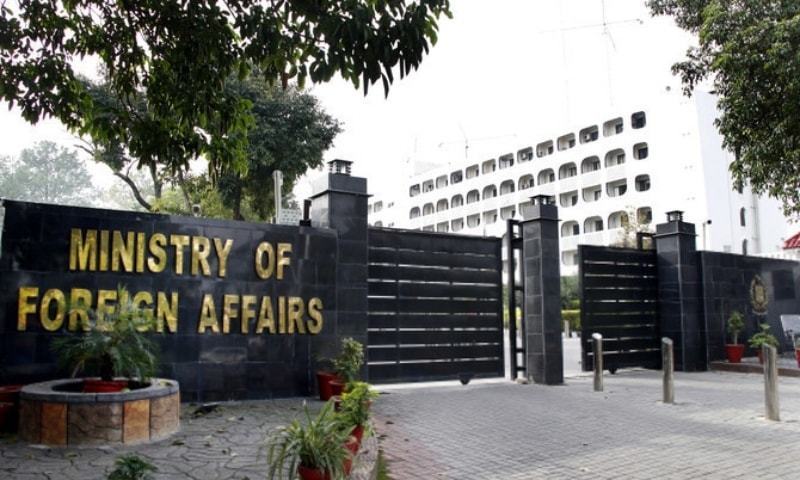
ISLAMABAD: The Foreign Office on Friday delivered a sharp rebuke to New Delhi, dismissing India’s objections to scheduled elections in Gilgit-Baltistan as “baseless” propaganda and accusing India of mounting a “carefully choreographed attempt to conflate fact with fiction” — all while election workers in the remote mountain territory were finalising security deployments for Sunday’s vote.
The dueling statements, exchanged hours before a midnight ban on campaigning took effect across Gilgit-Baltistan, laid bare the enduring bitterness of a territorial dispute that has shadowed the two nuclear-armed neighbors since the subcontinent’s partition nearly eight decades ago.
India’s foreign ministry fired first on Friday, asserting that “the entire Union Territories of Jammu and Kashmir and Ladakh, including the so-called ‘Gilgit-Baltistan’, are integral and inalienable parts of India” — language Islamabad has long rejected as legally hollow and politically self-serving.
Pakistan’s response was swift and pointed. Foreign Office spokesman Tahir Andarabi accused India of remaining in “illegal occupation of the internationally recognised disputed territory of Jammu and Kashmir” and described New Delhi as “a global leader in propagating fake narratives and tendentious propaganda.”
“We unequivocally reject this latest Indian rhetoric with the contempt it deserves,” the Foreign Office statement read.
Islamabad restated its long-held position that the Kashmir dispute represents the longest unresolved item on the United Nations Security Council agenda — a conflict it traces to India’s “forcible and unlawful occupation” of the state in 1947. A lasting settlement, the Foreign Office argued, can only come through implementation of UNSC resolutions granting Kashmiris the right to determine their own future through a UN-supervised plebiscite.
The statement made no effort to soften its language when describing conditions in Indian-occupied Kashmir, accusing New Delhi of committing “grave and systematic human rights violations” under “draconian laws” that grant Indian forces broad immunity. Pakistan characterized the situation as “state terrorism” against an unarmed civilian population, and called on India to repeal those laws, reverse all actions taken in occupied Kashmir since August 5, 2019, and allow independent observers, humanitarian organizations, and journalists access to the territory.
The exchange unfolded against the backdrop of a region mobilizing for elections it has waited months to hold. Gilgit-Baltistan’s general assembly elections, originally delayed four months due to severe winter conditions, are now set for Sunday. On Friday evening, the Gilgit-Baltistan Election Commission formally imposed a 48-hour blackout on all campaign activity, effective midnight.
The prohibition, grounded in Section 182 of the Elections Act 2017, bars political parties, candidates, and their supporters from organizing or attending any rally, corner meeting, procession, or public gathering within constituencies until polls close. Loudspeakers, canvassing, and any form of voter outreach were also banned under the order.
“The commission has directed all political parties, candidates, election agents and workers to ensure full compliance,” the commission warned, adding that violations would be prosecuted under election law.
Gilgit-Baltistan Chief Election Commissioner Raja Shahbaz Khan told PTV News that all arrangements were in place for a peaceful vote, with strict security measures deployed across the region’s constituencies. He said campaigning had concluded without significant incident and warned that any breach of the code of conduct would draw immediate consequences.
In the constituency of Shigar — designated GBA-12 — returning officer Faisal Hayat said public engagement had been strong, with transport arranged for polling day and roughly 120 security personnel divided across three deployment points to cover sensitive locations. “A policy of zero tolerance will be enforced to ensure peaceful elections,” he said.
The weeks leading up to Sunday’s vote were dominated by the kind of high-decibel politics that regional elections in Pakistan routinely attract. Pakistan Peoples Party chairman Bilawal Bhutto-Zardari and First Lady Aseefa Bhutto-Zardari led the PPP’s campaign through the territory, making pledges of constitutional protections for Gilgit-Baltistan and promising development through public-private partnerships.
Former Prime Minister Nawaz Sharif made a one-day swing through the region for the PML-N, addressing a public gathering and meeting with the party’s ticket-holders.
The Pakistan Tehreek-e-Insaf, which holds the principal opposition role at the federal level, campaigned amid persistent complaints. Party leaders alleged that several of their officials had been expelled from the territory, and that others were blocked from entering altogether. PTI chairman Barrister Gohar Ali Khan, who led much of the party’s outreach, repeatedly criticized what he described as an “uneven playing field.”
Gilgit-Baltistan Minister Ghulam Abbas had offered his own dismissal of India’s political claims earlier this year, telling reporters at the National Press Club in Islamabad that the region’s people had voluntarily chosen Pakistan at partition — without, he said, major violence — and had remained loyal ever since.
“The Indian propaganda and the statements of Narendra Modi claiming that the people of GB are protesting against Pakistan to join India have become a laughing stock in the region,” Abbas said, adding that the narrative had found no traction internationally either.
Copyright © 2021 Independent Pakistan | All rights reserved