By Staff Reporter
ISLAMABAD: Pakistan’s two largest ruling parties clashed over taxation strategy on Sunday as they raced to iron out budget differences before Finance Minister Muhammad Aurangzeb presents the federal spending plan to parliament in less than 72 hours.
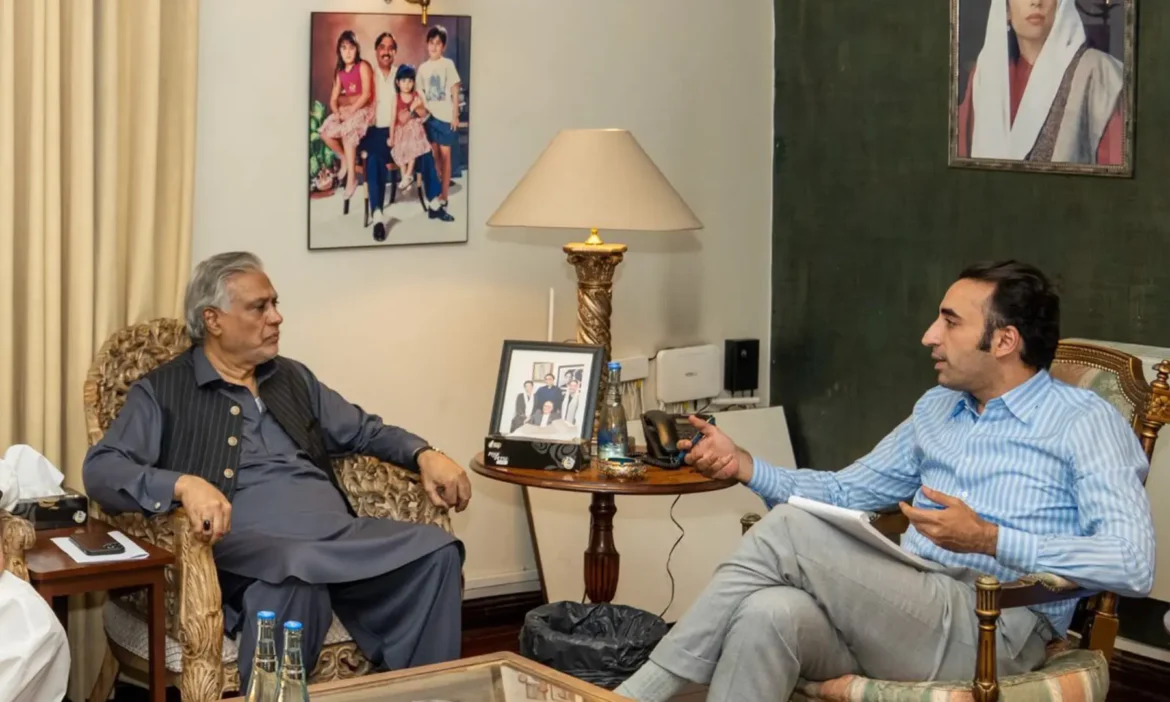
A Pakistan Peoples Party delegation led by Chairman Bilawal Bhutto-Zardari met Deputy Prime Minister Ishaq Dar at Zardari House in Islamabad in the second of what is expected to be three rounds of pre-budget consultations between the coalition partners. A final meeting is scheduled for Monday.
The talks, which covered revenue measures, development allocations and provincial fiscal targets, exposed a fault line at the heart of government economic policy: how to raise the hundreds of billions of rupees demanded by the International Monetary Fund without alienating voters already battered by years of inflation.
“The government wants to tax the same classes instead of expanding the tax base,” a PPP leader said, summarising the party’s core objection. PPP officials said their delegation was “unhappy with the budget in its current form.”
Bhutto-Zardari was accompanied by senior party figures including Senator Sherry Rehman, former finance minister Naveed Qamar, Sindh Chief Minister Murad Ali Shah and Sindh Minister Jam Khan Shoro.
IMF Demands Reshape Coalition Politics
The IMF’s fingerprints are visible throughout the negotiations. The fund has demanded at least Rs430 billion in additional federal budgetary measures in the fiscal year beginning July, alongside a roughly equivalent Rs430 billion contribution from the country’s four provinces — a condition that sources described as unprecedented in the fund’s engagement with Pakistan.
That provincial revenue requirement has become a particular flashpoint. PPP officials said the Centre had already asked provinces to raise their revenue targets to meet IMF conditions, and Bhutto-Zardari’s team pressed Dar on Sunday for specific mechanisms to help provinces generate the additional tax revenue without imposing new levies on existing taxpayers.
The federal government is separately seeking Rs1.7 trillion in budgetary support from the provinces for the coming fiscal year, according to people familiar with the discussions, a figure that reflects the scale of fiscal pressures bearing down on the coalition ahead of the June 10 budget.
One PPP insider said the IMF had set binding macroeconomic conditions — including primary surplus and revenue targets — for the federal budget, adding that the fund’s direct imposition of provincial fiscal targets represented a structural shift in how Pakistan’s multilateral program is being administered.
Development Priorities for Sindh
Beyond taxation, the discussions also touched on Sindh-specific concerns. Shoro briefed Dar on the provincial government’s development priorities, including ongoing infrastructure schemes and proposed projects requiring federal financial support.
PPP officials indicated that Bhutto-Zardari raised reservations about certain development project allocations for the province under the FY2026-27 fiscal plan, though the specifics were not disclosed. Development allocations and the Public Sector Development Programme more broadly were also on the agenda.
Dar told the PPP delegation that the party’s proposals would be reflected in the final budget, according to sources. Further consultations on development spending are expected to continue before the plan is formally locked in.
Final Window
The Monday meeting, likely the last opportunity for substantive changes before Wednesday’s parliamentary presentation, will be watched closely for signs of whether the two parties can bridge their differences on revenue strategy.
The IMF’s insistence on a broad fiscal consolidation effort — one that now extends to subnational governments — has complicated the coalition’s ability to offer voters the kind of relief spending that could soften the political blow of an austerity-tinged budget. PPP leaders said they continued to push for measures that would ease pressures on lower-income households and that meaningful expansion of the tax base, rather than deeper levies on existing filers, remained their preferred path.
Copyright © 2021 Independent Pakistan | All rights reserved