By Staff reporter
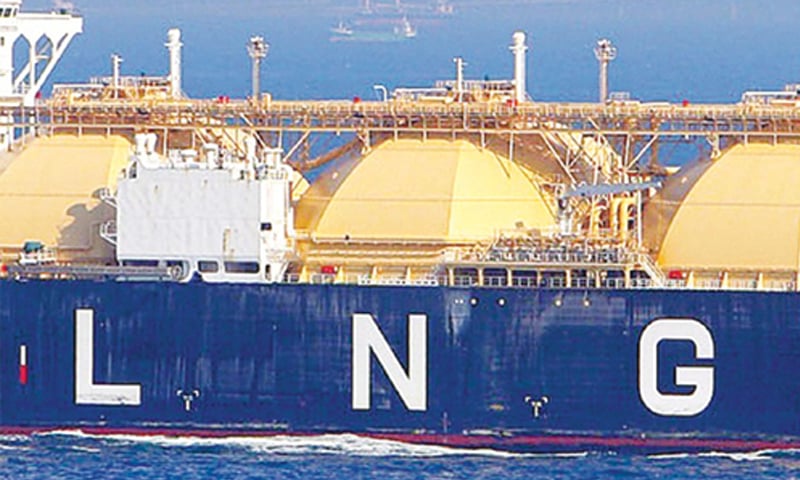
KARACHI: A liquefied natural gas tanker docked at Karachi’s Port Qasim on Sunday, marking only the second spot cargo the country has received since the Iran war severed regional energy supply chains and effectively closed one of the world’s most critical maritime chokepoints.
The BW Helios, a Singapore-flagged carrier, berthed at the PGPCL terminal at 12:24 p.m. local time carrying 167,070 cubic meters of LNG sourced from Oman, according to a statement from Port Qasim’s public relations officer, Aktaf Hussain Warsi. “The vessel has been positioned at berth for commencement of operational activities as per schedule,” Warsi said, adding that updates on departure timelines would follow.
The arrival is a modest but telling indicator of how Pakistan is navigating an energy landscape transformed by the conflict. The country received its first spot LNG cargo since the war began on April 30, when the carrier Seapeak Magellan delivered 140,000 cubic meters sourced from TotalEnergies SE — a smaller consignment, and weeks in the making.
The two deliveries follow a procurement tender Pakistan floated last month seeking bids from international suppliers for two spot cargoes, a stopgap measure as the country’s contracted Qatari pipeline supplies grew increasingly unreliable. Shipping through the Strait of Hormuz — the narrow passage separating Iran from the Arabian Peninsula — has been severely disrupted since the United States and Israel launched joint airstrikes against Iran, prompting Tehran to effectively close the strait to commercial traffic.
The consequences for global energy markets have been swift. Nearly a fifth of the world’s seaborne oil and gas transits the Hormuz corridor, and its closure has forced importers across Asia to scramble for alternative sources and longer shipping routes.
For Pakistan, a country overwhelmingly dependent on Middle Eastern fuel imports to meet domestic energy demand, the disruption has been particularly acute. LNG imports in March — before the conflict escalated — totaled just $70.2 million, a collapse of 69% compared with $226 million in the same month a year earlier, according to data from the Pakistan Bureau of Statistics. That sharp contraction preceded the worst of the Hormuz disruptions, suggesting subsequent months may prove even more challenging.
Islamabad has moved cautiously to rebuild its buffer. Officials have sought to maintain adequate inventory levels of energy products while avoiding overexposure to spot market volatility, which has spiked in tandem with regional instability. Sunday’s delivery, while not large by international standards, signals a continued effort to keep gas-fired power plants and industrial consumers supplied through what may be a prolonged period of supply uncertainty.
Copyright © 2021 Independent Pakistan | All rights reserved