By Staff Reporter
ISLAMABAD: Pakistan’s spending on nuclear weapons rose 18 percent last year to an estimated $1.5 billion, outpacing the rate of increase by rival India and ranking as the second-steepest percentage jump among the world’s nine nuclear-armed states, according to a report published on Tuesday by the International Campaign to Abolish Nuclear Weapons.
The figures emerged as global nuclear weapons expenditure hit its highest level since ICAN began tracking it in 2020, climbing 19 percent year-on-year to $118.8 billion — equivalent to roughly $3,768 every second — as nuclear powers pressed ahead with sweeping programmes to modernise and expand their arsenals.
Pakistan’s outlay, equivalent to around 358 billion rupees at current exchange rates, compared with $1.3 billion in 2024. Only the United States recorded a steeper percentage increase among the nine states covered by the report.
India, Pakistan’s nuclear-armed rival with whom Islamabad fought a brief aerial confrontation in May, spent an estimated $2.8 billion on its nuclear arsenal in 2025, up 12 percent from the prior year. ICAN estimates India holds approximately 190 nuclear warheads against Pakistan’s roughly 170, with both countries continuing to develop and upgrade delivery systems as the cornerstone of their respective deterrence postures.
The United States remained by a considerable margin the world’s largest nuclear spender, allocating $69.2 billion to its arsenal — more than the other eight states combined. China ranked second at $13.5 billion, followed by the United Kingdom at $12.6 billion and Russia at $9.5 billion.
ICAN, the Geneva-based advocacy group that won the 2017 Nobel Peace Prize for its campaign against nuclear weapons, said the cumulative cost of maintaining these arsenals was staggering. The nine states collectively spent $471 billion on nuclear weapons in the five years from 2021 through 2025, the report found.
“Across the board, nuclear-armed states are making plans to retain their arsenals for decades to come,” the report said, noting that several had published spending projections running to tens of billions of dollars — and in some cases past $1 trillion — over the next several decades.
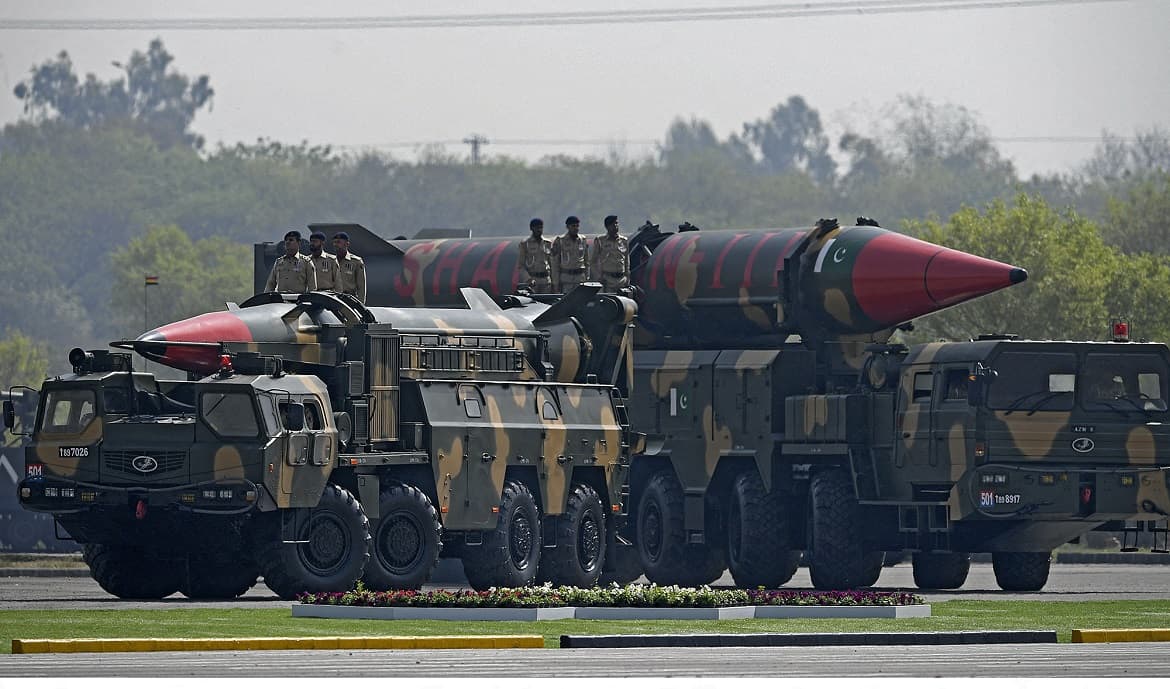
As an illustration of those long-term commitments, ICAN pointed to Pakistan’s Shaheen-I ballistic missile system, believed to have entered operational deployment around 2022 and potentially remaining in service until 2052.
The surge in expenditure comes against a backdrop of heightened geopolitical tensions globally, with nuclear doctrine receiving renewed attention from Moscow to Washington. ICAN said all nine nuclear-armed states were investing in systems specifically designed for multi-decade operational lifespans.
The report’s findings drew a sharp contrast with the trajectory of disarmament efforts. Ninety-nine countries have now signed, ratified or acceded to the Treaty on the Prohibition of Nuclear Weapons, an accord that seeks the eventual elimination of all nuclear arms. None of the nine nuclear-armed states is among them.
Copyright © 2021 Independent Pakistan | All rights reserved