By Staff Reporter
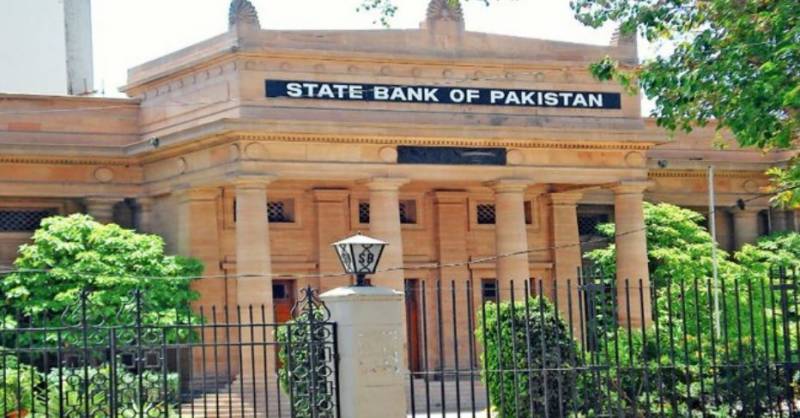
KARACHI: Pakistan’s central bank faces one of its more unusual policy meetings in recent memory on Monday, convening its Monetary Policy Committee just hours after the United States and Iran announced a peace deal that dramatically altered the geopolitical backdrop that had driven the South Asian nation’s first interest-rate increase in nearly three years.
The State Bank of Pakistan scheduled the June 15 meeting as the final policy review of fiscal year 2026, a gathering that as recently as last week carried genuine uncertainty about whether borrowing costs would rise further. That calculus shifted abruptly on Sunday when Prime Minister Shehbaz Sharif announced on X that the United States and Iran had reached a peace deal declaring “the immediate and permanent termination of military operations on all fronts, including in Lebanon,” with a formal signing ceremony scheduled for June 19 in Switzerland.
Trump followed within minutes on Truth Social, declaring the deal “complete” and authorising the immediate lifting of the US naval blockade on the Strait of Hormuz, the narrow waterway through which roughly a fifth of global oil supplies normally transit. “Ships of the World, start your engines. Let the oil flow!” the president wrote.
The announcement landed the morning of the very meeting at which the SBP’s Monetary Policy Committee was weighing whether to extend its tightening cycle — removing, in the span of hours, much of the inflationary pressure that had underpinned the case for higher rates.
A Hike Born of War
The SBP raised its benchmark policy rate by 100 basis points to 11.5% on April 27, its first increase since June 2023, as volatile oil prices stemming from Middle East tensions clouded the inflation outlook. Policymakers said a tighter stance was needed to anchor inflation expectations and contain second-round effects of the supply shock.
At its worst, Brent crude futures had surged past $111 a barrel in late March, touching their highest level since June 2022, as the Strait of Hormuz closure choked off roughly a fifth of global energy flows. The MPC assessed that the supply shock could push inflation to double digits before it began to ease, with price pressures expected to stay above the upper bound of the bank’s 5-7% target range for most of fiscal 2027
The war between the US and Israel on one side and Iran on the other began February 28 and had reshaped Pakistan’s monetary policy calculus at every turn. A ceasefire brokered partly through Islamabad’s mediation took effect in April, with Sharif announcing that Pakistan’s capital would host delegations from both sides in an effort to reach a “conclusive agreement.” That ceasefire proved fragile, with both sides trading strikes in subsequent weeks, keeping energy markets on edge.
The Case for Holding
By the time the MPC convened on Monday, the grounds for a further increase had substantially eroded. Brent crude fell to around $87.3 a barrel last week, declining roughly 6% over the preceding days as expectations of a US-Iran agreement built, though prices remain more than 20% higher than before the conflict began in late February.
Brokerage firm Topline Securities said it expected the SBP to keep the policy rate unchanged, noting that repeated assurances from US President Donald Trump about ending the war early had kept Brent crude below $100 a barrel for the prior two weeks.
The brokerage’s own survey ahead of the meeting captured just how divided market participants had been before Sunday’s announcement. Of respondents polled, 49% expected the policy rate to remain unchanged while another 49% anticipated an increase — 34% forecasting a 50-basis-point hike and 15% expecting 100 basis points. Just 2% anticipated a rate cut.
The near-perfect split reflected the singular driver of uncertainty: oil price volatility stemming from a conflict whose resolution, until this weekend, remained deeply uncertain.
Faisal Mamsa, chief executive of financial data firm Tresmark, said the SBP would weigh several variables before any decision, including currency stability and the external account. Pakistan’s recent economic stability, he said, had been driven more by strong capital inflows and the accumulation of foreign exchange reserves than by interest rates alone — a nuance that limits what monetary policy can accomplish when inflation is supply-driven rather than demand-driven.
“If the recent inflationary pressure is being driven by oil prices and geopolitical tensions, and a regional truce emerges in the coming days, some of that pressure could subside on its own,” Mamsa said. He added that subdued demand from China also reduced the probability that oil prices would stay elevated for an extended period, with inflation expected to soften from August onward.
The SBP’s own April statement had pointed to FX reserves reaching above $18 billion by June 2026, supported by a Eurobond issuance that marked Pakistan’s return to international capital markets after a gap of more than four years, as well as a staff-level agreement with the IMF reached in late March. Those external buffers have given policymakers more room to pause than Pakistan has historically enjoyed during periods of global commodity stress.
Twin Deficits, Inflation Trajectory
Mamsa cautioned that the MPC would also have to weigh Pakistan’s twin deficits — its current account and trade imbalance — before settling on rates. “The fiscal position and current account remain critical variables, particularly for an economy that has historically faced external financing constraints,” he said.
Analysts expect average inflation in fiscal 2026 to remain near 7%, with fiscal 2027 projected slightly above 8%. The trajectory argues against aggressive further tightening even absent the peace deal, since the April hike was specifically calibrated to address the pass-through of an external energy shock rather than a broadening of domestic price pressures.
With Sunday’s agreement reopening the Strait of Hormuz — the deal includes an end to military operations, reopening of the waterway, and a 60-day negotiation process covering Iran’s nuclear program and sanctions relief — markets are pricing a meaningful reversal of the oil shock. Even with a deal in hand, traders cautioned that full normalisation of oil flows would face practical obstacles, including clearing mines from the strait, restarting idled production fields, and repairing energy infrastructure damaged in the conflict
For now, sources in Pakistan’s financial sector said ahead of Monday’s decision that further rate increases appeared unlikely, and that cuts remained a question of timing rather than direction. The June 15 meeting, originally freighted with uncertainty, may ultimately prove easier to call than almost any other in the SBP’s fiscal year — the war that drove its only hike ended on the morning of its final review.
Copyright © 2021 Independent Pakistan | All rights reserved