By Staff Reporter
ISLAMABAD: The United States and Iran declared an end to months of devastating war on Sunday night, announcing a framework agreement that would halt military operations, lift America’s naval blockade of Iranian ports and reopen the Strait of Hormuz — the critical Gulf waterway that Tehran has effectively closed to global shipping since the conflict began in February.
The announcement, which sent oil prices tumbling and Asian stock markets sharply higher, was first confirmed by Prime Minister Shehbaz Sharif, who has led a diplomatic effort involving Qatar, Saudi Arabia and Turkey over recent weeks of frantic shuttle diplomacy. Minutes later, Donald Trump posted his endorsement on Truth Social. “The Deal with the Islamic Republic of Iran is now complete,” the president wrote shortly after 5.30 pm Washington time. “Let the oil flow.”
A formal signing ceremony is scheduled for Friday, 19 June, in Switzerland. But even as world leaders welcomed the announcement and energy markets reacted with relief, the precise terms of the agreement remained undisclosed, and several of the most consequential questions — above all, the fate of Iran’s nuclear programme — were explicitly deferred to a separate, 60-day negotiating period that will begin only after the memorandum of understanding is signed.
A deal wrapped in uncertainty
Iran’s Mehr state news agency published what it described as a 14-point memorandum of understanding between the two countries, reporting that the US had agreed to release $12 billion in frozen Iranian assets before negotiations begin, with a further $24 billion to follow during the 60-day talks. A senior Iranian official separately told Reuters that under the draft deal Washington had agreed to release $25 billion in frozen assets, while Tehran would commit not to produce or acquire nuclear weapons and would maintain the nuclear status quo — no further enrichment or expansion of facilities — pending a final agreement.
The Trump administration did not immediately confirm these figures or publish any text of the memorandum. That opacity drew swift and pointed criticism from Democratic senators, who warned that competing interpretations of what had been agreed could undermine the deal before it was even signed.
“The fact that we have not seen any text of an agreement, while he and Iranian leaders once again say different things about what has been agreed, highlights why we need to see this deal immediately,” said Senator Chris Coons of Delaware, writing on X. Senator Chris Murphy, a member of the Senate Foreign Relations Committee, went further, describing the deal as “a surrender to Iran” — though one the US should welcome. “Every day this insane, illegal war continues, we get weaker,” he said. “More war would just make things worse.” Murphy noted that the sole tangible Iranian concession was the reopening of the Strait of Hormuz, which had been open before the conflict began.
How the deal came together
Pakistan’s role in brokering the agreement has been central. Sharif wrote that his country was grateful to Qatar, Saudi Arabia and Turkey for their contributions, and diplomats familiar with the process said the Qatari delegation had travelled to Tehran twice in the final days of talks — remaining in the Iranian capital even at the height of the conflict — to persuade Iranian officials to pull back from the brink. The Pakistanis maintained constant contact with Washington, Tehran and the broader regional quartet they lead, which also includes Egypt.
Tehran’s embassy in Tunisia acknowledged the irony with some relish. “History can be ironic,” it posted on X. “Trump, in pursuit of a deal with the Islamic Republic of Iran, went to the doorstep of another ‘Islamic Republic’ — the Islamic Republic of Pakistan.”
Iran’s deputy foreign minister, Kazem Gharibabadi, confirmed in televised remarks that the agreement brought “an immediate end” to the war, and that talks within two months would seek a “final agreement.” The secretariat of Iran’s Supreme National Security Council announced that military operations on all fronts, including Lebanon, would cease permanently from Monday night. It added, however, a pointed qualifier: “final negotiations will be postponed until after the implementation of the other party’s commitments under the memorandum” — a formulation that left open the question of what Iran understood those commitments to be.
The Strait of Hormuz: open, but how, and when?
On Sunday evening, Trump appeared categorical. “I hereby fully authorise the toll-free opening of the Strait of Hormuz,” he wrote, “and, simultaneously herewith, authorise the immediate removal of the United States Naval blockade.” An hour later, his position had shifted: the opening of the waterway would be contingent on the signing ceremony on Friday, he said, and initially for the purposes of mine removal.
Iran’s Mehr news agency, meanwhile, reported that the memorandum stipulates the strait would reopen within 30 days under “Iranian arrangements” — a formulation that sits awkwardly with Trump’s repeated insistence that no country would be permitted to control the waterway or levy tolls on passing ships. “The strait is going to be open to everybody. Nobody’s going to control it,” he had said last month. Pakistan’s prime minister made no mention of the Hormuz question at all in his opening announcement.
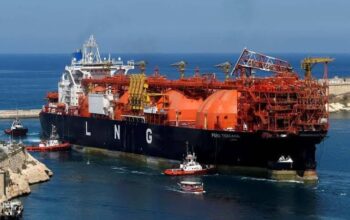
Energy market experts cautioned against assuming a swift return to normal. Andrew Lipow of Lipow Oil Associates said mines would first need to be cleared from the waterway, a process that could take anywhere from a few weeks to six months. A large backlog of tankers had accumulated, and restarting oil production and restoring normal loading operations at Gulf terminals would itself take weeks. Some of the region’s infrastructure has been damaged by drone strikes during the conflict.
Oil markets nonetheless reacted decisively. Brent crude fell 4.8 percent to $83.18 a barrel in early Asian trading on Monday, while US West Texas Intermediate slid more than 5.6 percent to $80.13. Brent had peaked at around $120 a barrel during the war, up from roughly $70 before it began. Japan’s Nikkei 225 gained 5.4 per cent in morning trade, while South Korea’s Kospi rose more than 5.5 per cent.
Vandana Hari of the energy markets analysis firm Vanda Insights tempered the optimism, warning that the absence of published detail “is likely to inject unease and uncertainty into the market” and that a week of volatility lay ahead.
Lebanon: the deal’s most dangerous loose end
Thousands of people have died since the US and Israeli forces first struck Iran on 28 February. The conflict rapidly spread, drawing in Lebanon, where Israel continued operations against Hezbollah throughout the war, and the Gulf states hosting American bases, which came under Iranian attack. Tehran responded to the initial strikes by threatening vessels using the Strait of Hormuz, triggering the economic disruption that has roiled global energy markets and become a mounting political liability for Trump and his Republican party ahead of November’s midterm elections.
The role of Lebanon in any agreement proved one of the most contentious issues throughout negotiations. Iran insisted on a complete cessation of hostilities there as a condition of any deal; Israel declared it would retain freedom of military operations regardless. An Israeli strike on the southern suburbs of Beirut on Sunday — which killed three people and injured six, and which Israel said targeted Hezbollah — nearly derailed the entire process. Trump said it had “delayed the signing by a few hours” and told the Axios news site he was furious. He had previously described Netanyahu as “fucking crazy” after an earlier Beirut strike, and told the Wall Street Journal on Sunday that he feared the latest attack might torpedo the deal entirely. He is reported to have called the Israeli prime minister and told him he had “no fucking judgment.”
Both Sharif and Gharibabadi were unequivocal that Lebanon was included in the ceasefire. Trump, in his initial announcements, made no mention of the country at all.
Israel did not immediately respond to news of the agreement. It has consistently said it was not party to the US-Iran talks. Gideon Levy, the Israeli political commentator, told Al Jazeera that the deal was being read in Israel as “the defeat of Israel and the personal defeat of Netanyahu.” Iran had been Netanyahu’s “life project”, Levy said, and Israel had been “totally excluded from the negotiations.” The attacks on Beirut were “ridiculous, childish,” he added, and the reality was now clear: “Israel only lost in this game.”
Levy was stark about the fragility of the Lebanon element. “Israel is still in Lebanon, has no intention to withdraw from Lebanon, and as long as the troops are there, there will be no ‘total ceasefire’ because there will always be resistance to the Israeli occupation,” he said. “That is one of the biggest challenges of the agreement.”
The nuclear question: deferred, not resolved
Perhaps most significantly, the agreement does not resolve the question that Trump cited as the central justification for the war: Iran’s nuclear programme. The president repeated his pledge that “Iran will never have a nuclear weapon,” and Vice President JD Vance told Fox News on Sunday evening that a prohibition on Iranian nuclear weapons was “built into this agreement” and that American compliance verification was assured. Yet neither the administration nor Iran published any text confirming those commitments, and senior Pakistani officials briefed reporters that nuclear talks would simply continue over the next 60 days.
Iran has produced more than 400 kilograms of uranium enriched to near bomb-grade purity in the years since Trump withdrew the United States from the 2015 Joint Comprehensive Plan of Action — the multilateral deal negotiated under Barack Obama that Tehran now derides as the baseline from which America retreated. The eventual fate of that stockpile, believed by Western intelligence services to have been buried beneath three nuclear sites badly damaged by US strikes last year, will be the central point of dispute in the coming talks.
Republican senator Lindsey Graham, one of the most hawkish voices in Congress on Iran, said he would be “watching closely.” He reminded the administration that under existing law, any nuclear agreement with Iran must be submitted to Congress for review and a vote. Several of Graham’s Republican colleagues took a more triumphant line, with Congressman Robert Aderholt claiming the deal would place greater limits on Iranian enrichment than the JCPOA had done — a claim for which no published evidence currently exists.
In a joint statement, the leaders of the United Kingdom, France, Germany and Italy said they were prepared to lift sanctions on Iran in response to “clear, verifiable steps” on its nuclear programme. “Iran must never have a nuclear weapon,” said the British prime minister, Keir Starmer, adding that unrestricted freedom of navigation in the Strait of Hormuz must be restored without conditions.
A deal — and a birthday
The announcement came on Trump’s 80th birthday, a fact his secretary of state, Marco Rubio, did not allow to pass unacknowledged. “America is lucky to have a leader with such incredible courage, remarkable strength, an unmatched sense of humour, and an unparalleled love of country,” Rubio wrote on X. The president, for his part, drew the obvious contrast with his predecessors. He had secured a “great deal,” he declared, that past presidents had been unable to achieve — a claim that sat alongside his longstanding contention that the 2015 deal he himself abandoned was a catastrophic failure.
Democrats continued to urge scepticism without rejecting the ceasefire outright. Murphy acknowledged that the US should be relieved the war was ending, but described the conflict as “insane” and “illegal” from the outset, and argued that the country was now back roughly where it had started — but only after devastating loss of life and months of economic pain. Polling published last week found 63 percent of Americans disapprove of Trump’s handling of the economy, with 57 percent believing conditions were getting worse.
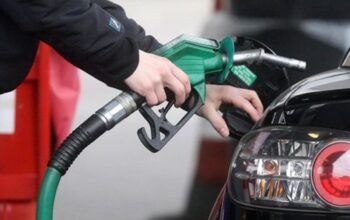
Vance, appearing on Fox News, promised that energy prices would start falling and thanked the American public for its patience. How quickly any reduction in petrol prices translates into tangible relief for households will go a considerable way to determining the political weather ahead of November — and how much credit, or blame, the Republican party carries into those elections.
With the signing ceremony still days away, several critical details remain unresolved. The text of the memorandum has not been published. Iran and the United States have already offered different accounts of what it contains. Israel remains outside the agreement and has given no indication it will halt operations in Lebanon. Trump himself told the New York Times that he would restart military operations if Tehran failed to reach a satisfactory nuclear agreement during the 60-day talks. The deal is real. Whether it holds is another question entirely.
Copyright © 2021 Independent Pakistan | All rights reserved