By Staff Reporter
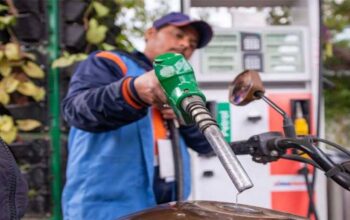
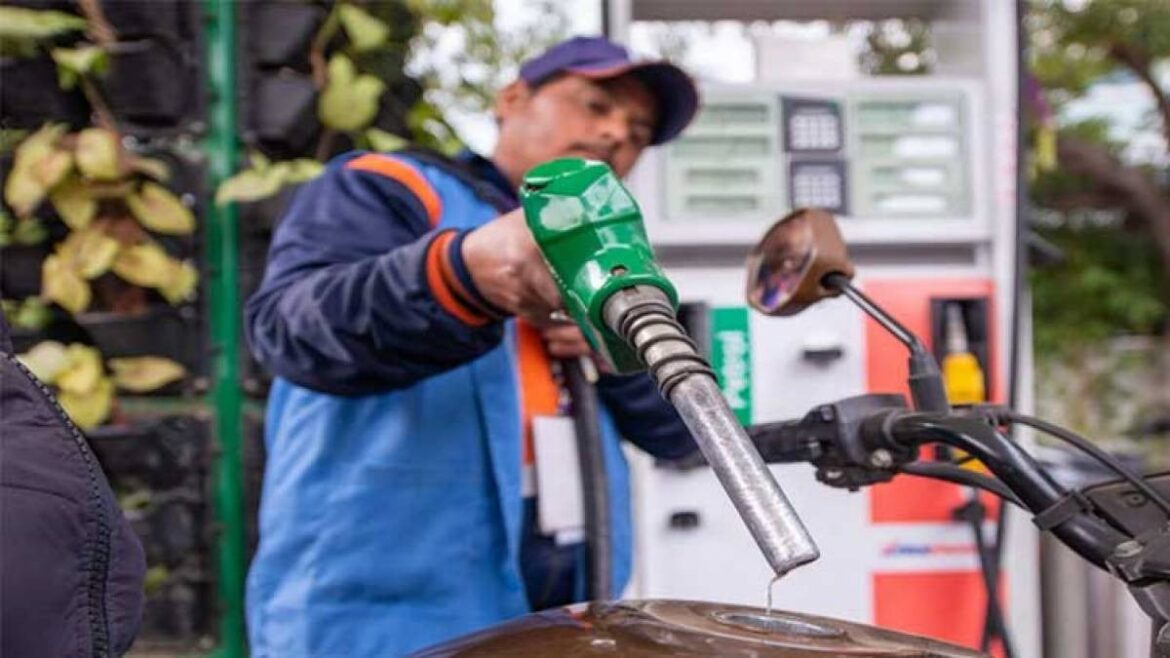
ISLAMABAD: Pakistan’s petroleum minister signaled that consumers will see relief at the pump as early as this week, as tumbling crude prices in the wake of a US-Iran ceasefire framework give Islamabad room to unwind some of the sharpest fuel-price increases in the country’s recent history.
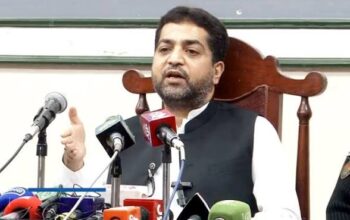
Federal Minister for Petroleum Ali Pervaiz Malik told Geo News on Wednesday that the government would bring “good news regarding a reduction in petroleum prices,” with a formal decision expected Friday — the government’s designated weekly review date for fuel pricing, a practice it adopted after the conflict erupted in late February.
Brent crude futures fell below $80 a barrel Wednesday, their lowest level since the opening days of the US-Iran war, after American and Iranian officials announced agreement on a framework to end hostilities, reopen the Strait of Hormuz and lift Washington’s naval blockade of Iranian oil exports. The prospect of Iranian crude returning to world markets drove the move, with bond yields also retreating on expectations of easing inflationary pressure.
For Pakistan — a major fuel importer that has seen petrol prices surge from Rs373 per litre before the war to a record Rs458.40 per litre at the peak — the shift in global markets arrives at a politically fraught moment. “The prime minister had assured that whenever global prices fall, the benefit will be transferred to the people,” Malik said.
From Record Highs to Potential Reversal
The arithmetic of Pakistan’s fuel crisis tracks closely with the trajectory of the conflict. When US and Israeli forces struck Iran on Feb. 28, Brent closed the prior session at $72.48 a barrel and West Texas Intermediate at $67.02. As Iranian retaliation temporarily shut the Strait of Hormuz — through which roughly a fifth of the world’s seaborne oil and liquefied natural gas transits — crude spiked, and Islamabad moved swiftly to pass the cost to consumers.
Petroleum prices were revised twice in the first week of March alone. The steepest single adjustment came in April, when petrol was raised by Rs137 per litre to Rs458.40 — a record. Prime Minister Shehbaz Sharif moved to contain the political damage the following day, announcing an Rs80-per-litre cut in the petroleum levy that brought the price back to Rs378.
Subsequent weeks brought additional turbulence. Prices rose again by Rs26.77 per litre for both petrol and high-speed diesel, followed by a further increase that pushed the pump price toward Rs400 per litre. The Petroleum Division then issued another notification adding roughly Rs15 per litre. More recently, the government has moved in the other direction, trimming prices in consecutive revisions as global rates softened. Petrol currently stands at Rs373.78 per litre, with high-speed diesel at Rs378.78.
In aggregate, domestic fuel prices rose more than 50% in the months following the February attacks before the partial pullback.
Political Pressure and a Premier’s Pledge
Malik framed Friday’s expected announcement as the fulfillment of a standing commitment from the prime minister. “There is a promise and the prime minister’s direction that we will reduce prices to the extent possible,” he said, acknowledging that the wartime surge had squeezed household budgets across the country.
The minister said the anticipated return of Iranian crude to global supply chains was itself helping to drive prices lower even before a formal agreement takes effect. “On this expectation, oil prices are falling in the international market,” he said.
Pakistan imports the bulk of its crude and refined products, making domestic fuel prices acutely sensitive to both global benchmark moves and the rupee’s performance. The government’s decision to review pricing weekly — rather than fortnightly, as was previously the practice — reflected the volatility that came with the conflict and the political pressure to respond quickly to market moves in either direction.
With Brent having shed more than a tenth of its wartime peak and a ceasefire framework now in place, Islamabad faces a different kind of political calculation: how much of the decline to absorb into the levy versus passing it through to consumers who bore the brunt of the increases. Malik’s comments suggest the government intends to lean toward the latter, at least for now.
A final determination on the scale of any reduction is expected to be announced on Friday.
Copyright © 2021 Independent Pakistan | All rights reserved