By Staff Reporter
ISLAMABAD: The ruling coalition partners exchanged increasingly sharp public rebukes on Thursday over local government elections, with the Pakistan Peoples Party announcing that Sindh province would hold polls in 2027 and challenging its federal ally, the Pakistan Muslim League-Nawaz, to do the same in Punjab and Islamabad within 90 days.
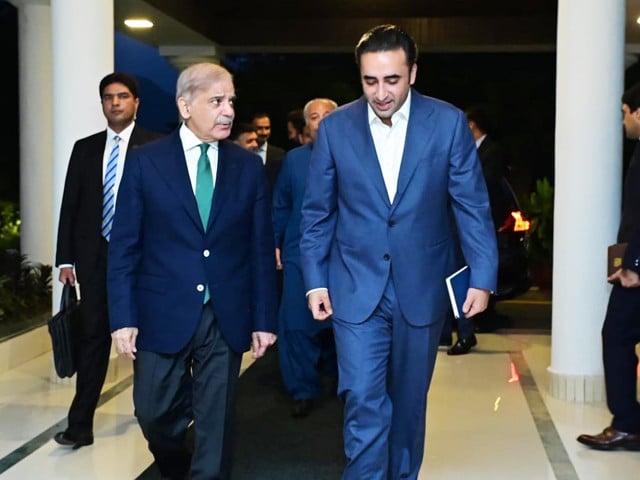
The unusually pointed exchange between the two parties — who govern jointly at the federal level — broke into the open a day after PPP Chairman Bilawal Bhutto-Zardari took to the floor of the National Assembly to accuse the PML-N of stalling constitutionally mandated local body polls in Pakistan’s most populous province while purporting to lecture others on democratic governance.
The row was ignited by PML-N senior leader Khawaja Saad Rafique, who in a post on X endorsed holding local elections soon in Punjab and the federal capital but drew a pointed distinction between that goal and the model used in the PPP’s stronghold of Sindh — specifically Karachi. Rafique suggested that anyone seeking further detail on the matter ask MQM-Pakistan leader Khalid Maqbool Siddiqui or Jamaat-i-Islami chief Hafiz Naeemur Rehman, a reference to two parties that have long disputed the city’s local government arrangements.
The PPP’s Karachi local government structure has been a persistent source of friction with rival political forces in the port city, and Rafique’s remarks were widely read as amplifying those grievances.
Senior PPP Senator Waqar Mehdi responded on Thursday with a formal statement in which he announced the date of Sindh’s next local polls and dismissed the PML-N’s criticism. “By the grace of Allah Almighty, local government elections will be held for the third time in Sindh in 2027,” Mehdi said.
Turning directly on Rafique, Mehdi added: “PPP has just asked for local government elections in Punjab and the Centre, but you started crying. Don’t be scared and conduct LG polls. Whoever is popular among the people will win.”
In the National Assembly on Wednesday, Bhutto-Zardari had been more expansive, accusing the PML-N of deliberately attempting to sow discord between the PPP and the Muttahida Qaumi Movement-Pakistan, another federal coalition partner, over the local government question. He argued that local administrations were already functioning in PPP-governed territories while the PML-N showed no appetite for elections closer to home.
“They are not even ready to hold a single union council election,” Bhutto-Zardari said. “I say introduce the same kind of local government system in Lahore that we have in Karachi. Let’s contest the polls.” He then issued his formal challenge: “I challenge you to hold local government elections in Islamabad within 90 days.”
He also announced that the PPP would hold local government elections in Gilgit-Baltistan, the northern territory administered from Islamabad, within the same 90-day window — a pledge that appeared designed to underscore the contrast with PML-N’s record.
Sindh Senior Minister Sharjeel Inam Memon, who also holds the information portfolio, pressed the attack, demanding Rafique explain the prolonged absence of local polls in Punjab before raising questions about Karachi. “It is surprising that the PML-N, which is reluctant to conduct local government elections in Punjab, is criticising the democratic process and local government system in Karachi,” Memon said in a separate statement.
He argued that local polls in Sindh had been conducted in accordance with the constitution and the law, and urged Rafique to respect the public’s democratic verdict rather than question it.
Local government elections are constitutionally required across Pakistan but have repeatedly been delayed, with ruling parties at both provincial and federal levels often reluctant to devolve power and resources to administrations that rival political forces could control. Punjab, the PML-N’s political base and home to roughly half of Pakistan’s population, has not held local body polls for several years.
The escalating rhetoric poses a delicate management challenge for a coalition government that depends on PPP support in parliament but whose two largest partners are governed by increasingly divergent political calculations ahead of the next electoral cycle.
Copyright © 2021 Independent Pakistan | All rights reserved