By Staff Reporter
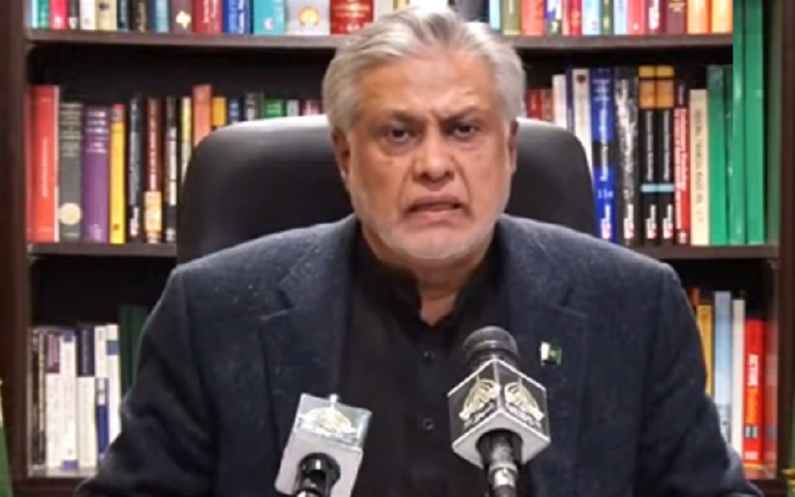
ISLAMABAD: Pakistan’s foreign minister said on Thursday that Islamabad’s role in brokering a ceasefire between the United States and Iran had fundamentally transformed its international standing, describing the country as a newly recognised “middle power and net security provider” with ambitions to become an economic force.
The remarks by Deputy Prime Minister and Foreign Minister Ishaq Dar came as Pakistan and Iran separately agreed to strengthen road and rail connectivity and revive a dormant bilateral transport mechanism — a sign of the practical dividends Islamabad is seeking to extract from its recent diplomatic capital.
“Pakistan was isolated for several years,” Dar said during a televised media interaction in Lahore. “Compare the number of countries that engaged with Pakistan two or three years ago with the situation today.” “Pakistan’s image has improved considerably. We are already a nuclear and missile power. Now our goal is to become an economic power.”
Pakistan played a quiet but pivotal role in helping end a conflict that shook global energy markets and raised fears of a broader regional war. The crisis was triggered in February by joint US-Israeli strikes on Iran, prompting Tehran to close the Strait of Hormuz — a chokepoint through which roughly a fifth of the world’s oil supplies pass — and to retaliate against American military bases and other targets across the Gulf.
Islamabad publicly condemned the initial strikes, called for restraint on all sides and subsequently helped facilitate a ceasefire. Pakistani and Qatari officials are now supporting ongoing technical-level negotiations between Washington and Tehran in Switzerland, following a framework agreement the two sides signed earlier this month — their first significant diplomatic engagement in more than four decades.
Dar said much of Pakistan’s role had been deliberately kept out of the public eye, as mediators must preserve the confidence of both parties. “We acted only as an honest facilitator,” he said, adding that Prime Minister Shehbaz Sharif, Chief of Army Staff Field Marshal Asim Munir and the Foreign Office had all engaged in intensive shuttle diplomacy and back-channel contacts throughout the process.
He acknowledged the parallel contributions of Qatar, Saudi Arabia, China, the United Arab Emirates, Türkiye and Egypt, framing the outcome as a collective diplomatic achievement rather than a unilateral Pakistani success.
Connectivity push
The same day, Pakistan’s Communications Minister Abdul Aleem Khan held talks in Islamabad with Iran’s Minister for Roads and Urban Development, Farzaneh Sadegh, agreeing to reactivate the Pakistan-Iran Joint Transport Committee and address logistical bottlenecks at their shared border — including delays in clearing trucks and containers.
“Future road and rail links between Pakistan and Iran will be further strengthened, noting that robust land connectivity is vital to unlocking immense trade opportunities for both nations,” Khan’s ministry said in an official statement after the meeting.
The talks came days after Iranian President Masoud Pezeshkian visited Pakistan and publicly thanked Islamabad for its role in ending the conflict with Washington.
Sadegh echoed that gratitude on Thursday. “We highly value the unwavering support and cooperation of our Pakistani brothers,” she said, according to the statement.
Pakistan and Iran share a nearly 900-kilometre border and have long sought to expand economic ties through border markets, barter trade and improved transport infrastructure. Bilateral trade has remained well below potential, however, constrained by international sanctions on Tehran, limited banking channels and weak cross-border logistics.
With Iran now engaged in broader peace negotiations with the United States, officials in Islamabad see an opening to accelerate connectivity projects and advance long-stalled cooperation in transport and energy that previous sanctions regimes had effectively frozen.
Iranian crude
Industry officials said Pakistan could once again source crude oil from Iran following a temporary easing of US sanctions on Tehran, reopening the possibility of importing discounted supplies that local refineries could process into higher-value petroleum products.
Pakistan Refinery Ltd (PRL) previously imported Iranian crude under a long-term contract with the National Iranian Oil Company. Those purchases stopped after US sanctions were imposed, and no Iranian oil has entered the country since.
Local refineries are technically capable of processing Iranian crude, but industry experts said commercial and operational challenges remain significant. The main issues are the high yield of furnace oil and the lack of meaningful domestic demand for the fuel, given its negligible use in the power sector.
A former head of a leading refinery in Karachi told Dawn newspaper that the situation is changing with the temporary lifting of sanctions, though the outcome remains uncertain over the next two months. “We can refine Iranian light crude oil, but due to high furnace oil (FO) content, it is not a commercially viable option, particularly when there is no domestic market for the FO due to its negligible usage in the power sector,” the former executive said. “The most notable aspect is the price of Iranian crude oil and whether it is pegged to an international benchmark, with parity to Arab crude. If there is no discount, refining at the local refinery is not economical.”
Indian refineries, by contrast, are mostly deep-conversion units equipped with hydrocrackers, hydrocokers and residue fluid catalytic cracking units. This configuration gives them the flexibility to process crude ranging from heavy to light grades into value-added products such as diesel and petrol, the executive noted. “If Pakistani refineries are upgraded in the near future then we will have a choice to process heavy crude,” he said.
Over the last 16 years, most Pakistani refineries have shifted their crude slate from sour heavy grades to lighter, sweeter varieties to improve refinery economics and sustainability, according to the executive.
Local refineries now meet 80% of domestic diesel demand following these changes in crude recipe and modifications. Diesel has faced demand destruction because of high stocks, with refineries producing at maximum throughput. Pakistan’s diesel sales in May stood at 455,000 tonnes, down 32% from a year earlier and 17% from the previous month. Diesel production totalled 4.958 million tonnes in fiscal year 2025 and 3.787 million tonnes in the July-February period of fiscal 2026. Imports reached 2.037 million tonnes in FY25 and 1.239 million tonnes in the July-April period of FY26.
Barring Pak Arab Refinery Ltd, which operates a mild cracker unit, other refineries in Pakistan do not have hydrocracker units, the executive said. Pakistani refineries would need cracking units similar to those in India to gain greater flexibility.
Pakistan Refinery Ltd is working on its Refinery Expansion and Upgrade Project (REUP), which would double the refinery’s crude processing capacity from 50,000 barrels per day to 100,000 barrels per day. The project is designed to eliminate high-sulphur furnace oil production and yield Euro V refined products.
PRL is engaged with the government on restoring the taxable status of petroleum products and amending brownfield policies. These steps are viewed as critical for the company’s sustainable operations and successful execution of the REUP.
Pakistan also stands to benefit on the import side, Sania Irfan of Topline Securities said. The country imported nearly $17 billion worth of petroleum products and fuels in 2025. Historically, Pakistan imported Iranian crude at a discounted realised price compared with supplies from Saudi Arabia and the UAE, with average discounts recorded during 2009-12. Recent reported prices also show Iranian light and heavy grades trading at discounts to Saudi Arabian benchmarks.
Sourcing crude oil from Iran could generate import cost savings of $170-340 million for Pakistan, assuming the country imports 10-20% of its total petroleum requirement at a discount, including freight savings, Irfan said.
Prospects for refining heavier Iranian grades will depend on the discounts available, domestic demand for furnace oil and the pace of technological upgrades at local refineries, experts said.
Copyright © 2021 Independent Pakistan | All rights reserved