By Staff Reporter
ISLAMABAD/KARACHI: Twenty-two Iranian crew members whose oil tanker was seized by United States naval forces during the brief but disruptive conflict earlier this year arrived in Karachi on Friday, Pakistani and Iranian officials said, marking the fourth such repatriation mission facilitated by Islamabad since hostilities ended.
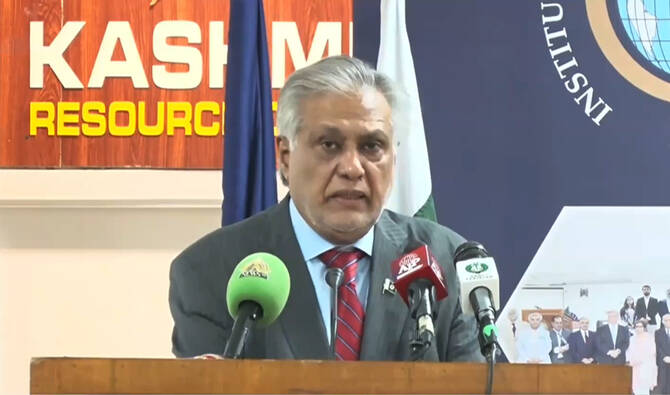
Deputy Prime Minister and Foreign Minister Ishaq Dar said the crew had served aboard the M/T Davina, also referred to as the Lenore/Davina, which was intercepted by US forces overnight on April 13 as part of a naval blockade Washington imposed on vessels entering or leaving Iranian ports following the outbreak of fighting on Feb. 28.
“Arrangements are now being finalised in close collaboration with the Iranian missions in Pakistan to facilitate their earliest and safe return to their homeland,” Dar wrote on X. “We remained in close contact with the U.S. and Iranian authorities throughout this process.”
Iran’s state news agency IRNA said the 22 sailors had been handed over to Iranian diplomats at the consulate general in Karachi and were expected to return to Iran within days. The Iranian consulate confirmed their arrival, saying the crew “will return to their homeland in the coming days.”
Neither Iranian authorities nor IRNA disclosed the location or precise circumstances of the tanker’s seizure.
Dar said the latest group brought the total number of Iranian nationals repatriated through Pakistani territory over the past two months to more than 70. He thanked Tehran for the “trust they have reposed in Pakistan” and credited the Ministry of Foreign Affairs and other Pakistani institutions for managing the logistics.
CONFLICT AND BLOCKADE
The repatriations are a consequence of the most serious military confrontation between the United States and Iran in decades. The conflict began on Feb. 28 when US and Israeli forces launched strikes on Iran that killed Supreme Leader Ayatollah Ali Khamenei and several senior military commanders.
Iran retaliated with missile and drone attacks across the region and closed the Strait of Hormuz — the strategic chokepoint through which roughly 20 percent of the world’s crude oil and liquefied natural gas normally moves. The U.S. responded by imposing a naval blockade, interdicting commercial vessels linked to Iran both within the Persian Gulf and in international waters.
Among the ships targeted was the M/V Touska, a container vessel belonging to the Islamic Republic of Iran Shipping Lines (IRISL) — a group subject to longstanding U.S. sanctions — which was boarded by American forces on April 19 off Chabahar port in the Gulf of Oman. Six of its crew were freed on April 29, while the remaining 22 were evacuated to Pakistan on May 4 and subsequently crossed into Iran overland. The Touska itself was brought to Pakistan for repairs before being returned to its owners.
On May 15, Dar announced the successful repatriation of 11 Pakistani nationals and 20 Iranians who had been aboard vessels seized on the high seas, saying the group had transited through Singapore and Bangkok before flying into Islamabad. “All individuals are in good health and high spirits,” he said at the time.
Earlier this month, Dar said Pakistan was facilitating the return of a further 30 Iranian nationals: eight fishermen rescued at sea by the British vessel MMA Valour after their boat ran aground, and the 22 Davina crew members whose repatriation was completed on Friday.
DIPLOMACY
The repatriations have unfolded against the backdrop of an interim ceasefire agreement signed in Switzerland in mid-June by Tehran and Washington, with Pakistan and Qatar serving as mediators. The accord calls for the gradual lifting of respective maritime blockades and a resumption of technical-level diplomatic talks.
Islamabad has positioned itself as a key intermediary in the post-conflict diplomacy, leveraging its geographic proximity to Iran and its established back-channel contacts with both sides. Dar’s ministry has overseen each of the four repatriation convoys, coordinating directly with U.S. authorities over the release of crew members and, in at least one case, the return of a seized vessel.
Pakistan shares a long border with Iran and was one of the few regional powers to maintain open lines of communication with Tehran during the conflict.
Copyright © 2021 Independent Pakistan | All rights reserved