By Staff Reporter
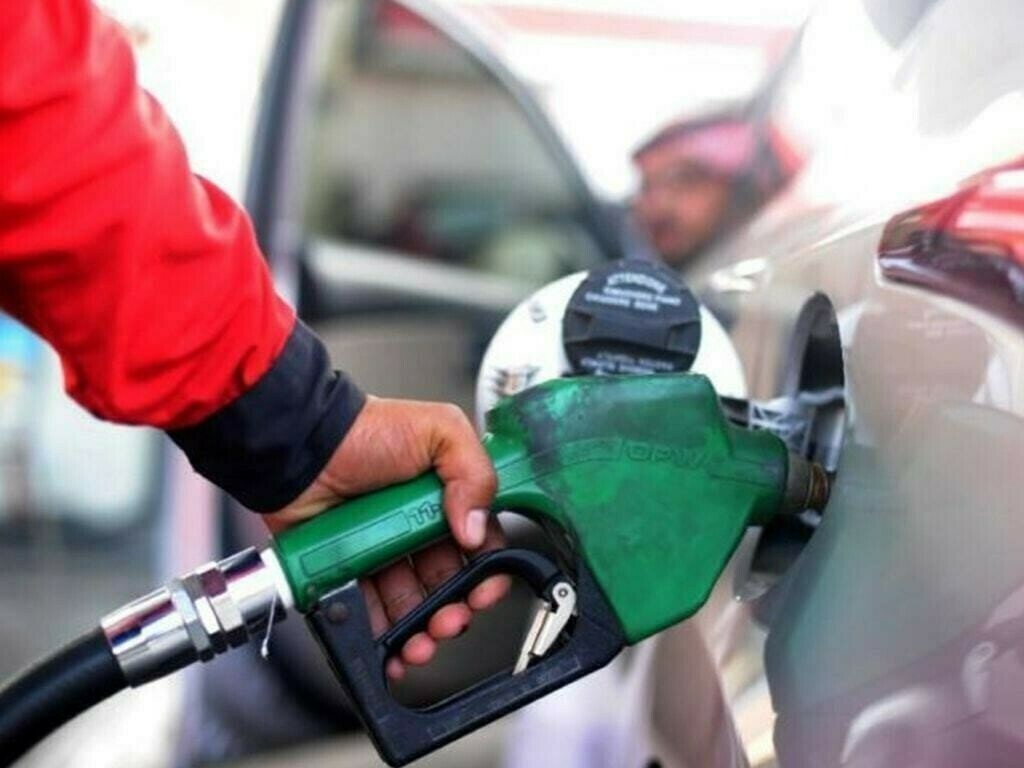
ISLAMABAD: Pakistan held petrol and diesel prices unchanged on Friday, pausing weekly wartime fuel revisions that have swung costs at the pump by as much as 320 rupees a litre since a US-Iran conflict choked off oil supplies through the Strait of Hormuz, as global crude benchmarks sank more than 10% on the week on mounting evidence that the vital waterway is recovering.
The Petroleum Division said in a notification that petrol would remain at 299.50 rupees per litre and high-speed diesel at 311.47 rupees “till further orders,” consolidating last week’s record reductions of 74 rupees on petrol and 67 rupees on diesel — the largest single-week cuts since wartime revisions began — ordered by Prime Minister Shehbaz Sharif as a peace agreement between Washington and Tehran reopened the Hormuz chokepoint and sent international crude prices tumbling.
While headline pump prices were frozen, Islamabad quietly tightened its fiscal grip: the petroleum levy on diesel rose by 6.57 rupees to 79.54 rupees per litre and the levy on petrol edged up 39 paisas to 66.64 rupees, according to Petroleum Division sources. The levy on kerosene was left unchanged at 20.36 rupees per litre.
In a separate notification, the Oil and Gas Regulatory Authority cut the price of kerosene oil by 6.85 rupees per litre to 227.05 rupees, extending relief on the fuel used predominantly by low-income households. Last week, kerosene had been slashed by 48.29 rupees to 233.90 rupees.
A VOLATILE FOUR MONTHS
Since the U.S.-Iran conflict triggered a Hormuz blockade at the end of February, Pakistan’s government had been conducting emergency weekly price reviews in place of its customary fortnightly schedule, producing swings in fuel costs that have squeezed middle-class and low-income households, which rely on petrol for private transport, rickshaws and two-wheelers, while rattling the broader economy through diesel, which powers the heavy goods, trucking, railway and agricultural sectors.
The first wartime revision on March 6 raised both petrol and diesel by 55 rupees per litre — a move condemned by opposition parties as an “inflation bomb” — lifting ex-depot diesel to 335.86 rupees and petrol to 321.17 rupees.
Prices hit their peak on April 3 when the government imposed increases of 137.24 rupees on petrol and 184.49 rupees on diesel, carrying them to 458.40 and 520.35 rupees per litre respectively. Faced with immediate and widespread public backlash, Shehbaz reversed course within 24 hours, slashing the petroleum levy by 80 rupees a litre to pull petrol back to 378 rupees.
Friday’s rates sit roughly 160 rupees below those April highs.
OIL MARKETS RETREAT ON HORMUZ RECOVERY
Global crude markets extended a steep weekly decline as fears over supply disruptions from the Hormuz conflict faded. Brent crude futures settled at $71.99 a barrel on Friday, down $3.27 or 4.34% on the day, while U.S. West Texas Intermediate fell $2.69, or 3.74%, to $69.23. Measured from the close the previous Thursday — Friday had been a public holiday — Brent lost 10.86% on the week and WTI shed 9.62%.
Shipping data released on Thursday showed crude flows through the Strait of Hormuz climbed to their highest level since the conflict erupted in late February, though overall traffic remains far below pre-war daily averages.
Saudi Aramco resumed oil loading at its Ras Tanura terminal in the Gulf on Friday after a nearly four-month halt, shipping data from LSEG showed. Two very large crude carriers, each capable of loading cargoes of 2 million barrels, took on crude at the terminal while a third vessel waited nearby.
“There is a growing sense that oil is going to keep moving through the Strait of Hormuz,” said Phil Flynn, senior analyst at Price Futures Group. “We’re going to get a flood of oil. I think we’re going to see a huge flood of products.”
Tamas Varga at PVM said market sentiment had shifted decisively. “The predominant view, it appears, remains one of imminent oversupply,” he said.
June Goh, senior oil market analyst at Sparta Commodities, pointed to a twin drag on prices. “There is a general selloff as the market reacts to the increased flows exiting the Strait of Hormuz and China not yet picking up crude demand,” she said.
The positive mood was briefly punctured on Thursday after a cargo vessel was struck by an unknown projectile near Oman, sending both benchmarks up more than 2%. Two U.S. officials told Reuters that Iran fired on the vessel as it attempted to pass through the strait. Iranian authorities stated that the security of vessels transiting outside designated Hormuz routes could not be guaranteed. On Friday, Tehran reasserted its right to control shipping through the waterway and warned Gulf states against aligning with Washington.
Adding a further layer of supply uncertainty, Russia is weighing a ban on diesel exports for several months after Ukrainian drone strikes caused extensive damage to its refineries and energy infrastructure, state news agency TASS reported on Friday.
PAKISTAN EYES IRAN OIL DIVIDEND
For Islamabad, a full normalisation of the Hormuz route and the lifting of international sanctions on Iran could bring a substantial medium-term fiscal windfall. Karachi-based Topline Securities estimated in a report published this week that Pakistan could save between $280 million and $340 million annually on crude imports if sanctions on Tehran are removed following the U.S.-Iran peace deal.
“Assuming Iran continues to offer competitive pricing to regain market share following the easing of sanctions, sourcing crude oil from Iran could potentially generate import cost savings of up to $170-340 million for Pakistan,” Topline said, modelling a scenario in which Pakistan sources 10 to 20 percent of its total petroleum requirement from Iran at a 10 percent discount, including savings on freight. Pakistan imported nearly $17 billion worth of petroleum products and fuels in 2025.
Between 2009 and 2012, before Iranian banks were severed from the SWIFT financial messaging system following European Union sanctions, Pakistan bought Iranian crude at average discounts of between 13 and 17 percent. Iranian Light and Iranian Heavy grades currently trade at 2-3 percent discounts.
Pakistan and Iran last year signed 12 agreements and memoranda of understanding covering a range of sectors and have set a bilateral trade target of $10 billion, up from the current $3 billion.
Any economic opening, however, will move in lockstep with the pace at which sanctions are lifted, Pakistan’s Foreign Office spokesperson Tahir Andrabi cautioned on Wednesday, the day after Iranian President Masoud Pezeshkian visited Islamabad.
“Progress on economic projects and opening up of Iran for economic and trade relations across the world will take place simultaneously with the relief of sanctions,” Andrabi told reporters. “Till such time that the sanctions are relieved, the progress on these projects will hinge on the pace of the relief of sanctions. It is important to match the two.”
Copyright © 2021 Independent Pakistan | All rights reserved