By Staff Reporter
ISLAMABAD: Security forces killed 29 militants in an intelligence-led ground operation and precision air strikes along the Afghan border overnight, the government said on Sunday, retaliating hours after gunmen attacked a paramilitary camp in Karachi and killed three soldiers.
Information Minister Attaullah Tarar said forces conducted a ground operation on June 28 in Bajaur district in Khyber Pakhtunkhwa province, neutralising a high-value militant commander identified as Khan Farosh, also known as Zabal, along with three militants linked to Jamaat ul Ahrar. Several others were wounded.
Overnight, between June 28 and 29, Pakistan followed up with cross-border strikes on three targets in Afghanistan’s Paktia, Paktika and Kunar provinces under the continuing Operation Ghazab lil-Haq, killing 25 more militants and destroying significant stockpiles of weapons and ammunition, Tarar said in a post on X.
“Pakistan has always strived for maintaining peace and stability in the region, but at the same time shall not compromise on the safety and security of our citizens, which remains our top priority,” he said.
There was no immediate comment from Kabul or New Delhi.
Karachi Attack
The operations followed a brazen assault late on Saturday on a compound of the Rangers, a federal paramilitary force, in the Gulistan-e-Jauhar district of Karachi. The military’s media wing, the Inter-Services Public Relations (ISPR), said attackers detonated a blast at the camp’s main gate before attempting to breach its perimeter. Rangers personnel repelled the assault, killing three attackers and capturing a fourth, identified as an Afghan national.
The ISPR identified the attackers as belonging to Jamaat ul Ahrar, a faction it described as an “Indian proxy,” and said the captured militant — who gave his name as Usman Ali — had entered Pakistan from Jalalabad, Afghanistan, roughly a week earlier. Islamabad has frequently accused New Delhi of backing militant networks operating from Afghan soil; India and Afghanistan have consistently denied the allegations.
Pakistan’s military said Chief of Army Staff and Chief of Defence Forces Field Marshal Asim Munir expressed condolences to the families of the three soldiers killed and pledged that retribution operations would follow.
President Asif Ali Zardari, Prime Minister Shehbaz Sharif and Interior Minister Mohsin Naqvi separately condemned the attack. Naqvi flew to Karachi on Sunday, attended the funeral of the slain Rangers personnel and visited the site of the assault. “Those involved in terrorism, wherever they may be, will be pursued by the security forces and brought to justice,” he said.
Escalating Campaign
The strikes are part of Operation Ghazab lil-Haq, launched on the night of February 26 following what Islamabad described as unprovoked firing from Afghan territory. The operation has continued with only a brief, five-day pause around the Eidul Fitr holiday in late March, with Pakistani officials stating it would run until its objectives were met.
This is not the first time Pakistan has struck targets across the border under the operation. Earlier this month, similar strikes killed 26 militants in Afghan border areas.
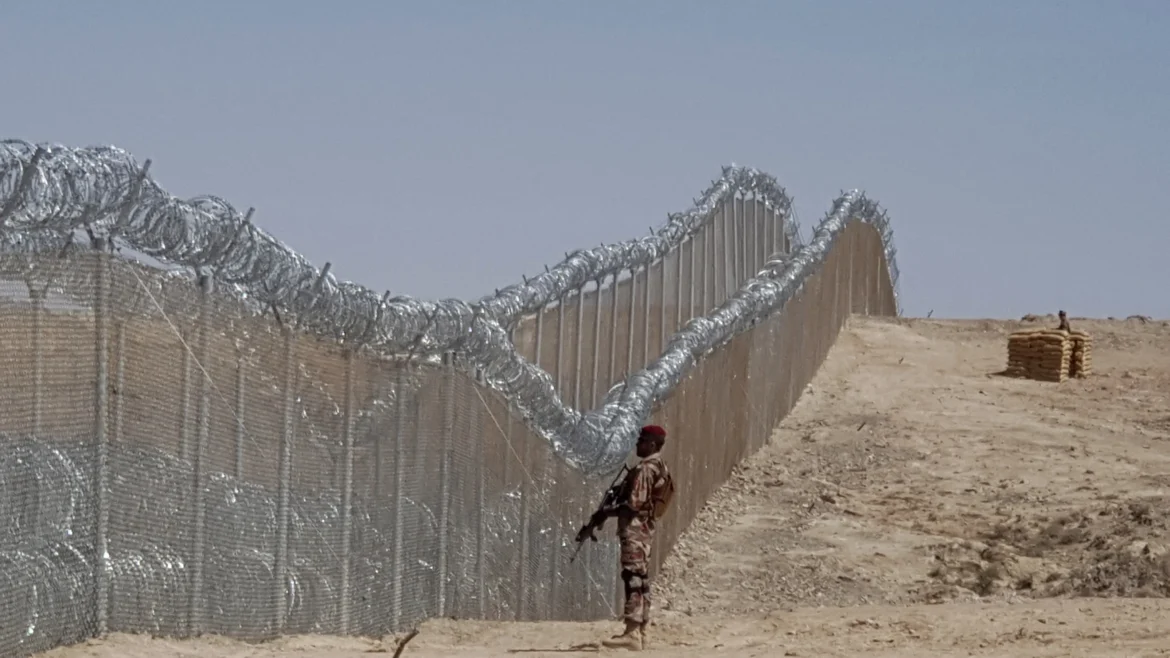
Cross-border militancy has escalated sharply since the Afghan Taliban returned to power in Kabul in 2021. Pakistan has repeatedly pressed the Taliban administration to dismantle sanctuaries used by the banned Tehreek-i-Taliban Pakistan (TTP) — which the state refers to as Fitna al-Khawarij — and allied factions operating on Afghan soil. Pakistani officials say those appeals have gone largely unheeded.
The violence has badly strained relations between the two neighbours and triggered fierce border clashes since February. China has stepped in as a mediator, hosting a first round of talks between Islamabad and Kabul in Urumqi, Xinjiang, in April. A second meeting is being planned to sustain that process, according to people familiar with the discussions. Saudi Arabia, Qatar and Turkey have also pressed both sides to de-escalate.
In early March, Field Marshal Munir had said that lasting peace between Pakistan and Afghanistan was contingent on Kabul renouncing its support for militant organisations.
Tarar said on Sunday that Pakistan’s broader counterterrorism campaign under the “Azm-e-Istehkam” strategy, endorsed by the Federal Apex Committee on the National Action Plan, would press ahead at full pace.
Copyright © 2021 Independent Pakistan | All rights reserved